


Father Koch: The Kingdom of God comes with a promise
January 2, 2026 at 9:23 a.m.
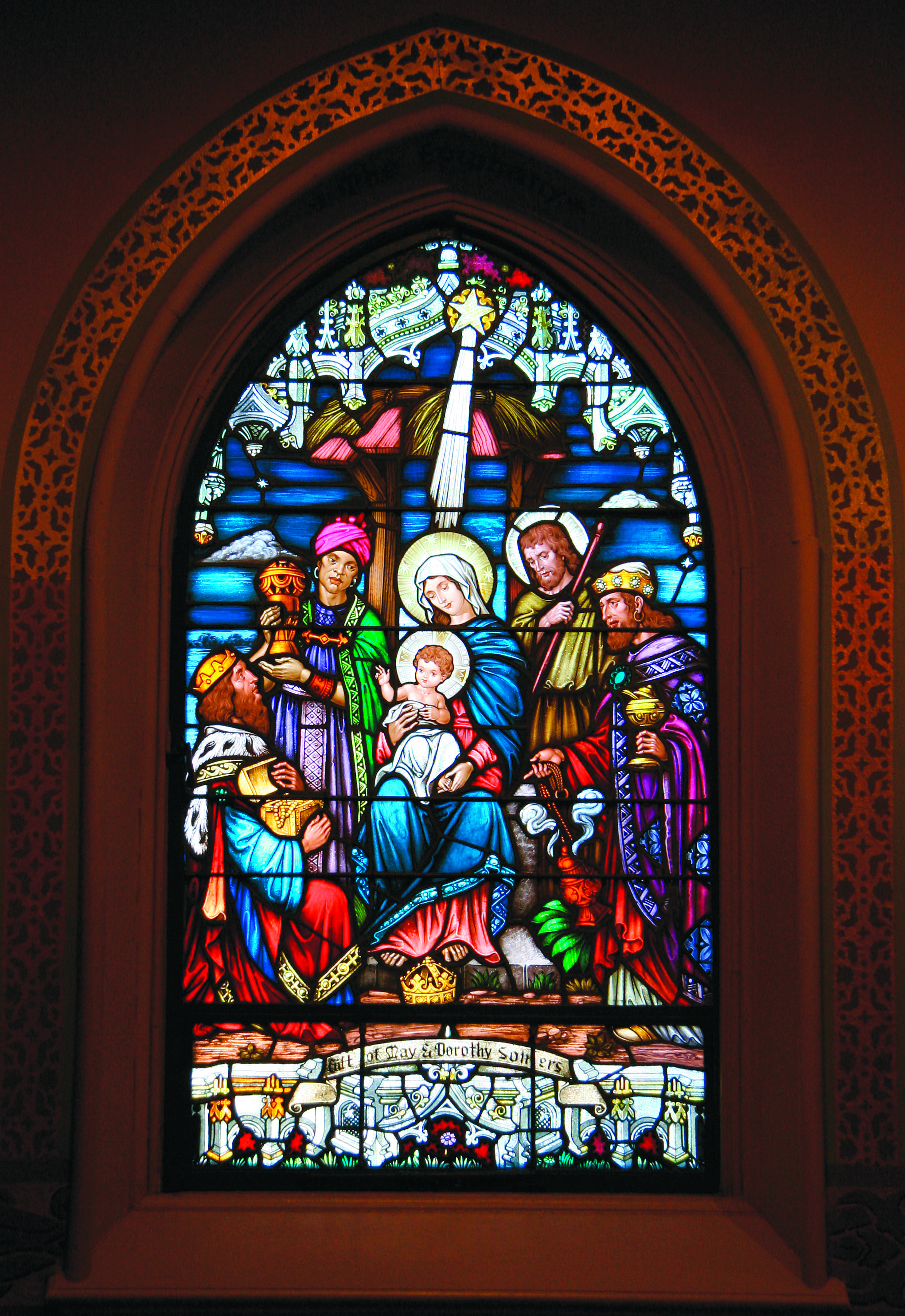 The Solemnity of the Epiphany of Our Lord is reflected in this image in Ascension Church, Bradley Beach, depicting the three magi visiting the Holy Family. File photo
Gospel reflection for Jan. 4, 2026, Solemnity of the Epiphany of the Lord
The celebrations of the Christmas Season, and in a particular away on this observation of the Epiphany of the Lord, draws our attention to a small village called Bethlehem. Nestled in the Judean hills not far from Jerusalem, the only significance of this village was as the birthplace of David, the greatest king of Israel and the ancestor of the messiah. In remained just a small and insignificant village for most of its history.
Today, located in what is Palestinian territory on the West Bank, it has a population of about 30,000 people, mostly Muslims, but there remains a strong Christian community. The city is a popular site for tourists, mostly pilgrims, who come to visit the oldest continually functioning church in the world, the Church of the Nativity. It is here that Christians have gathered even from apostolic times, to observe the birth of Jesus. As we saw this past April as the town of Dolton, Illinois immediately set aside the Prevost family home as a landmark, signifying the place of the childhood of now Pope Leo XIV, so Christians traveled to Bethlehem to mark the birth of Jesus.
The first pilgrims to this village were the Magi, likely Zoroastrian priests, who interpreted the celestial signs and understood that a great miracle had occurred in Judea. This led them to embark on a rigorous trek in order to encounter this new born king.
While their journey was not an easy one, they encountered a significant stumbling block when they arrived in Jerusalem and encountered the court of the despot King Herod the Great. Eventually they were directed to Bethlehem, where they presented their gifts of gold, frankincense, and myrrh. Yet, it was just a matter of days before Herod directed the murder of his alleged rival king leading to the deaths of the boys under the age of two in the village. Warned in a dream, the Holy Family had already fled for Egypt, where they remained for several years.
The pilgrims who arrive in Bethlehem today bring neither gold, frankincense or myrrh, but like the magi, come seeking the king. As with the magi the king they seek has no political ambition, army, or economic power. Instead, they seek the Kingdom of God, and the peace that it promises to the world.
It is sadly ironic that the city of Bethlehem remains today not a city of peace and security, but one shrouded in war and division. Though not under assault as is Gaza, the West Bank is in a constant state of tension and conflict. Generally speaking the peoples there live in harmony with one another. While over ninety percent of the populace are Muslims, the small Christian minority generally lives at peace with their neighbors.
However, the recent conflicts in the region have even disrupted this fragile coexistence.
The land of Jesus and his disciples, the birthplace of the Church, and the promised final age of human existence, is in great turmoil.
The celebration of the Christmas Season, and especially this Feast of the Epiphany, reminds us of the hope for God’s peaceable kingdom and how we have managed to destroy that hope with the very tools that the messianic king lacked: political ambition, army, and economic power.
Perhaps the conflict in Bethlehem mirrors the cosmic struggle between life and death; good and evil; peace and war; hope and despair; the Kingdom of God and the Kingdom of Satan.
The Epiphany is the proclamation that God is manifest in our midst, that he is truly among us. This is not merely a quaint remembrance of the past, but the commitment to a present and future reality of God’s presence, and of our need to not give in to the wiles of sin and death, instead committing ourselves to living for the Kingdom of God.
Father Garry Koch is pastor of St. Benedict Parish, Holmdel.
Related Stories
Friday, January 02, 2026

E-Editions
Events
The Solemnity of the Epiphany of Our Lord is reflected in this image in Ascension Church, Bradley Beach, depicting the three magi visiting the Holy Family. File photoGospel reflection for Jan. 4, 2026, Solemnity of the Epiphany of the Lord
The celebrations of the Christmas Season, and in a particular away on this observation of the Epiphany of the Lord, draws our attention to a small village called Bethlehem. Nestled in the Judean hills not far from Jerusalem, the only significance of this village was as the birthplace of David, the greatest king of Israel and the ancestor of the messiah. In remained just a small and insignificant village for most of its history.
Today, located in what is Palestinian territory on the West Bank, it has a population of about 30,000 people, mostly Muslims, but there remains a strong Christian community. The city is a popular site for tourists, mostly pilgrims, who come to visit the oldest continually functioning church in the world, the Church of the Nativity. It is here that Christians have gathered even from apostolic times, to observe the birth of Jesus. As we saw this past April as the town of Dolton, Illinois immediately set aside the Prevost family home as a landmark, signifying the place of the childhood of now Pope Leo XIV, so Christians traveled to Bethlehem to mark the birth of Jesus.
The first pilgrims to this village were the Magi, likely Zoroastrian priests, who interpreted the celestial signs and understood that a great miracle had occurred in Judea. This led them to embark on a rigorous trek in order to encounter this new born king.
While their journey was not an easy one, they encountered a significant stumbling block when they arrived in Jerusalem and encountered the court of the despot King Herod the Great. Eventually they were directed to Bethlehem, where they presented their gifts of gold, frankincense, and myrrh. Yet, it was just a matter of days before Herod directed the murder of his alleged rival king leading to the deaths of the boys under the age of two in the village. Warned in a dream, the Holy Family had already fled for Egypt, where they remained for several years.
The pilgrims who arrive in Bethlehem today bring neither gold, frankincense or myrrh, but like the magi, come seeking the king. As with the magi the king they seek has no political ambition, army, or economic power. Instead, they seek the Kingdom of God, and the peace that it promises to the world.
It is sadly ironic that the city of Bethlehem remains today not a city of peace and security, but one shrouded in war and division. Though not under assault as is Gaza, the West Bank is in a constant state of tension and conflict. Generally speaking the peoples there live in harmony with one another. While over ninety percent of the populace are Muslims, the small Christian minority generally lives at peace with their neighbors.
However, the recent conflicts in the region have even disrupted this fragile coexistence.
The land of Jesus and his disciples, the birthplace of the Church, and the promised final age of human existence, is in great turmoil.
The celebration of the Christmas Season, and especially this Feast of the Epiphany, reminds us of the hope for God’s peaceable kingdom and how we have managed to destroy that hope with the very tools that the messianic king lacked: political ambition, army, and economic power.
Perhaps the conflict in Bethlehem mirrors the cosmic struggle between life and death; good and evil; peace and war; hope and despair; the Kingdom of God and the Kingdom of Satan.
The Epiphany is the proclamation that God is manifest in our midst, that he is truly among us. This is not merely a quaint remembrance of the past, but the commitment to a present and future reality of God’s presence, and of our need to not give in to the wiles of sin and death, instead committing ourselves to living for the Kingdom of God.
Father Garry Koch is pastor of St. Benedict Parish, Holmdel.