


Father Koch: The Cross, the most identifiable expression of our Christian faith
September 12, 2025 at 9:44 a.m.
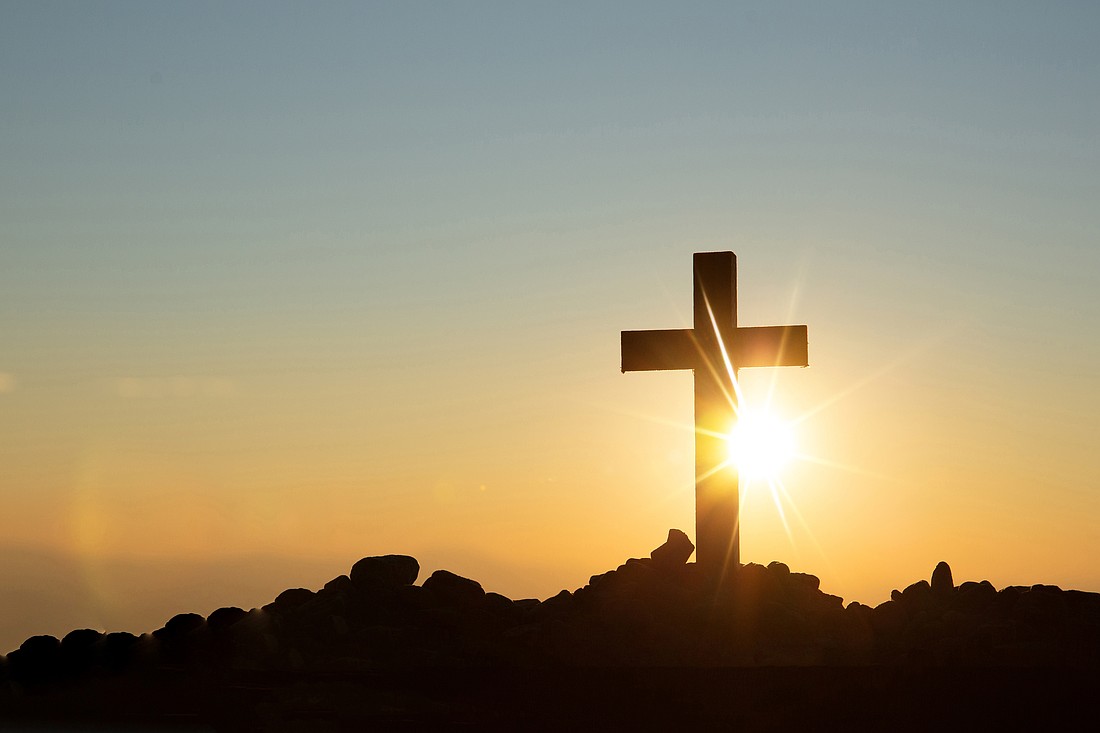
Gospel reflection for Sept. 14, 2025, Feast of the Exaltation of the Holy Cross
The most basic and familiar prayer that we say everyday, likely multiple times each day, is the Sign of the Cross. Pope Benedict XVI explained the significance of the Sign of the Cross, saying, “By signing ourselves with the Cross, we place ourselves under the protection of the Cross, hold it in front of us like a shield that will guard us in all the distress of daily life and give us the courage to go on.”
He continued: “The Cross shows us the road of life, the imitation of Christ…whenever we make the sign of the Cross we accept our Baptism anew. Christ from the Cross draws us, so to speak, to himself.”
We observe the solemnity of the Exaltation of the Cross, a celebration dating from the fourth century, which stands for us as a reminder of the victory over sin and Death won by Jesus through his Passion and Death on the Cross.
While the earliest Christians did not use the Cross as the identifiable moniker of their faith, the image of the Cross and the reality of the Cross was never far from their minds.
For the Roman world, the Cross was a weapon, used to subjugate rebels and brigands, while instilling fear and defeat among their enemies and subjugated peoples. Jesus died on a Cross outside the walls of the city of Jerusalem. That is a fact, and one that the Christians could not explain away or hide from.
Yet, the Cross does not end the story. The Romans thought it would, the members of the Sanhedrin thought it would, even many of the disciples of Jesus likely thought that it would as well. Yet the Cross instead points to something even greater than its power to destroy – the resurrection of Jesus Christ three days after his ignominious death.
Saint Paul understood well that the Cross was a paradox. The very instrument of death became the tree of life. Jesus died a real death on the Cross, yet it was so that the power of God over sin and death could be visibly demonstrated through the resurrection.
While some Christians prefer an empty Cross signifying solely that the Cross is empty and Jesus is risen, Catholic and Orthodox Christians maintain the corpus of Jesus on the Cross – usually as already deceased, sometimes in a triumphal pose or seated as on a throne as a reminder that without the Cross there is no resurrection. One must precede the other and the Cross stands as the great symbol of that reality.
The Exaltation of the Cross follows the Feast of Our Lady of Sorrows. As foretold through the prophets Simeon and Anna at the Presentation of Jesus in the Temple, Mary suffered greatly at the torture and death of her son. While she believed in the power of God and knew well that this would not be the final answer, her anguish and suffering were real. Not only did she weep for her son, and those who loved and followed him, she also knew that his death was a rejection as well of the promise and the love of the One who sent him – God the Father.
We “Lift high the Cross” not as a sign of victory in this world, but as the living expression of the triumph of life over death; good over evil; love over hatred; despair over hopelessness; truth over falsehood; and reconciliation over sin.
In our days the Cross has been reduced by many to a piece of jewelry, and for some even a sign of oppression or hatred.
We celebrate the Cross – not as an object in itself – but for what it means. The Cross shows to the world that we know that we are saved in and through the sacrifice of Jesus Christ and we live that reality through lives of faithful discipleship.
Let us never be ashamed of the Cross, rather, we proudly wear the Cross, we boldly make the Sign of the Cross, as an expression of God’s love for us and with us. We share that love with others, whether they want it or not, when we display the Cross or make the Sign of the Cross.
Father Garry Koch is pastor of St. Benedict Parish, Holmdel.
Related Stories
Saturday, December 27, 2025

E-Editions
Events
Gospel reflection for Sept. 14, 2025, Feast of the Exaltation of the Holy Cross
The most basic and familiar prayer that we say everyday, likely multiple times each day, is the Sign of the Cross. Pope Benedict XVI explained the significance of the Sign of the Cross, saying, “By signing ourselves with the Cross, we place ourselves under the protection of the Cross, hold it in front of us like a shield that will guard us in all the distress of daily life and give us the courage to go on.”
He continued: “The Cross shows us the road of life, the imitation of Christ…whenever we make the sign of the Cross we accept our Baptism anew. Christ from the Cross draws us, so to speak, to himself.”
We observe the solemnity of the Exaltation of the Cross, a celebration dating from the fourth century, which stands for us as a reminder of the victory over sin and Death won by Jesus through his Passion and Death on the Cross.
While the earliest Christians did not use the Cross as the identifiable moniker of their faith, the image of the Cross and the reality of the Cross was never far from their minds.
For the Roman world, the Cross was a weapon, used to subjugate rebels and brigands, while instilling fear and defeat among their enemies and subjugated peoples. Jesus died on a Cross outside the walls of the city of Jerusalem. That is a fact, and one that the Christians could not explain away or hide from.
Yet, the Cross does not end the story. The Romans thought it would, the members of the Sanhedrin thought it would, even many of the disciples of Jesus likely thought that it would as well. Yet the Cross instead points to something even greater than its power to destroy – the resurrection of Jesus Christ three days after his ignominious death.
Saint Paul understood well that the Cross was a paradox. The very instrument of death became the tree of life. Jesus died a real death on the Cross, yet it was so that the power of God over sin and death could be visibly demonstrated through the resurrection.
While some Christians prefer an empty Cross signifying solely that the Cross is empty and Jesus is risen, Catholic and Orthodox Christians maintain the corpus of Jesus on the Cross – usually as already deceased, sometimes in a triumphal pose or seated as on a throne as a reminder that without the Cross there is no resurrection. One must precede the other and the Cross stands as the great symbol of that reality.
The Exaltation of the Cross follows the Feast of Our Lady of Sorrows. As foretold through the prophets Simeon and Anna at the Presentation of Jesus in the Temple, Mary suffered greatly at the torture and death of her son. While she believed in the power of God and knew well that this would not be the final answer, her anguish and suffering were real. Not only did she weep for her son, and those who loved and followed him, she also knew that his death was a rejection as well of the promise and the love of the One who sent him – God the Father.
We “Lift high the Cross” not as a sign of victory in this world, but as the living expression of the triumph of life over death; good over evil; love over hatred; despair over hopelessness; truth over falsehood; and reconciliation over sin.
In our days the Cross has been reduced by many to a piece of jewelry, and for some even a sign of oppression or hatred.
We celebrate the Cross – not as an object in itself – but for what it means. The Cross shows to the world that we know that we are saved in and through the sacrifice of Jesus Christ and we live that reality through lives of faithful discipleship.
Let us never be ashamed of the Cross, rather, we proudly wear the Cross, we boldly make the Sign of the Cross, as an expression of God’s love for us and with us. We share that love with others, whether they want it or not, when we display the Cross or make the Sign of the Cross.
Father Garry Koch is pastor of St. Benedict Parish, Holmdel.