


Father Koch: The Ascension of Jesus calls the Church to mission
May 30, 2025 at 8:00 a.m.
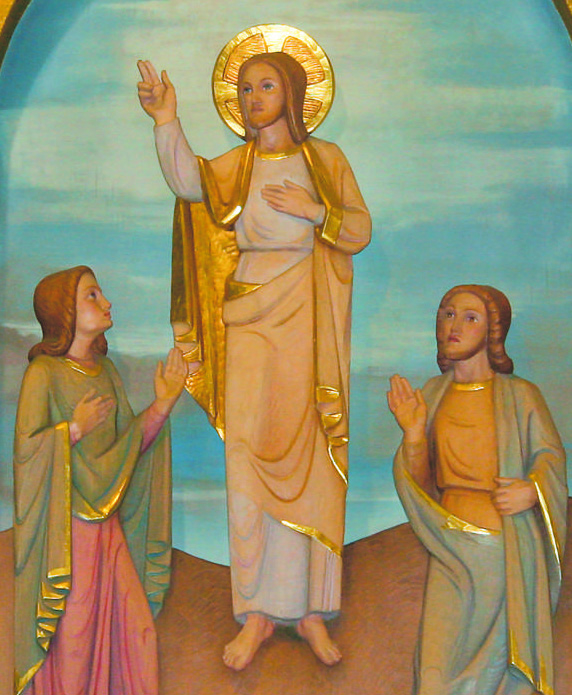 This image of the Ascension of the Lord is found in St. Joseph Church, Keyport, part of Our Lady of Fatima Parish, Keyport. File photo
 Gospel reflection for June 1, 2025, The Solemnity of the Ascension of the Lord
After the Resurrection, Jesus appeared to his disciples at seemingly random and unannounced times. They encountered him in the Upper Room, on the road to Emmaus, on the shores of Lake Tiberius, and for the last time on the Mount of Olives. St. Paul reports in his First Letter to the Corinthians that Jesus appeared to some 500 disciples. Unlike his public ministry, after the Resurrection Jesus was only witnessed by those who followed him. The appearances of Jesus seems to have strengthened the disciples and they became more comfortable traveling between Jerusalem and Galilee and engaging in the marketplaces.
Now back in Jerusalem, and across the Kidron Valley from the Temple, they are gathered with Jesus again. They are merely a few hundred yards up the hill from Gethsemane where Jesus suffered in agony and was arrested just weeks before.
Neither the Gospels nor the Acts of the Apostles tell us very much about the appearances or the instruction and teaching of Jesus to his disciples during this time. Jesus likely revealed much to them, and they certainly came to understand more profoundly all that they had seen and heard in the time he spent with them over the course of his ministry.
Yet, they still seem to be shaken and uncertain when he delivers his final instructions to them as he prepares to ascend to heaven and take his place at the right hand of the Father. As seen both in the Acts of the Apostles and in Matthew’s account, Jesus lays forth the very mission of the church both at its beginnings and yet today, as we continue to live the mission in a post–modern world.
His mandate seems simple enough – proclaim the Gospel, make disciples and baptize all nations in the name of the Trinity.
The challenge before the Church from the beginning, and certainly just as pertinent and challenging today, is to “make disciples.”
During a recent audience with the members of the Pontifical Missionary Society, Pope Leo XIV stated: “Our world, wounded by war, violence and injustice, needs to hear the Gospel message of God’s love and to experience the reconciling power of Christ’s grace.”
“We are to bring to all peoples, indeed to all creatures, the Gospel promise of true and lasting peace, which is possible because, in the words of Pope Francis, ‘the Lord has overcome the world and its constant conflict ‘by making peace through the blood of His Cross.’” He then continued: “we see the importance of fostering a spirit of missionary discipleship in all the baptized and a sense of the urgency of bringing Christ to all people.”
Perhaps this is the great failure of the church over the past century or so. We presume we have disciples. For a longtime our churches were full to overflowing. This is rarely the case today. It is evident that through our schools and religious education programs we are not as successful at “making disciples” as we once thought we were.
The church in every age and place must fulfill the mission given to her by Jesus on the Day of the Ascension: bear witness and make disciples in all nations.
Father Garry Koch is pastor of St. Benedict Parish, Holmdel.
Related Stories
Thursday, January 08, 2026




E-Editions
Events
This image of the Ascension of the Lord is found in St. Joseph Church, Keyport, part of Our Lady of Fatima Parish, Keyport. File photo Gospel reflection for June 1, 2025, The Solemnity of the Ascension of the Lord
After the Resurrection, Jesus appeared to his disciples at seemingly random and unannounced times. They encountered him in the Upper Room, on the road to Emmaus, on the shores of Lake Tiberius, and for the last time on the Mount of Olives. St. Paul reports in his First Letter to the Corinthians that Jesus appeared to some 500 disciples. Unlike his public ministry, after the Resurrection Jesus was only witnessed by those who followed him. The appearances of Jesus seems to have strengthened the disciples and they became more comfortable traveling between Jerusalem and Galilee and engaging in the marketplaces.
Now back in Jerusalem, and across the Kidron Valley from the Temple, they are gathered with Jesus again. They are merely a few hundred yards up the hill from Gethsemane where Jesus suffered in agony and was arrested just weeks before.
Neither the Gospels nor the Acts of the Apostles tell us very much about the appearances or the instruction and teaching of Jesus to his disciples during this time. Jesus likely revealed much to them, and they certainly came to understand more profoundly all that they had seen and heard in the time he spent with them over the course of his ministry.
Yet, they still seem to be shaken and uncertain when he delivers his final instructions to them as he prepares to ascend to heaven and take his place at the right hand of the Father. As seen both in the Acts of the Apostles and in Matthew’s account, Jesus lays forth the very mission of the church both at its beginnings and yet today, as we continue to live the mission in a post–modern world.
His mandate seems simple enough – proclaim the Gospel, make disciples and baptize all nations in the name of the Trinity.
The challenge before the Church from the beginning, and certainly just as pertinent and challenging today, is to “make disciples.”
During a recent audience with the members of the Pontifical Missionary Society, Pope Leo XIV stated: “Our world, wounded by war, violence and injustice, needs to hear the Gospel message of God’s love and to experience the reconciling power of Christ’s grace.”
“We are to bring to all peoples, indeed to all creatures, the Gospel promise of true and lasting peace, which is possible because, in the words of Pope Francis, ‘the Lord has overcome the world and its constant conflict ‘by making peace through the blood of His Cross.’” He then continued: “we see the importance of fostering a spirit of missionary discipleship in all the baptized and a sense of the urgency of bringing Christ to all people.”
Perhaps this is the great failure of the church over the past century or so. We presume we have disciples. For a longtime our churches were full to overflowing. This is rarely the case today. It is evident that through our schools and religious education programs we are not as successful at “making disciples” as we once thought we were.
The church in every age and place must fulfill the mission given to her by Jesus on the Day of the Ascension: bear witness and make disciples in all nations.
Father Garry Koch is pastor of St. Benedict Parish, Holmdel.