


Father Koch: Our greatest challenge as disciples is to love
May 16, 2025 at 12:00 p.m.
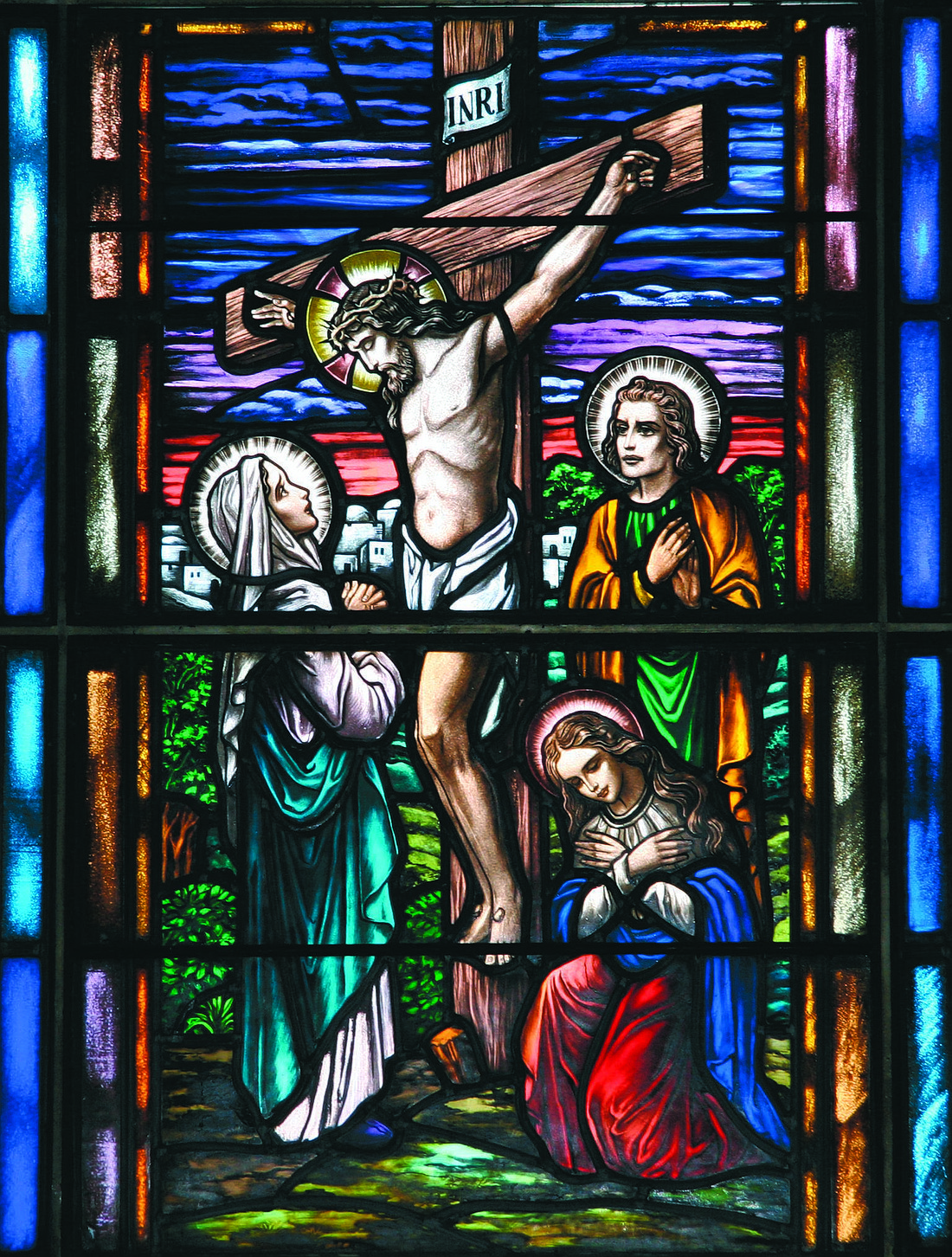
Gospel reflection for May 18, 2025, Fourth Sunday of Easter
It sounds easy enough, Jesus gives a new commandment to his disciples as he speaks with them just hours before his arrest: “love one another.” However, he did place a qualifier on this commandment as his instruction continues: “As I have loved you, so you also should love one another.”
Usually a qualifying instruction makes the burden easier, allowing for exceptions. This is not the case with Jesus, he takes the already challenging commandment to love one another to the level of his own love for his disciples. This should hit us to the very core of our souls as each and every day we are called to live this commandment as sinners in a sinful world.
Often our lives are afflicted with pain. Some of which are our acts of selfishness, greed, hostility, and anger while others are those sins which are inflicted upon us. However, and more often mutual failures in love.
At the core of Catholic theology, we define a failure in love as sin. We do not love God, we do not authentically love ourselves, and therefore we fail completely at loving our neighbor.
While in the English language we use only one word, “love,” to describe our closest relationships, our favorite sports team, and all things in between, the Greeks understood the meaning of love with more precision.
In this Gospel John uses the specific term “agape” to reflect what Jesus said to his disciples at the Last Supper. This means a self-giving and unconditioned outpouring of oneself into another. This is as distinguished from the love that one would have for their spouse, their children, a friend or more casual relationship. Agape is the love that is the imitation of the love that God has for us.
We all want to be loved. We come into the world hopeful of being loved. From the womb we recognize the familiarity of the voice of our mother and infants will naturally turn toward that voice from the earliest moments of their lives. Yet while love is instinctive, in that we are psychologically built for relationship. Yet, we must learn the mechanics of love, and that is where the difficulty arises.
We live in a world afflicted by sin. We see the other -- the stranger -- as an enemy and not a friend. We are more inclined to fear than to calm; to conflict than to peace.
Instead of love of God and love of neighbor, love of self has become the dominant force in our lives. While Jesus does at one point instruct his disciples to “love your neighbor as yourself”, many of us fail to move beyond the self and to see love in the other.
Social media allows us the luxury of self-indulgence and self-gratification in ways unknown to previous generations. While we are “connected” to people more broadly than ever before, we have lost intimacy and connectedness to others in ways which are meaningful. We love only to the extent that we are gratified by that love.
The Readings for this Sunday remind us that love, though often painful, is the core of our humanity. God created us out of love, he created us for love, and he so loved us that he granted us the unimaginable gift of the Incarnation of the Son, in order to show us how to love in concrete ways.
We are called to lay down our lives for one another; to be of service to each other. We serve, not to be served; we love not to be loved. Rather we love because God loves us. We extend that love for the welfare of the other, even when the other doesn’t even realize that they need to be loved or that they are capable of being loved.
This is what Jesus did for us through his Passion, Death and Resurrection. Jesus loved his disciples, even the one who betrayed him.
As we seek the goodness and the welfare of the other it should be a challenge to us, not easy. Love is not focused on what is in it for me, but rather how does this reflect the very love that God has for me, for us here and for all time.
This weekend we will hear the first homily to the world from our new Holy Father, Pope Leo XIV. may his words and his ministry challenge the world to a deeper understanding of God’s love for us, and our commandment to love one another.
We can only change ourselves and the world one moment at a time, but to be true disciples of Jesus, to enter into the Promised Kingdom, we must love one another.
Father Garry Koch is pastor of St. Benedict Parish, Holmdel.
Related Stories
Thursday, January 08, 2026




E-Editions

Events
Gospel reflection for May 18, 2025, Fourth Sunday of Easter
It sounds easy enough, Jesus gives a new commandment to his disciples as he speaks with them just hours before his arrest: “love one another.” However, he did place a qualifier on this commandment as his instruction continues: “As I have loved you, so you also should love one another.”
Usually a qualifying instruction makes the burden easier, allowing for exceptions. This is not the case with Jesus, he takes the already challenging commandment to love one another to the level of his own love for his disciples. This should hit us to the very core of our souls as each and every day we are called to live this commandment as sinners in a sinful world.
Often our lives are afflicted with pain. Some of which are our acts of selfishness, greed, hostility, and anger while others are those sins which are inflicted upon us. However, and more often mutual failures in love.
At the core of Catholic theology, we define a failure in love as sin. We do not love God, we do not authentically love ourselves, and therefore we fail completely at loving our neighbor.
While in the English language we use only one word, “love,” to describe our closest relationships, our favorite sports team, and all things in between, the Greeks understood the meaning of love with more precision.
In this Gospel John uses the specific term “agape” to reflect what Jesus said to his disciples at the Last Supper. This means a self-giving and unconditioned outpouring of oneself into another. This is as distinguished from the love that one would have for their spouse, their children, a friend or more casual relationship. Agape is the love that is the imitation of the love that God has for us.
We all want to be loved. We come into the world hopeful of being loved. From the womb we recognize the familiarity of the voice of our mother and infants will naturally turn toward that voice from the earliest moments of their lives. Yet while love is instinctive, in that we are psychologically built for relationship. Yet, we must learn the mechanics of love, and that is where the difficulty arises.
We live in a world afflicted by sin. We see the other -- the stranger -- as an enemy and not a friend. We are more inclined to fear than to calm; to conflict than to peace.
Instead of love of God and love of neighbor, love of self has become the dominant force in our lives. While Jesus does at one point instruct his disciples to “love your neighbor as yourself”, many of us fail to move beyond the self and to see love in the other.
Social media allows us the luxury of self-indulgence and self-gratification in ways unknown to previous generations. While we are “connected” to people more broadly than ever before, we have lost intimacy and connectedness to others in ways which are meaningful. We love only to the extent that we are gratified by that love.
The Readings for this Sunday remind us that love, though often painful, is the core of our humanity. God created us out of love, he created us for love, and he so loved us that he granted us the unimaginable gift of the Incarnation of the Son, in order to show us how to love in concrete ways.
We are called to lay down our lives for one another; to be of service to each other. We serve, not to be served; we love not to be loved. Rather we love because God loves us. We extend that love for the welfare of the other, even when the other doesn’t even realize that they need to be loved or that they are capable of being loved.
This is what Jesus did for us through his Passion, Death and Resurrection. Jesus loved his disciples, even the one who betrayed him.
As we seek the goodness and the welfare of the other it should be a challenge to us, not easy. Love is not focused on what is in it for me, but rather how does this reflect the very love that God has for me, for us here and for all time.
This weekend we will hear the first homily to the world from our new Holy Father, Pope Leo XIV. may his words and his ministry challenge the world to a deeper understanding of God’s love for us, and our commandment to love one another.
We can only change ourselves and the world one moment at a time, but to be true disciples of Jesus, to enter into the Promised Kingdom, we must love one another.
Father Garry Koch is pastor of St. Benedict Parish, Holmdel.