


Pedestal deserved: Carlo Acutis' digital authenticity
May 1, 2025 at 3:40 p.m.
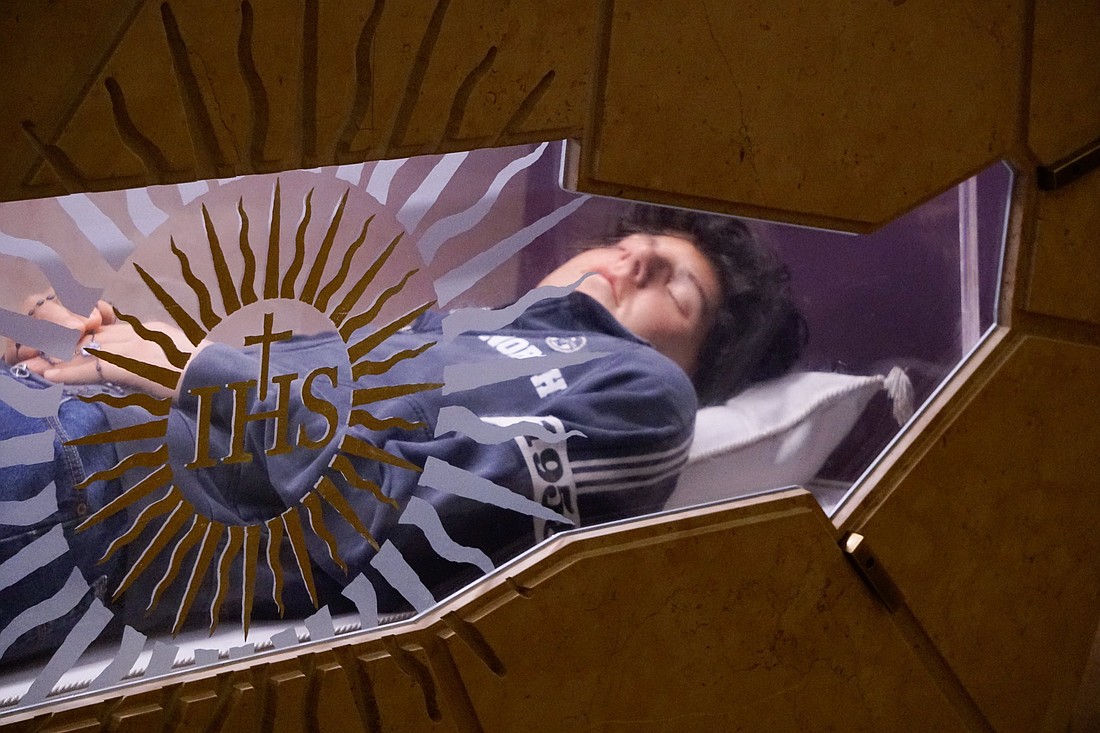
For someone for whom the idea of a celebrity culture putting people on an undeserved pedestal was distasteful, it's a bit ironic that he's been put on a pedestal himself. In the case of soon-to-be-St. Carlo Acutis, however, the pedestal is well deserved.
Due to the death of Pope Francis on April 21, Carlo's canonization, originally scheduled for April 27, has been delayed, and no date has yet been announced. Even so, Blessed Carlo continues to be "God's influencer" for so many young Catholics throughout the world.
Carlo, in some aspects, was a normal teenager like many of his contemporaries. In other ways, he might seem a bit strange to the contemporary world. In her book, "My Son Carlo," Antonia Salzano, Carlo's mother, remarks, "When I compare him to myself as a child and to my childhood friends, he seems like an alien, a boy from another planet!"
Why is it, then, that so many have been inspired by this "alien" kid who died at age 15 in 2006? Because, although he lived in the world, he was not of the world. He exercised digital authenticity and knew how to use the technology of the world to bring people closer to the most important person in the world: Jesus Christ.
Many parents and teachers today bemoan how much time kids today spend on electronic devices. Glued to their screens, the young seem to be so connected but they are also among the loneliest. A new documentary film about Carlo, "Carlo Acutis: Roadmap to Reality," says that Carlo had the antidote to the isolation that many young people feel.
How so? Carlo knew the difference between digital/virtual connection and real connection. He knew that no electronic technology, as good as it can be, can take the place of in-person interaction, first with Christ in the Eucharist, and then with other people.
Having had a love of the Eucharist from an early age, Carlo and his family once visited the Italian town of Lanciano, where a Eucharistic miracle had taken place in the eighth century. When he later told his classmates about the miracle, he noticed how they hung on every word of his story. This made him realize that if more people knew of the Eucharistic miracles, they would be drawn to Jesus.
Thus began the work that Carlo is most famous for: his website chronicling the stories of Eucharistic miracles from all over the world. People found it amazing that, at age 9, Carlo started reading university-level computer coding books, teaching himself coding. Then, he set off on the adventure of building his website, not to become an influencer, but to draw people closer to Christ in the Eucharist
For young people today, Carlo is an example of digital authenticity, being who one truly is, even when interacting through digital technology. He knew the way a person can be drawn into media and be consumed by it, and he refused to let technology overtake him.
Digital authenticity isn't only for the young. It's for all of us who have, at one time or another, realized that we can tend to spend too much time with our devices to the detriment of our relationships. Here are some things Carlo practiced that can also help us to live authenticity even in our digital lives.
-- Discipline and balance. We all need balance in our lives. If our digital lives are out of balance, then our spiritual life will be out of balance as well. An avid gamer, Carlo once read that many kids, especially in the United States, had health problems because of excessive gaming. Therefore, he put limits on himself and his friends when they gamed with him: one hour per week!
-- Responsibility. Take responsibility for the way you use your devices. If you have rules for your children, model those rules yourself. Carlo used technology responsibly, hoping to draw others closer to Christ through his website.
-- Silence and listening. Periods of silence are so important for our mental and spiritual health. It's difficult to find silence in a world with so much noise. Carlo knew how to find the silence he needed, making it a point to go to Mass and spend time -- even if it was just a few minutes on the way to school -- in Eucharistic adoration.
By knowing and practicing digital authenticity, Carlo was able to make real connections with those around him, connections that deepened into relationships without the aid of technology.
He was present to the homeless poor he encountered as he went from place to place in his hometown of Milan, stopping to talk to them and bringing them blankets and sleeping bags. He was present to his friends, family and classmates. Most significantly, he was present to God.
May Carlo Acutis be an inspiration for us to make the same connections and practice digital authenticity in our own lives.
Sister Hosea Rupprecht, a Daughter of St. Paul, is the associate director of the Pauline Center for Media Studies.
The Church needs quality Catholic journalism now more than ever. Please consider supporting this work by signing up for a SUBSCRIPTION (click HERE) or making a DONATION to The Monitor (click HERE). Thank you for your support.
Related Stories
Sunday, December 14, 2025


E-Editions
Events
For someone for whom the idea of a celebrity culture putting people on an undeserved pedestal was distasteful, it's a bit ironic that he's been put on a pedestal himself. In the case of soon-to-be-St. Carlo Acutis, however, the pedestal is well deserved.
Due to the death of Pope Francis on April 21, Carlo's canonization, originally scheduled for April 27, has been delayed, and no date has yet been announced. Even so, Blessed Carlo continues to be "God's influencer" for so many young Catholics throughout the world.
Carlo, in some aspects, was a normal teenager like many of his contemporaries. In other ways, he might seem a bit strange to the contemporary world. In her book, "My Son Carlo," Antonia Salzano, Carlo's mother, remarks, "When I compare him to myself as a child and to my childhood friends, he seems like an alien, a boy from another planet!"
Why is it, then, that so many have been inspired by this "alien" kid who died at age 15 in 2006? Because, although he lived in the world, he was not of the world. He exercised digital authenticity and knew how to use the technology of the world to bring people closer to the most important person in the world: Jesus Christ.
Many parents and teachers today bemoan how much time kids today spend on electronic devices. Glued to their screens, the young seem to be so connected but they are also among the loneliest. A new documentary film about Carlo, "Carlo Acutis: Roadmap to Reality," says that Carlo had the antidote to the isolation that many young people feel.
How so? Carlo knew the difference between digital/virtual connection and real connection. He knew that no electronic technology, as good as it can be, can take the place of in-person interaction, first with Christ in the Eucharist, and then with other people.
Having had a love of the Eucharist from an early age, Carlo and his family once visited the Italian town of Lanciano, where a Eucharistic miracle had taken place in the eighth century. When he later told his classmates about the miracle, he noticed how they hung on every word of his story. This made him realize that if more people knew of the Eucharistic miracles, they would be drawn to Jesus.
Thus began the work that Carlo is most famous for: his website chronicling the stories of Eucharistic miracles from all over the world. People found it amazing that, at age 9, Carlo started reading university-level computer coding books, teaching himself coding. Then, he set off on the adventure of building his website, not to become an influencer, but to draw people closer to Christ in the Eucharist
For young people today, Carlo is an example of digital authenticity, being who one truly is, even when interacting through digital technology. He knew the way a person can be drawn into media and be consumed by it, and he refused to let technology overtake him.
Digital authenticity isn't only for the young. It's for all of us who have, at one time or another, realized that we can tend to spend too much time with our devices to the detriment of our relationships. Here are some things Carlo practiced that can also help us to live authenticity even in our digital lives.
-- Discipline and balance. We all need balance in our lives. If our digital lives are out of balance, then our spiritual life will be out of balance as well. An avid gamer, Carlo once read that many kids, especially in the United States, had health problems because of excessive gaming. Therefore, he put limits on himself and his friends when they gamed with him: one hour per week!
-- Responsibility. Take responsibility for the way you use your devices. If you have rules for your children, model those rules yourself. Carlo used technology responsibly, hoping to draw others closer to Christ through his website.
-- Silence and listening. Periods of silence are so important for our mental and spiritual health. It's difficult to find silence in a world with so much noise. Carlo knew how to find the silence he needed, making it a point to go to Mass and spend time -- even if it was just a few minutes on the way to school -- in Eucharistic adoration.
By knowing and practicing digital authenticity, Carlo was able to make real connections with those around him, connections that deepened into relationships without the aid of technology.
He was present to the homeless poor he encountered as he went from place to place in his hometown of Milan, stopping to talk to them and bringing them blankets and sleeping bags. He was present to his friends, family and classmates. Most significantly, he was present to God.
May Carlo Acutis be an inspiration for us to make the same connections and practice digital authenticity in our own lives.
Sister Hosea Rupprecht, a Daughter of St. Paul, is the associate director of the Pauline Center for Media Studies.
The Church needs quality Catholic journalism now more than ever. Please consider supporting this work by signing up for a SUBSCRIPTION (click HERE) or making a DONATION to The Monitor (click HERE). Thank you for your support.