


Father Koch: The Apostles Peter and Paul are the pillars of the Church
June 27, 2025 at 10:28 a.m.
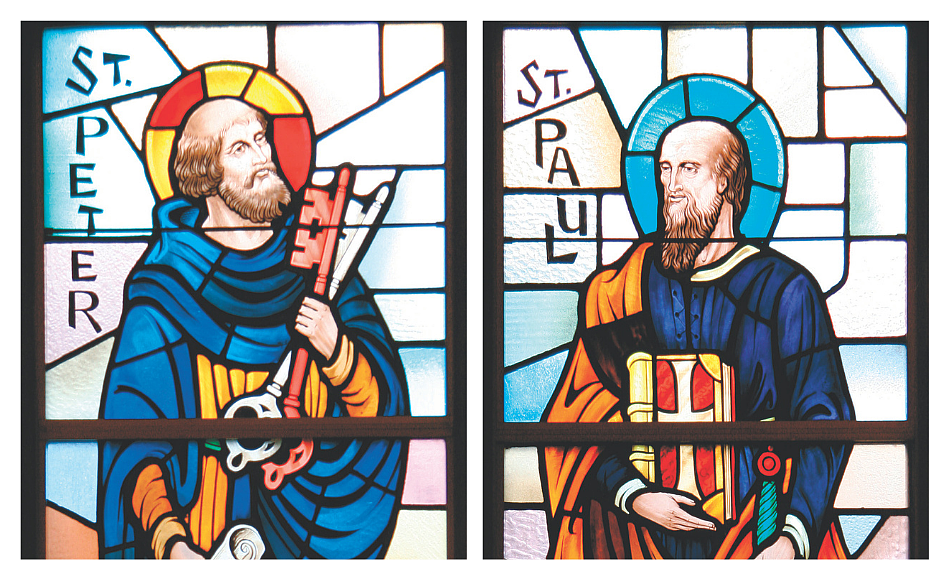
Gospel reflection for June 29, 2025, Solemnity of Sts. Peter & Paul
At the beginning of his papacy Pope Leo XIV made a pilgrimage to the Basilica of Saint Paul outside the Walls, where he prayed before the tomb of St. Paul the Apostle. On the day of his installation as the Successor of Saint Peter, the Holy Father was accompanied by the Patriarchs of the Catholic East as he prayed before the tomb of St. Peter before he processed from the Basilica to celebrate Mass, receive the fisherman’s ring, and be invested with the pallium.
In this way, Pope Leo, like his predecessors, showed the depth of his connection to the two apostles of Rome: Saints Peter and Paul.
Each of them was martyred during the persecutions of Christians under Caesar Nero in the aftermath of the great fire of Rome in AD 64. From the earliest days the Church remembered their martyrdom and the early Christians carefully laid them to rest, marked the locations of their tombs, which became pilgrimage sites and places of prayer.
Archaeological research demonstrates that the remains in those sepulchers are very likely of Peter and Paul as the DNA reflects the right age, and heritage of both men.
During the Mass the pope received the pallium -- an ancient vestment worn by residential archbishops -- signifying their connection to the suffering of Jesus and the Roman martyrs. The pallium is blessed and is then laid upon the tomb of St. Peter to demonstrate their connection with him. It is a powerful symbol of continuity with the apostles and the unity of the archbishops with the suffering Church throughout the world. Today, Pope Leo will invest with the pallium those resident archbishops who have been appointed over the past year.
The Second Reading in the Office of Readings for today is a reflection given by St. Augustine for this feast day. This is important not only for his insight but also as we recognize the ancient practice of observing this day in the liturgy. St. Augustine wrote: “There is one day for the passion of two apostles. But these two also were as one; although they suffered on different days, they were as one. Peter went first, Paul followed. We are celebrating a feast day, consecrated for us by the blood of the apostles. Let us love their faith, their lives, their labors, their sufferings, their confession of faith, their preaching.”
Through Peter and Paul the Church finds her universality. While both Jews, Peter carried out his mission among the Jews of the first century diaspora while Paul focused primarily on the Gentiles. Bringing together these two disparate groups of people, with broadly differing religious and cultural world views, into one community of faith, built upon the passion, death, and resurrection of Jesus Christ, was no small feat. Of course they were not alone in their mission. Each of them was accompanied by coworkers in the Lord; the other apostles moved throughout the known world of the time to preach and to be martyred as well and; still others took up the task of spreading the word. Yet is it always to Peter and Paul that the Church looks for signs of unity and inspiration in her mission in the world.
The universality of the Church is in direct response to the call of Jesus to preach the Gospel to the ends of the earth and as exemplified in the lives of these two men who responded in differing ways, yet with the totality of their lives to the call of Jesus. Peter and Paul each suffered the cruelty of martyrdom in the city of Rome, and magnificent Churches stand over the burial sites of each of them.
We are also reminded of the on-going persecution of the Church in so many corners of the world, even in our own nation. Red martyrdom is not the memory of a distant past but the tragic experience of tens of thousands of people per year, especially now in parts of Africa. We cannot remain silent in the face of persecution, while yet recognizing that it is indeed the consequence of living faithfully the Gospel of Christ.
The solemnity of the Saints Peter and Paul reminds the Church of its universality, celebrates its great diversity, keeps us aware of the suffering of martyrs throughout the world, and calls us to be on, as the Father and the Son are one.
Father Garry Koch is pastor of St. Benedict Parish, Holmdel.
Related Stories
Sunday, December 14, 2025
E-Editions
Events
Gospel reflection for June 29, 2025, Solemnity of Sts. Peter & Paul
At the beginning of his papacy Pope Leo XIV made a pilgrimage to the Basilica of Saint Paul outside the Walls, where he prayed before the tomb of St. Paul the Apostle. On the day of his installation as the Successor of Saint Peter, the Holy Father was accompanied by the Patriarchs of the Catholic East as he prayed before the tomb of St. Peter before he processed from the Basilica to celebrate Mass, receive the fisherman’s ring, and be invested with the pallium.
In this way, Pope Leo, like his predecessors, showed the depth of his connection to the two apostles of Rome: Saints Peter and Paul.
Each of them was martyred during the persecutions of Christians under Caesar Nero in the aftermath of the great fire of Rome in AD 64. From the earliest days the Church remembered their martyrdom and the early Christians carefully laid them to rest, marked the locations of their tombs, which became pilgrimage sites and places of prayer.
Archaeological research demonstrates that the remains in those sepulchers are very likely of Peter and Paul as the DNA reflects the right age, and heritage of both men.
During the Mass the pope received the pallium -- an ancient vestment worn by residential archbishops -- signifying their connection to the suffering of Jesus and the Roman martyrs. The pallium is blessed and is then laid upon the tomb of St. Peter to demonstrate their connection with him. It is a powerful symbol of continuity with the apostles and the unity of the archbishops with the suffering Church throughout the world. Today, Pope Leo will invest with the pallium those resident archbishops who have been appointed over the past year.
The Second Reading in the Office of Readings for today is a reflection given by St. Augustine for this feast day. This is important not only for his insight but also as we recognize the ancient practice of observing this day in the liturgy. St. Augustine wrote: “There is one day for the passion of two apostles. But these two also were as one; although they suffered on different days, they were as one. Peter went first, Paul followed. We are celebrating a feast day, consecrated for us by the blood of the apostles. Let us love their faith, their lives, their labors, their sufferings, their confession of faith, their preaching.”
Through Peter and Paul the Church finds her universality. While both Jews, Peter carried out his mission among the Jews of the first century diaspora while Paul focused primarily on the Gentiles. Bringing together these two disparate groups of people, with broadly differing religious and cultural world views, into one community of faith, built upon the passion, death, and resurrection of Jesus Christ, was no small feat. Of course they were not alone in their mission. Each of them was accompanied by coworkers in the Lord; the other apostles moved throughout the known world of the time to preach and to be martyred as well and; still others took up the task of spreading the word. Yet is it always to Peter and Paul that the Church looks for signs of unity and inspiration in her mission in the world.
The universality of the Church is in direct response to the call of Jesus to preach the Gospel to the ends of the earth and as exemplified in the lives of these two men who responded in differing ways, yet with the totality of their lives to the call of Jesus. Peter and Paul each suffered the cruelty of martyrdom in the city of Rome, and magnificent Churches stand over the burial sites of each of them.
We are also reminded of the on-going persecution of the Church in so many corners of the world, even in our own nation. Red martyrdom is not the memory of a distant past but the tragic experience of tens of thousands of people per year, especially now in parts of Africa. We cannot remain silent in the face of persecution, while yet recognizing that it is indeed the consequence of living faithfully the Gospel of Christ.
The solemnity of the Saints Peter and Paul reminds the Church of its universality, celebrates its great diversity, keeps us aware of the suffering of martyrs throughout the world, and calls us to be on, as the Father and the Son are one.
Father Garry Koch is pastor of St. Benedict Parish, Holmdel.