


As annual NATO summit emphasizes military readiness, local church leaders call for peace
June 27, 2025 at 10:54 a.m.
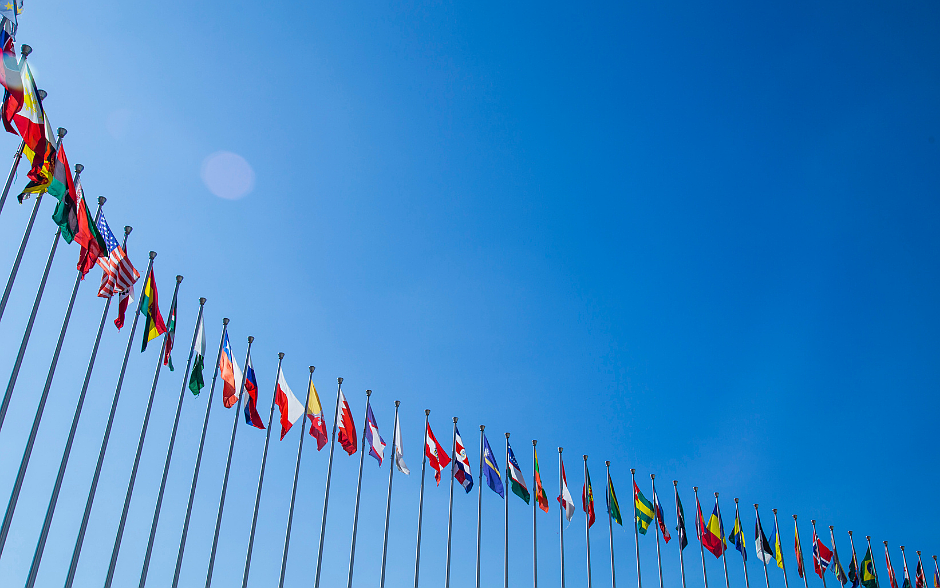
'S-HERTOGENBOSCH, Netherlands OSV News – While the NATO summit in the Netherlands focused on military preparedness, Christian voices in the country are advocating for peace and justice in a biblical sense, calling on people to pray for peace and aid for victims in the days surrounding the summit.
"If you direct your prayer to all victims of war, you are always on the right track," a Dutch bishop emphasized.
The June 24-25 NATO summit – dubbed as "transformational" and "historic" and during which 32 members of the world's biggest security organization endorsed a plan to massively ramp up defense spending – prompted the Dutch Council of Churches to say that it is "shortsighted to think that military force alone can enforce peace, if it is not accompanied by justice in the biblical sense, which also includes care for the well-being of the weakest brothers and sisters."
The council said that "Europe's defense should serve the promotion of this peace and justice," pointing out that wars are rarely simple and calling for attention to peace and justice.
Bishop Gerard de Korte of 's-Hertogenbosch and spokesman on social and political issues on behalf of the Dutch bishops' conference emphasized that "wars and civil conflicts are often deeply rooted in injustice."
Speaking to the Dutch Catholic weekly Katholiek Nieuwsblad, he pointed out that many wars are rooted in people's daily lives, and are driven by poverty and injustice, which is precisely why following Christ can have such a profound impact. "That discipleship takes place on a micro level," Bishop de Korte explained. "How do you, for example, deal with anger? Jesus shows the way in the Sermon on the Mount with his call to turn the other cheek and to pray for your enemies."
The Christian tradition – through thinkers like St. Augustine and St. Thomas Aquinas – developed the doctrine of just war, Bishop de Korte pointed out, adding it is clear that with today's wars: "None of the current wars can be considered just. This has everything to do with one of the core criteria of a just war: a clear distinction must be made between soldiers and civilians."
"Today, civilians are deliberately targeted to break the morale of the population. We see this in Russia and Ukraine, in Israel and Gaza, and more recently in the renewed conflict between Iran and Israel."
So what role do faith communities, Christianity and specifically the Catholic Church play in this unjust and hopeless situation? Asked about it, Bishop de Korte offered both a realistic and hopeful perspective: "Religions can be gentle forces and serve as countervoices against the violent."
He said: "Today's Catholicism can fulfill its role as a gentle force through nonviolence, with the pope as a moral leader."
Bishop de Korte experienced a powerful example of what this looks like in practice on the feast of the Ascension May 29. In his diocesan seat, 's-Hertogenbosch, a town in the south of Netherlands, a special service for Ukrainians was held in the local cathedral.
People gathered for the service said a prayer not only for Ukrainian victims but also for Russian victims – which, the bishop said, left a deep impression on participants. "By praying for Russian victims, enmity was broken. Russian families also mourn their lost loved ones."
The war was tangibly present through amputated limbs and burned faces, the bishop shared. "It hit me hard. That's when you see how horrific war is. Any romanticism about war is utter foolishness. (War) brings only death, destruction, sorrow and the creation of hatred."
This underscores the need to continue praying for peace, especially during the NATO summit, Dutch bishops said. Throughout the week in which the NATO summit took place, from June 22 to June 29, local church leaders urged Catholics to pray for peace, preparing a special prayer for each day of the week.
"It's crucial to realize that no matter who you are, as a human being, you have one Creator. Any religion that believes in a Creator has the basis to continue recognizing our shared humanity. If you stop doing that and begin to dehumanize others, then extermination becomes possible," Bishop de Korte said.
Overwhelmed with violence in the world, "we may rightly ask where God is in all of this," the bishop said, "but we should also ask where humanity is. Humans are responsible for the violence. At the same time, we are called, by our conscience, to seek peace."
Bishop de Korte finds inspiration in the life attitude of St. Titus Brandsma, a Dutch Carmelite who died in a concentration camp after torture and humiliation by Nazi guards. "He always continued speaking with them because he knew they were gripped by a terrible ideology. But they remained God's creatures: 'Despite all our differences, we all have one Father.'"
Meanwhile, NATO leaders reaffirmed their "ironclad commitment" to Article 5, NATO's collective defense clause, including President Donald Trump, who expressed reluctance in recent months toward the alliance's promise that any member, including the U.S., would come to the aid of any ally under attack.
Trump told reporters: "I left there saying that these people really love their countries. It's not a ripoff. And we're here to help them protect their country."
Elsa Eikema is a staff writer for Katholiek Nieuwsblad, Dutch Catholic media outlet.
Please consider supporting this work by signing up for a SUBSCRIPTION (click HERE) or making a DONATION to The Monitor (click HERE). Thank you for your support.
Related Stories
Sunday, December 14, 2025

E-Editions
Events
'S-HERTOGENBOSCH, Netherlands OSV News – While the NATO summit in the Netherlands focused on military preparedness, Christian voices in the country are advocating for peace and justice in a biblical sense, calling on people to pray for peace and aid for victims in the days surrounding the summit.
"If you direct your prayer to all victims of war, you are always on the right track," a Dutch bishop emphasized.
The June 24-25 NATO summit – dubbed as "transformational" and "historic" and during which 32 members of the world's biggest security organization endorsed a plan to massively ramp up defense spending – prompted the Dutch Council of Churches to say that it is "shortsighted to think that military force alone can enforce peace, if it is not accompanied by justice in the biblical sense, which also includes care for the well-being of the weakest brothers and sisters."
The council said that "Europe's defense should serve the promotion of this peace and justice," pointing out that wars are rarely simple and calling for attention to peace and justice.
Bishop Gerard de Korte of 's-Hertogenbosch and spokesman on social and political issues on behalf of the Dutch bishops' conference emphasized that "wars and civil conflicts are often deeply rooted in injustice."
Speaking to the Dutch Catholic weekly Katholiek Nieuwsblad, he pointed out that many wars are rooted in people's daily lives, and are driven by poverty and injustice, which is precisely why following Christ can have such a profound impact. "That discipleship takes place on a micro level," Bishop de Korte explained. "How do you, for example, deal with anger? Jesus shows the way in the Sermon on the Mount with his call to turn the other cheek and to pray for your enemies."
The Christian tradition – through thinkers like St. Augustine and St. Thomas Aquinas – developed the doctrine of just war, Bishop de Korte pointed out, adding it is clear that with today's wars: "None of the current wars can be considered just. This has everything to do with one of the core criteria of a just war: a clear distinction must be made between soldiers and civilians."
"Today, civilians are deliberately targeted to break the morale of the population. We see this in Russia and Ukraine, in Israel and Gaza, and more recently in the renewed conflict between Iran and Israel."
So what role do faith communities, Christianity and specifically the Catholic Church play in this unjust and hopeless situation? Asked about it, Bishop de Korte offered both a realistic and hopeful perspective: "Religions can be gentle forces and serve as countervoices against the violent."
He said: "Today's Catholicism can fulfill its role as a gentle force through nonviolence, with the pope as a moral leader."
Bishop de Korte experienced a powerful example of what this looks like in practice on the feast of the Ascension May 29. In his diocesan seat, 's-Hertogenbosch, a town in the south of Netherlands, a special service for Ukrainians was held in the local cathedral.
People gathered for the service said a prayer not only for Ukrainian victims but also for Russian victims – which, the bishop said, left a deep impression on participants. "By praying for Russian victims, enmity was broken. Russian families also mourn their lost loved ones."
The war was tangibly present through amputated limbs and burned faces, the bishop shared. "It hit me hard. That's when you see how horrific war is. Any romanticism about war is utter foolishness. (War) brings only death, destruction, sorrow and the creation of hatred."
This underscores the need to continue praying for peace, especially during the NATO summit, Dutch bishops said. Throughout the week in which the NATO summit took place, from June 22 to June 29, local church leaders urged Catholics to pray for peace, preparing a special prayer for each day of the week.
"It's crucial to realize that no matter who you are, as a human being, you have one Creator. Any religion that believes in a Creator has the basis to continue recognizing our shared humanity. If you stop doing that and begin to dehumanize others, then extermination becomes possible," Bishop de Korte said.
Overwhelmed with violence in the world, "we may rightly ask where God is in all of this," the bishop said, "but we should also ask where humanity is. Humans are responsible for the violence. At the same time, we are called, by our conscience, to seek peace."
Bishop de Korte finds inspiration in the life attitude of St. Titus Brandsma, a Dutch Carmelite who died in a concentration camp after torture and humiliation by Nazi guards. "He always continued speaking with them because he knew they were gripped by a terrible ideology. But they remained God's creatures: 'Despite all our differences, we all have one Father.'"
Meanwhile, NATO leaders reaffirmed their "ironclad commitment" to Article 5, NATO's collective defense clause, including President Donald Trump, who expressed reluctance in recent months toward the alliance's promise that any member, including the U.S., would come to the aid of any ally under attack.
Trump told reporters: "I left there saying that these people really love their countries. It's not a ripoff. And we're here to help them protect their country."
Elsa Eikema is a staff writer for Katholiek Nieuwsblad, Dutch Catholic media outlet.
Please consider supporting this work by signing up for a SUBSCRIPTION (click HERE) or making a DONATION to The Monitor (click HERE). Thank you for your support.