


Jesus invites Christians to overcome despair, Pope says
June 18, 2025 at 12:38 p.m.
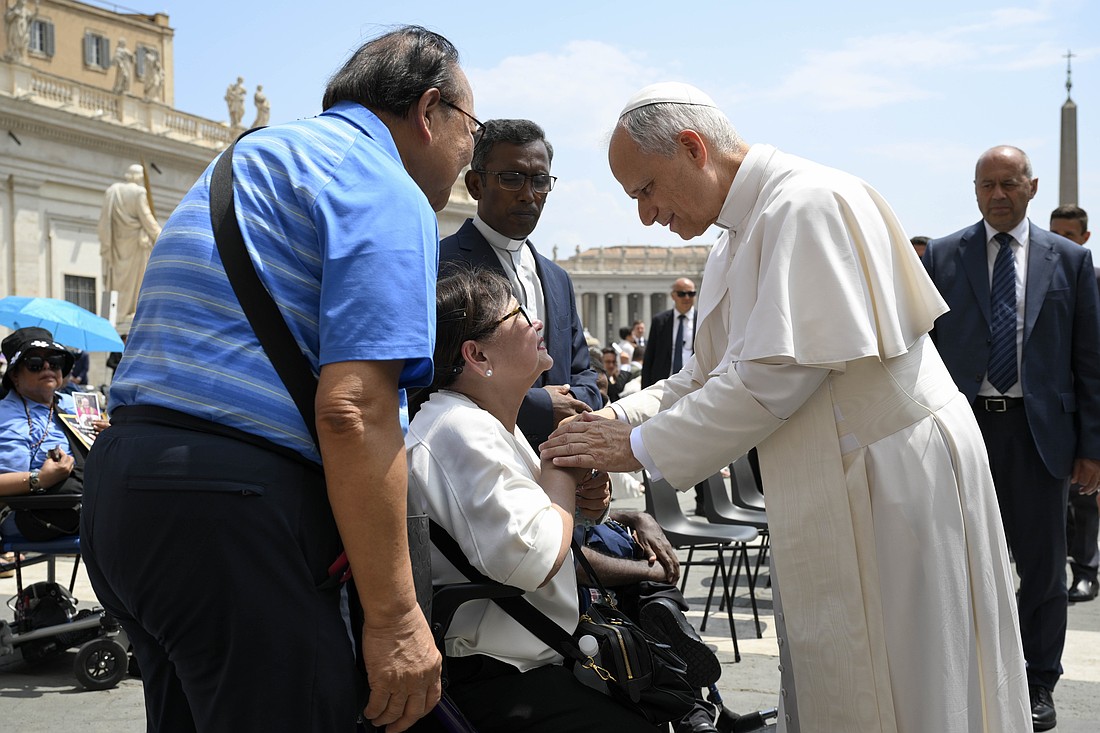
VATICAN CITY CNS – When hope seems long gone, Christians can turn to Jesus to overcome being resigned to despair and regain the desire to be healed, Pope Leo XIV said.
"Sometimes we feel blocked, stuck in a dead end, and it seems pointless to hope," the Pope told thousands of pilgrims gathered in a sun-drenched St. Peter's Square for his general audience June 18. "This condition is described in the Gospels through the image of paralysis."
The Pope centered his catechesis on the account in St. John's Gospel of Jesus healing a man who had been paralyzed for 38 years. Rather than going directly to the Temple in Jerusalem, Jesus visits the pool where the sick and suffering gathered, many of whom were excluded from temple worship for being ritually impure.
"Jesus goes to them himself," Pope Leo said, "meeting them in their pain."
The Pope said the pool of Bethesda, which means "house of mercy" in Hebrew, is an image of the Church "where the sick and poor gather and where the Lord comes to heal and give hope."
Focusing on the paralyzed man's condition, the Pope noted how disappointment and resignation can paralyze the human spirit. "When one is stuck for so many years, he or she can lose even the will to be healed," he said.
However, "Jesus sends this man back to his truest and deepest desire," the Pope said.
Jesus asked the paralytic: "Do you want to be healed?" the Pope noted. Though Jesus' question may seem "superfluous," it is essential, since "we sometimes prefer to remain in the sick condition, forcing others to take care of us," he said. Such resignation "is also sometimes an excuse for not deciding what to do with our lives."
In the Gospel account, the paralyzed man blames others for not helping him into the healing waters – a mindset Pope Leo warned against. Quoting St. Augustine, he said the man needed "a man who was also God" to truly be healed. "That man who was needed came; why delay the healing any longer?" the Pope said.
Pope Leo used the Gospel account to challenge fatalistic attitudes that view life as a matter of luck or misfortune. "Jesus helps the man understand that his life is also in his own hands," he said. When Jesus commands him to get up, pick up his mat and walk, it signals a call to take responsibility and move forward with purpose.
The mat, the Pope added, symbolizes the man's past suffering which "should not be left behind or thrown away." Although it had blocked the man's life before, "now it is he who can pick up that stretcher and take it wherever he wishes; he can decide what to do with his history."
Pope Leo urged the pilgrims gathered in the square to "ask the Lord for the gift of understanding where our lives are stuck" and to "try to voice our desire for healing."
"And let us pray for all those who feel paralyzed, who see no way out," he said. "Let us ask to return to dwell in the heart of Christ, which is the true home of mercy!"
The Church needs quality Catholic journalism now more than ever. Please consider supporting this work by signing up for a SUBSCRIPTION (click HERE) or making a DONATION to The Monitor (click HERE). Thank you for your support.
Related Stories
Sunday, December 14, 2025


E-Editions
Events
VATICAN CITY CNS – When hope seems long gone, Christians can turn to Jesus to overcome being resigned to despair and regain the desire to be healed, Pope Leo XIV said.
"Sometimes we feel blocked, stuck in a dead end, and it seems pointless to hope," the Pope told thousands of pilgrims gathered in a sun-drenched St. Peter's Square for his general audience June 18. "This condition is described in the Gospels through the image of paralysis."
The Pope centered his catechesis on the account in St. John's Gospel of Jesus healing a man who had been paralyzed for 38 years. Rather than going directly to the Temple in Jerusalem, Jesus visits the pool where the sick and suffering gathered, many of whom were excluded from temple worship for being ritually impure.
"Jesus goes to them himself," Pope Leo said, "meeting them in their pain."
The Pope said the pool of Bethesda, which means "house of mercy" in Hebrew, is an image of the Church "where the sick and poor gather and where the Lord comes to heal and give hope."
Focusing on the paralyzed man's condition, the Pope noted how disappointment and resignation can paralyze the human spirit. "When one is stuck for so many years, he or she can lose even the will to be healed," he said.
However, "Jesus sends this man back to his truest and deepest desire," the Pope said.
Jesus asked the paralytic: "Do you want to be healed?" the Pope noted. Though Jesus' question may seem "superfluous," it is essential, since "we sometimes prefer to remain in the sick condition, forcing others to take care of us," he said. Such resignation "is also sometimes an excuse for not deciding what to do with our lives."
In the Gospel account, the paralyzed man blames others for not helping him into the healing waters – a mindset Pope Leo warned against. Quoting St. Augustine, he said the man needed "a man who was also God" to truly be healed. "That man who was needed came; why delay the healing any longer?" the Pope said.
Pope Leo used the Gospel account to challenge fatalistic attitudes that view life as a matter of luck or misfortune. "Jesus helps the man understand that his life is also in his own hands," he said. When Jesus commands him to get up, pick up his mat and walk, it signals a call to take responsibility and move forward with purpose.
The mat, the Pope added, symbolizes the man's past suffering which "should not be left behind or thrown away." Although it had blocked the man's life before, "now it is he who can pick up that stretcher and take it wherever he wishes; he can decide what to do with his history."
Pope Leo urged the pilgrims gathered in the square to "ask the Lord for the gift of understanding where our lives are stuck" and to "try to voice our desire for healing."
"And let us pray for all those who feel paralyzed, who see no way out," he said. "Let us ask to return to dwell in the heart of Christ, which is the true home of mercy!"
The Church needs quality Catholic journalism now more than ever. Please consider supporting this work by signing up for a SUBSCRIPTION (click HERE) or making a DONATION to The Monitor (click HERE). Thank you for your support.