


'Humanitarian corridors' offer safe, legal pathways for refugees
June 18, 2025 at 12:34 p.m.
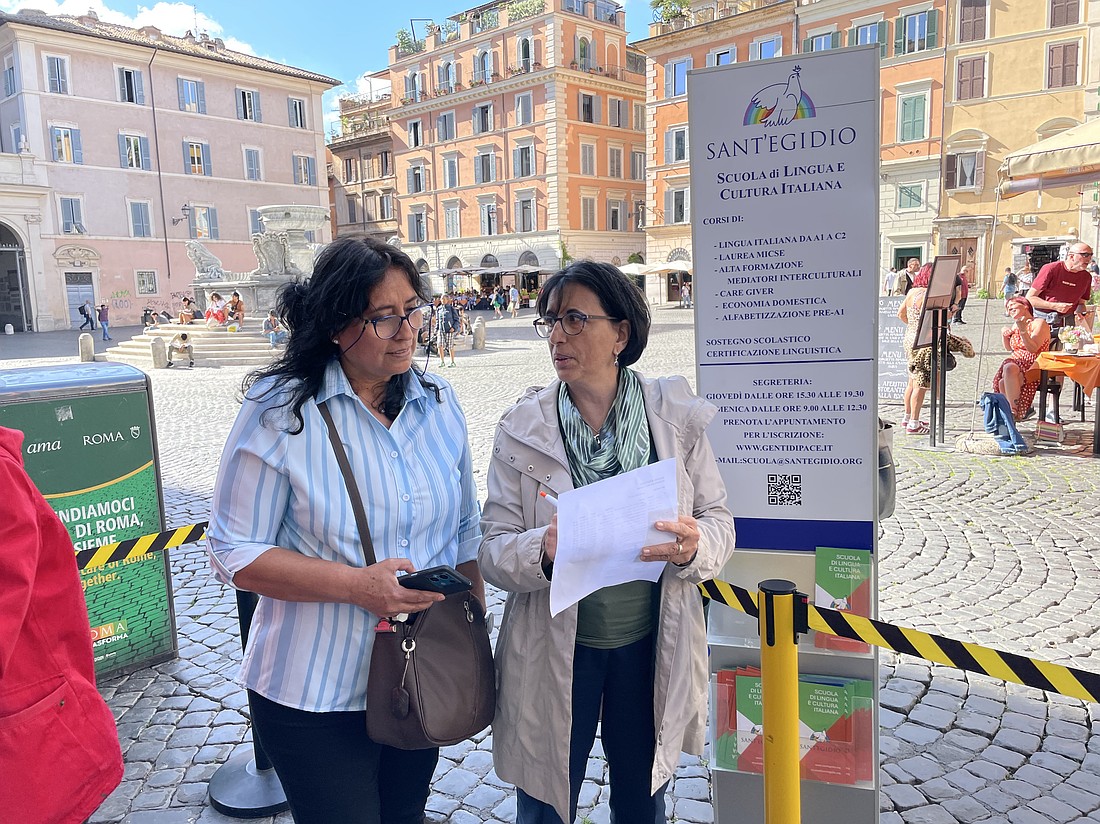
ROME CNS – Convinced that vulnerable migrants and refugees needed safe, legal pathways to a better life, Christian groups in Italy entered an agreement with the Italian government to open "humanitarian corridors."
"For the past 10 years, we have faced the problem of illegal migration and the terrible deaths of thousands during the perilous journey" across the Mediterranean Sea, said Cecilia Pani, who coordinates the Community of Sant'Egidio's part of the project for refugees coming from camps in Ethiopia.
The community, along with Caritas, the Italian bishops' conference, the Federation of Evangelical Churches in Italy and the Waldensian Board signed a memorandum of understanding with the Italian government in December 2015 to identify, contact and help vet refugees. The groups then cover the costs of bringing the approved asylum seekers to Italy and providing them with the housing and support they need to successfully build a new life.
More than 5,600 people have arrived in Italy through the program in the past 10 years. The Sant'Egidio Community works with about 400 of them in Rome, Pani told Catholic News Service in an interview in anticipation of the U.N. celebration of World Refugee Day June 20.
"Some have become independent and help to support others. Some have found jobs, but have difficulty locating housing, so they are now in temporary shelters or live together. Others also bought apartments," she said.
One Eritrean man, sick with a blood disease, walked with difficulty after his arduous journey through the north African desert and across the sea, arriving at Sant'Egidio seeking help.
Pani, seeing that the destitute man was extremely sick, managed to locate his wife and 6-year-old daughter, and helped them come to Italy by way of the humanitarian corridor program. A story of redemption began to unfold for the family.
"They lived together for two years in one room in a group house. The wife found a job. Later, she became pregnant, and the man eventually was completely healed due to the medical treatment he received," Pani said.
"A congregation of nuns in Rome later approached Sant'Egidio requesting a woman to help take care of their building and offered a small apartment inside the space for the family to live and raise their children," Pani said. "There are many such amazing stories."
Ali, one of Sant'Egidio's intercultural mediators has his own tale of redemption.
An Afghan, who grew up in Iran after his family fled during the Soviet-Afghan War (1979-1989), found he was unable to pursue further studies in the Islamic Republic because he was a refugee. That, despite attending a school for gifted students. He also knew he could never get a job, or secure other rights enjoyed by Iranian citizens.
After traveling to Turkey, Greece and spending four years in Norway, he arrived in Italy in 2016, where he applied for asylum. All along, Ali was never able to obtain his needed identity documents.
"After one year, I received protection in Italy. I got my documents," he said. "At the age of 30, I finally got my identity documents, and I bought a SIM card by my name."
"I remember this so well because until that moment, I had no legal identity. It was a big shock for me and the biggest celebration of my life," he told CNS.
Ali then learned about the community of Sant'Egidio. "Slowly I got to know people and the spirit of the community, and I worked as a volunteer," he said.
He later completed a university degree in intercultural mediation and became a mediator and counselor and has worked at Sant'Egidio for the past six years.
"My personal insights and understanding are now being used to help refugees coming from Afghanistan, Pakistan, Iran, Greece and Cyprus," Ali said. "I'm also working directly on Sant'Egidio's humanitarian corridor project."
The Church needs quality Catholic journalism now more than ever. Please consider supporting this work by signing up for a SUBSCRIPTION (click HERE) or making a DONATION to The Monitor (click HERE). Thank you for your support.
 Faith-based refugee centers in Rome provide a lifeline to newcomers
Sunday, December 14, 2025

E-Editions
Events
ROME CNS – Convinced that vulnerable migrants and refugees needed safe, legal pathways to a better life, Christian groups in Italy entered an agreement with the Italian government to open "humanitarian corridors."
"For the past 10 years, we have faced the problem of illegal migration and the terrible deaths of thousands during the perilous journey" across the Mediterranean Sea, said Cecilia Pani, who coordinates the Community of Sant'Egidio's part of the project for refugees coming from camps in Ethiopia.
The community, along with Caritas, the Italian bishops' conference, the Federation of Evangelical Churches in Italy and the Waldensian Board signed a memorandum of understanding with the Italian government in December 2015 to identify, contact and help vet refugees. The groups then cover the costs of bringing the approved asylum seekers to Italy and providing them with the housing and support they need to successfully build a new life.
More than 5,600 people have arrived in Italy through the program in the past 10 years. The Sant'Egidio Community works with about 400 of them in Rome, Pani told Catholic News Service in an interview in anticipation of the U.N. celebration of World Refugee Day June 20.
"Some have become independent and help to support others. Some have found jobs, but have difficulty locating housing, so they are now in temporary shelters or live together. Others also bought apartments," she said.
One Eritrean man, sick with a blood disease, walked with difficulty after his arduous journey through the north African desert and across the sea, arriving at Sant'Egidio seeking help.
Pani, seeing that the destitute man was extremely sick, managed to locate his wife and 6-year-old daughter, and helped them come to Italy by way of the humanitarian corridor program. A story of redemption began to unfold for the family.
"They lived together for two years in one room in a group house. The wife found a job. Later, she became pregnant, and the man eventually was completely healed due to the medical treatment he received," Pani said.
"A congregation of nuns in Rome later approached Sant'Egidio requesting a woman to help take care of their building and offered a small apartment inside the space for the family to live and raise their children," Pani said. "There are many such amazing stories."
Ali, one of Sant'Egidio's intercultural mediators has his own tale of redemption.
An Afghan, who grew up in Iran after his family fled during the Soviet-Afghan War (1979-1989), found he was unable to pursue further studies in the Islamic Republic because he was a refugee. That, despite attending a school for gifted students. He also knew he could never get a job, or secure other rights enjoyed by Iranian citizens.
After traveling to Turkey, Greece and spending four years in Norway, he arrived in Italy in 2016, where he applied for asylum. All along, Ali was never able to obtain his needed identity documents.
"After one year, I received protection in Italy. I got my documents," he said. "At the age of 30, I finally got my identity documents, and I bought a SIM card by my name."
"I remember this so well because until that moment, I had no legal identity. It was a big shock for me and the biggest celebration of my life," he told CNS.
Ali then learned about the community of Sant'Egidio. "Slowly I got to know people and the spirit of the community, and I worked as a volunteer," he said.
He later completed a university degree in intercultural mediation and became a mediator and counselor and has worked at Sant'Egidio for the past six years.
"My personal insights and understanding are now being used to help refugees coming from Afghanistan, Pakistan, Iran, Greece and Cyprus," Ali said. "I'm also working directly on Sant'Egidio's humanitarian corridor project."
The Church needs quality Catholic journalism now more than ever. Please consider supporting this work by signing up for a SUBSCRIPTION (click HERE) or making a DONATION to The Monitor (click HERE). Thank you for your support.