


Father Koch: God is made known as Father, Son and Holy Spirit
June 13, 2025 at 8:00 a.m.
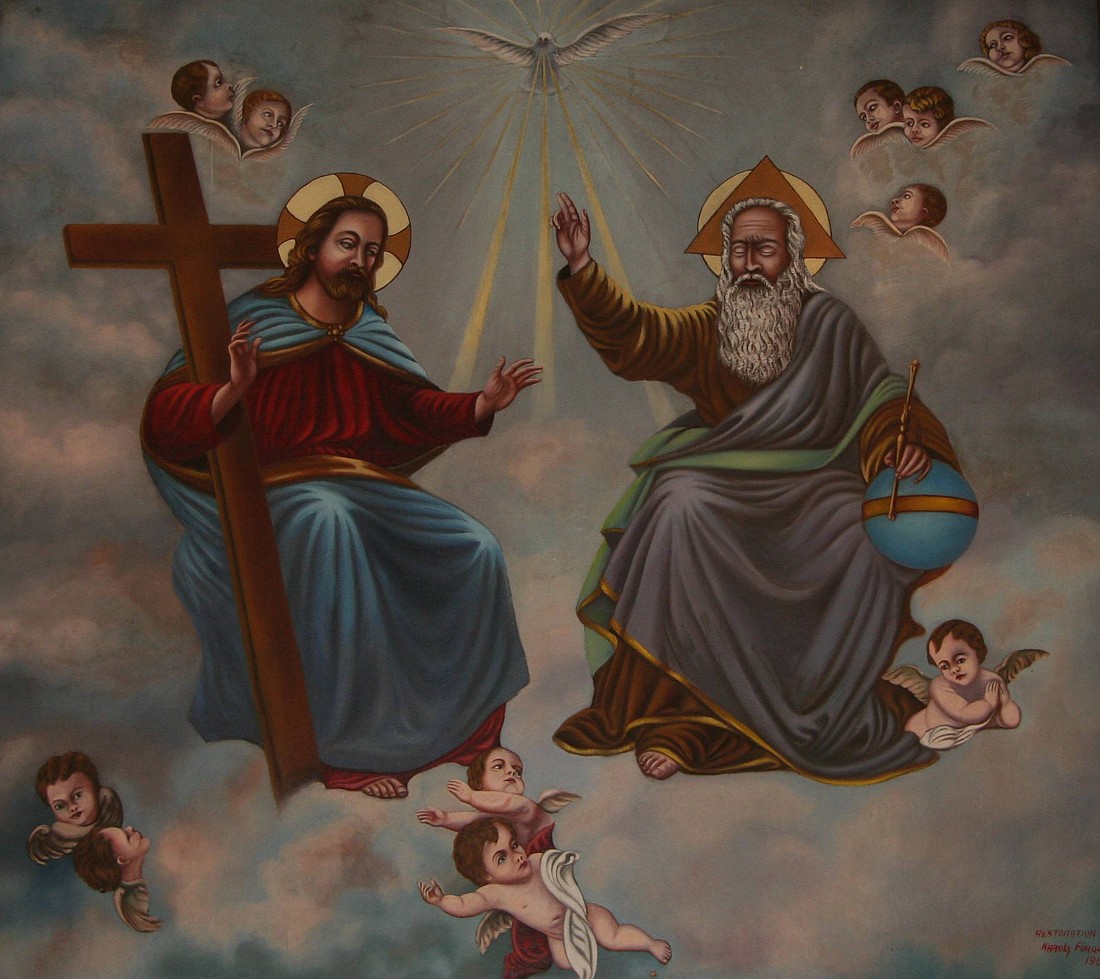
Gospel reflection for June 15, 2025, Solemnity of the Most Holy Trinity
The dogma of the Trinity is one of the most misunderstood teachings of the Christian faith. Various heresies over the centuries have compounded this misunderstanding, causing that, which is at its very core a mystery, to become also an enigma, leading to confusion and separation.
Because the word “Trinity” does not appear anywhere in the Bible, there are those who contend that it is an “invention” of theologians and Church Councils. While it is true that the dogma of the Trinity is defined at the Council of Nicaea in 325 the belief is by no means new to the church at the time.
The Trinity is the way in which we understand the nature of God as revealed through the Mysteries of the Incarnation and Pentecost.
Intuitively humans have encountered the divine from the dawn of civilization. Knowing that there is a creator-god, and that all of creation -- seen and unseen -- is subject to divine intention and control, is ingrained in our very human nature. While this led to the development of pantheons of an unimaginable number of gods and demi-gods, the Oneness of God is understood through divine revelation.
God makes himself known to humanity through the patriarchs and prophets of the Hebrew culture.
The realization that God is manifest in the person of Jesus Christ, born through the power of the Holy Spirit to the Virgin Mary, is a continuation of that revelatory process. While the Father revealed himself through mighty signs and wonders, the Son was revealed in the ordinariness of human experience, as he became “one like us in all things, but sin.” While he performed miracles during his earthly ministry, it is in his resurrection from the dead that his Sonship becomes more clear to the apostles.
In his final discourse to the disciples after the Last Supper, Jesus offers the promise of the Holy Spirit who is to guide and direct the Church until the parousia. We have seen this realized as we observed the Feast of Pentecost last Sunday. Jesus also explains to the disciples that all that he has comes to him from the Father. Throughout the Gospel According to John it is evident that Jesus is the Incarnation of the divine and, as such, is the ultimate revelation of God.
Yet we also know, again first intuitively and then through doctrinal definition, that the Father, the Son and the Holy Spirit cannot be entirely separate or unequal in being. We would then have reverted, as some who misunderstand the doctrine, to a form of polytheism, which would be a total rejection of the revelation of God throughout the Hebrew Scriptures.
The continuity with the faith of Abraham and Moses is seen as the apostles more fully understood the revelation of God through the Hebrew Scriptures. It is not enough to merely proclaim that God is One, for, although God is indeed One, God is revealed to us as three distinct, yet consubstantial persons.
In the Book of Proverbs we see the revelation of the “Wisdom of God.” God is expressed as Wisdom, present and active within the entire course of human history. It is this sense of Wisdom that becomes more fully understood as the Holy Spirit after the Pentecost-event.
The profound significance of the meaning of the Trinity for us as Christians is not in our ability to understand the mind of God. It is a dogmatic truth upon which to mediate and to assent in faith. It is the expression of the deepest part of our faith – that God who in love created all that is, remains ever present with us. God created us. God intended through that creation to lead us to eternal life. God speaks to us in clear, if often fragmentary ways, through the prophets, the Scriptures and the Church.
The most recited prayer in the Catholic Tradition, the Sign of the Cross, is both the blessing and the hope of our life of faith – that we share in the eternal life of the Trinity.
Father Koch is pastor of St. Benedict Parish, Holmdel.
Related Stories
Sunday, December 14, 2025


E-Editions
Events
Gospel reflection for June 15, 2025, Solemnity of the Most Holy Trinity
The dogma of the Trinity is one of the most misunderstood teachings of the Christian faith. Various heresies over the centuries have compounded this misunderstanding, causing that, which is at its very core a mystery, to become also an enigma, leading to confusion and separation.
Because the word “Trinity” does not appear anywhere in the Bible, there are those who contend that it is an “invention” of theologians and Church Councils. While it is true that the dogma of the Trinity is defined at the Council of Nicaea in 325 the belief is by no means new to the church at the time.
The Trinity is the way in which we understand the nature of God as revealed through the Mysteries of the Incarnation and Pentecost.
Intuitively humans have encountered the divine from the dawn of civilization. Knowing that there is a creator-god, and that all of creation -- seen and unseen -- is subject to divine intention and control, is ingrained in our very human nature. While this led to the development of pantheons of an unimaginable number of gods and demi-gods, the Oneness of God is understood through divine revelation.
God makes himself known to humanity through the patriarchs and prophets of the Hebrew culture.
The realization that God is manifest in the person of Jesus Christ, born through the power of the Holy Spirit to the Virgin Mary, is a continuation of that revelatory process. While the Father revealed himself through mighty signs and wonders, the Son was revealed in the ordinariness of human experience, as he became “one like us in all things, but sin.” While he performed miracles during his earthly ministry, it is in his resurrection from the dead that his Sonship becomes more clear to the apostles.
In his final discourse to the disciples after the Last Supper, Jesus offers the promise of the Holy Spirit who is to guide and direct the Church until the parousia. We have seen this realized as we observed the Feast of Pentecost last Sunday. Jesus also explains to the disciples that all that he has comes to him from the Father. Throughout the Gospel According to John it is evident that Jesus is the Incarnation of the divine and, as such, is the ultimate revelation of God.
Yet we also know, again first intuitively and then through doctrinal definition, that the Father, the Son and the Holy Spirit cannot be entirely separate or unequal in being. We would then have reverted, as some who misunderstand the doctrine, to a form of polytheism, which would be a total rejection of the revelation of God throughout the Hebrew Scriptures.
The continuity with the faith of Abraham and Moses is seen as the apostles more fully understood the revelation of God through the Hebrew Scriptures. It is not enough to merely proclaim that God is One, for, although God is indeed One, God is revealed to us as three distinct, yet consubstantial persons.
In the Book of Proverbs we see the revelation of the “Wisdom of God.” God is expressed as Wisdom, present and active within the entire course of human history. It is this sense of Wisdom that becomes more fully understood as the Holy Spirit after the Pentecost-event.
The profound significance of the meaning of the Trinity for us as Christians is not in our ability to understand the mind of God. It is a dogmatic truth upon which to mediate and to assent in faith. It is the expression of the deepest part of our faith – that God who in love created all that is, remains ever present with us. God created us. God intended through that creation to lead us to eternal life. God speaks to us in clear, if often fragmentary ways, through the prophets, the Scriptures and the Church.
The most recited prayer in the Catholic Tradition, the Sign of the Cross, is both the blessing and the hope of our life of faith – that we share in the eternal life of the Trinity.
Father Koch is pastor of St. Benedict Parish, Holmdel.