


Picturesque Catholic village in Switzerland buried under landslide
June 2, 2025 at 2:27 p.m.
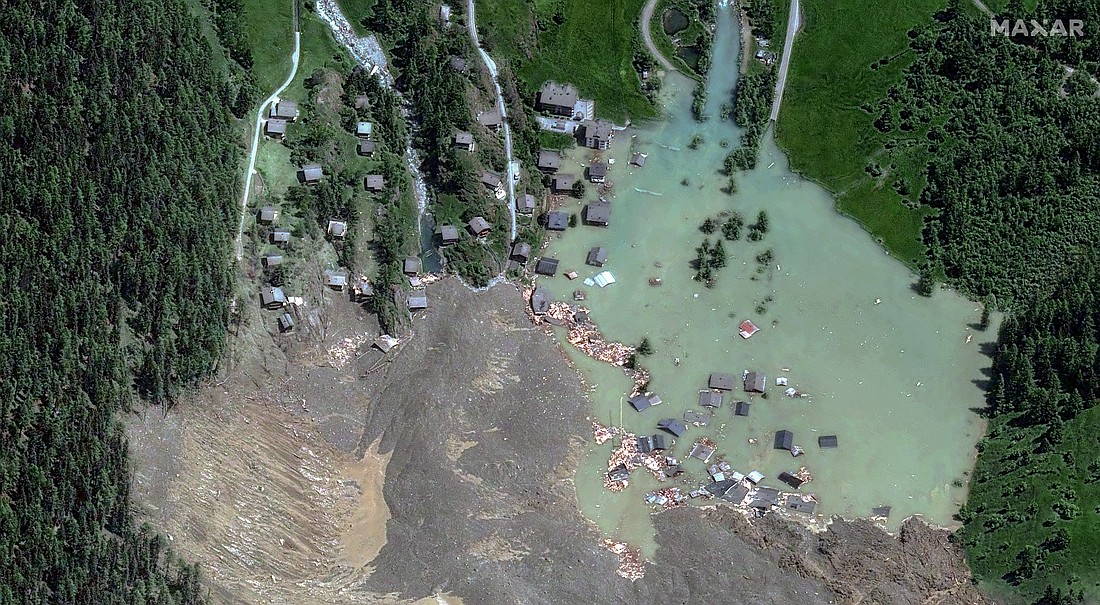
OSV News – A massive landslide triggered by the collapse of part of the Birch Glacier buried nearly 90% of the Catholic village of Blatten in Switzerland's Lötschental Valley on May 28.
All 300 residents were safely evacuated, but the historic village – once home to vibrant Corpus Christi processions and a 15th-century Virgin Mary statue – now lies under ice, mud and debris.
"This region is used to risks that come simply from the fact that what surrounds those villages are really high mountains," ranging from 10,000 to 13,000 feet high, said Polish Father Robert Biel, who serves in St. Maurice Parish in nearby Zermatt – one of Switzerland's flagship mountain resorts.
"But it's still a tragedy for the people who lost everything," he said. "They saved their lives but didn't manage to save a lot of belongings, there was no time."
The tiny fairy-tale looking village was home to roughly 300 inhabitants – who had been brought to safety – with village cars and sheep airlifted as their owners evacuated.
"Some cantons in Switzerland are Protestant, some Catholic, some mixed, but this region is definitely Catholic," Father Biel told OSV News May 30.
He recalled how the valley "consisted of four villages – and now we can only say three are left."
The natural disaster happened weeks before a spectacular procession for Corpus Christi, he noted. "Lötschental Valley had the most beautiful procession of Corpus Christi, with people dressed in traditional folk clothes, carrying historic banners, with orchestras playing and Church choirs singing," Father Biel said.
"It's the region from which many Swiss Guards come from, so they were often part of those processions too," he added, mentioning the Swiss soldiers who by tradition protect the Pope at the Vatican.
The local Church in Blatten was reportedly built in 1985, according to KNA German Catholic news agency, and contained a statue of the Virgin Mary from the 15th century in the chancel. It was also buried by the landslide.
Blatten's mayor, Matthias Bellwald, told the BBC "the unimaginable has happened" but promised the village still had a future.
As vast mounds of debris were still blocking the River Lonza, causing a huge lake to swell May 30, the future is however still mostly unknown.
"I don't want to talk just now. I lost everything yesterday. I hope you understand," one middle-aged woman from Blatten told Sky News, as she sat alone in front of a Church in the neighboring village of Wiler.
"A colleague with whom we work is from the affected village, and there are four elderly people in Zermatt's care home for the elderly now," said Father Biel, confirming that in the mountain community many know someone affected by the tragedy.
"They live here with the knowledge that it is beautiful here, but this can change very quickly," he said.
"We pray for them. Caritas and the Red Cross help with immediate needs," Father Biel said. "But what is really needed is a long-term plan on how to bring those people back to normal life," he emphasized.
He said living in the region is marked by disasters and sudden death. "We know many families whose loved ones – like mountain rescue workers – didn't come back alive from missions," Father Biel said.
"Weather is also unpredictable – for Holy Week liturgies, I had to be lifted by helicopter as snow covered everything," he said. "It's the mountains. It's part of life here. Life in the mountains means living with the unexpected – and often, with loss."
Paulina Guzik is international editor for OSV News. Follow her on X @Guzik_Paulina
The Church needs quality Catholic journalism now more than ever. Please consider supporting this work by signing up for a SUBSCRIPTION (click HERE) or making a DONATION to The Monitor (click HERE). Thank you for your support.
Related Stories
Monday, December 15, 2025


E-Editions
Events
OSV News – A massive landslide triggered by the collapse of part of the Birch Glacier buried nearly 90% of the Catholic village of Blatten in Switzerland's Lötschental Valley on May 28.
All 300 residents were safely evacuated, but the historic village – once home to vibrant Corpus Christi processions and a 15th-century Virgin Mary statue – now lies under ice, mud and debris.
"This region is used to risks that come simply from the fact that what surrounds those villages are really high mountains," ranging from 10,000 to 13,000 feet high, said Polish Father Robert Biel, who serves in St. Maurice Parish in nearby Zermatt – one of Switzerland's flagship mountain resorts.
"But it's still a tragedy for the people who lost everything," he said. "They saved their lives but didn't manage to save a lot of belongings, there was no time."
The tiny fairy-tale looking village was home to roughly 300 inhabitants – who had been brought to safety – with village cars and sheep airlifted as their owners evacuated.
"Some cantons in Switzerland are Protestant, some Catholic, some mixed, but this region is definitely Catholic," Father Biel told OSV News May 30.
He recalled how the valley "consisted of four villages – and now we can only say three are left."
The natural disaster happened weeks before a spectacular procession for Corpus Christi, he noted. "Lötschental Valley had the most beautiful procession of Corpus Christi, with people dressed in traditional folk clothes, carrying historic banners, with orchestras playing and Church choirs singing," Father Biel said.
"It's the region from which many Swiss Guards come from, so they were often part of those processions too," he added, mentioning the Swiss soldiers who by tradition protect the Pope at the Vatican.
The local Church in Blatten was reportedly built in 1985, according to KNA German Catholic news agency, and contained a statue of the Virgin Mary from the 15th century in the chancel. It was also buried by the landslide.
Blatten's mayor, Matthias Bellwald, told the BBC "the unimaginable has happened" but promised the village still had a future.
As vast mounds of debris were still blocking the River Lonza, causing a huge lake to swell May 30, the future is however still mostly unknown.
"I don't want to talk just now. I lost everything yesterday. I hope you understand," one middle-aged woman from Blatten told Sky News, as she sat alone in front of a Church in the neighboring village of Wiler.
"A colleague with whom we work is from the affected village, and there are four elderly people in Zermatt's care home for the elderly now," said Father Biel, confirming that in the mountain community many know someone affected by the tragedy.
"They live here with the knowledge that it is beautiful here, but this can change very quickly," he said.
"We pray for them. Caritas and the Red Cross help with immediate needs," Father Biel said. "But what is really needed is a long-term plan on how to bring those people back to normal life," he emphasized.
He said living in the region is marked by disasters and sudden death. "We know many families whose loved ones – like mountain rescue workers – didn't come back alive from missions," Father Biel said.
"Weather is also unpredictable – for Holy Week liturgies, I had to be lifted by helicopter as snow covered everything," he said. "It's the mountains. It's part of life here. Life in the mountains means living with the unexpected – and often, with loss."
Paulina Guzik is international editor for OSV News. Follow her on X @Guzik_Paulina
The Church needs quality Catholic journalism now more than ever. Please consider supporting this work by signing up for a SUBSCRIPTION (click HERE) or making a DONATION to The Monitor (click HERE). Thank you for your support.