


Father Koch: Failing to see and value the people in before us
July 18, 2025 at 1:42 p.m.
Gospel reflection for July 20, 2025, 16th Sunday in Ordinary Time
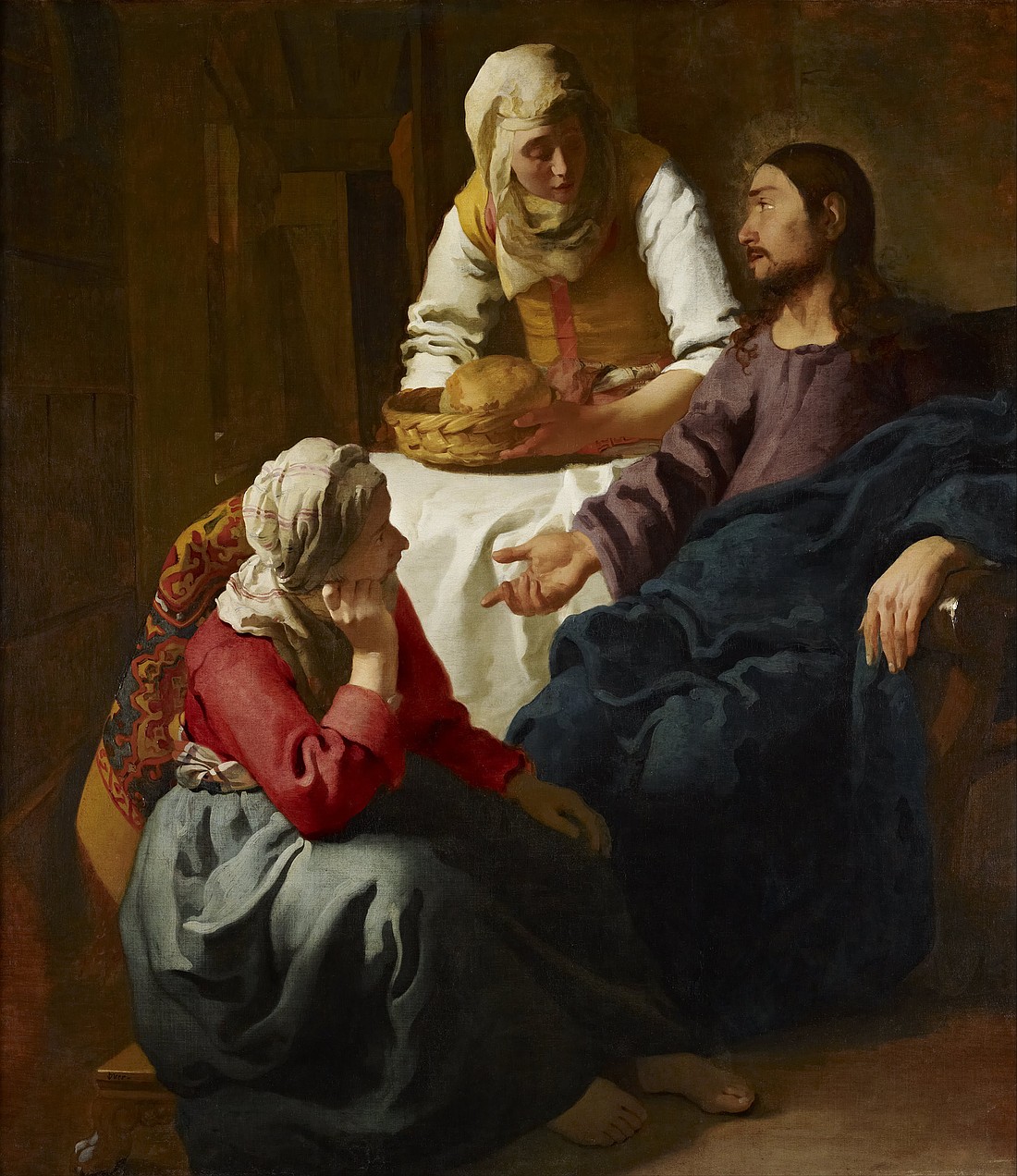
The ubiquity of cell phones, computers and instant communication with each other leaves us with little time to slow down and assess our present and think about our future. This is true in every aspect of life. Our children are over-scheduled, our lives planned are to the minute, and the pressure to post it all on social media becomes overwhelming. I recently attended a social event where the hosts were so busy with the peripheral business of the event that when I left, I felt like it didn’t really matter at all that I was there. In a sense Martha, though she was unable to take a selfie with Jesus, left him feeling like he was a prop in her home and not a person to be valued.
Often the struggle between Martha and Mary and their differing responses to the visit of Jesus to their home is used to highlight the distinctions between contemplative religious life and active service in the mission of the Gospel. Because most of the great commentators on Scripture have been monks or friars, the preference of religious life often comes through their reflections.
Martha and Mary, as with Abraham and Sarah, were part of a culture that deeply valued hospitality, especially towards strangers. Nomadic tribesmen, such as Abraham, relied upon a weakly defined but necessary network of similar groups in order to survive in the wilderness. Although there were likely bands of marauders as well, the first thought upon encountering the stranger was not defensive or hostile, but rather to be welcoming and endearing. They relied deeply upon one another for sustenance, information about what was happening in the region.
While hospitality itself was mutually beneficial, it eventually led to something even more significant as time moved on, and that is a deep sense of respect for each person as an individual person.
It is not unusual that when we meet someone famous, especially if we are in a receiving line with them, that we are alert to the amount of time that the celebrity spends with us. Some famous people are deeply engaged and pay attention to us. Others are looking to move on and are more concerned about whether there is someone else there that they want to meet instead.
We all also get put off when someone is paying more attention to their cellphone than they are to us in the midst of a conversation. Sure, if the other asks to be excused to focus on something that seems to be important, we understand. But when the cellphone just appears and we can feel uncared for and unimportant.
Martha got herself all flustered because she wanted the evening that she and Mary were spending with Jesus to be perfect. In one way she was the perfect host and was planning the best meal and preparation for Jesus. On one level that is commendable.
Mary was attentive to Jesus. Her focus was not on the meal, the table setting, or the lighting; it was on her guest. Jesus, and whatever entourage of the disciples who were with him, were guests in her home, and deserved the dignity of being a guest.
Each person in our lives -- whether we have known them for years or for moments -- is a gift to us from God and is created in God’s image and likeness. They are bringing something to us, and we are bringing something to them.
It is this awareness of presence that we learn from these two encounters that we hear today. Abraham and Sarah did not know that they were entertaining the angels of God when they offered hospitality to the strangers. Martha and Mary did not know that they were entertaining the Incarnate Son of God, when they invited Jesus into their homes.
While the likelihood of any one of us having the same exact experience is extremely low, what remains is that we encounter Jesus Christ in each person we meet, and we should honor and respect that presence.
It is not always easy to be hospitable and welcoming. We are “busy”; we are suspicious of the alien; and uncomfortable with the stranger. Jesus Christ comes to us in many ways; for Christians there are no aliens or strangers -- there are only brothers and sisters in Christ whom he have yet to meet.
Father Garry Koch is pastor of St. Benedict Parish, Holmdel.
Related Stories
Thursday, January 08, 2026




E-Editions

Events
Gospel reflection for July 20, 2025, 16th Sunday in Ordinary Time
The ubiquity of cell phones, computers and instant communication with each other leaves us with little time to slow down and assess our present and think about our future. This is true in every aspect of life. Our children are over-scheduled, our lives planned are to the minute, and the pressure to post it all on social media becomes overwhelming. I recently attended a social event where the hosts were so busy with the peripheral business of the event that when I left, I felt like it didn’t really matter at all that I was there. In a sense Martha, though she was unable to take a selfie with Jesus, left him feeling like he was a prop in her home and not a person to be valued.
Often the struggle between Martha and Mary and their differing responses to the visit of Jesus to their home is used to highlight the distinctions between contemplative religious life and active service in the mission of the Gospel. Because most of the great commentators on Scripture have been monks or friars, the preference of religious life often comes through their reflections.
Martha and Mary, as with Abraham and Sarah, were part of a culture that deeply valued hospitality, especially towards strangers. Nomadic tribesmen, such as Abraham, relied upon a weakly defined but necessary network of similar groups in order to survive in the wilderness. Although there were likely bands of marauders as well, the first thought upon encountering the stranger was not defensive or hostile, but rather to be welcoming and endearing. They relied deeply upon one another for sustenance, information about what was happening in the region.
While hospitality itself was mutually beneficial, it eventually led to something even more significant as time moved on, and that is a deep sense of respect for each person as an individual person.
It is not unusual that when we meet someone famous, especially if we are in a receiving line with them, that we are alert to the amount of time that the celebrity spends with us. Some famous people are deeply engaged and pay attention to us. Others are looking to move on and are more concerned about whether there is someone else there that they want to meet instead.
We all also get put off when someone is paying more attention to their cellphone than they are to us in the midst of a conversation. Sure, if the other asks to be excused to focus on something that seems to be important, we understand. But when the cellphone just appears and we can feel uncared for and unimportant.
Martha got herself all flustered because she wanted the evening that she and Mary were spending with Jesus to be perfect. In one way she was the perfect host and was planning the best meal and preparation for Jesus. On one level that is commendable.
Mary was attentive to Jesus. Her focus was not on the meal, the table setting, or the lighting; it was on her guest. Jesus, and whatever entourage of the disciples who were with him, were guests in her home, and deserved the dignity of being a guest.
Each person in our lives -- whether we have known them for years or for moments -- is a gift to us from God and is created in God’s image and likeness. They are bringing something to us, and we are bringing something to them.
It is this awareness of presence that we learn from these two encounters that we hear today. Abraham and Sarah did not know that they were entertaining the angels of God when they offered hospitality to the strangers. Martha and Mary did not know that they were entertaining the Incarnate Son of God, when they invited Jesus into their homes.
While the likelihood of any one of us having the same exact experience is extremely low, what remains is that we encounter Jesus Christ in each person we meet, and we should honor and respect that presence.
It is not always easy to be hospitable and welcoming. We are “busy”; we are suspicious of the alien; and uncomfortable with the stranger. Jesus Christ comes to us in many ways; for Christians there are no aliens or strangers -- there are only brothers and sisters in Christ whom he have yet to meet.
Father Garry Koch is pastor of St. Benedict Parish, Holmdel.