


Florida archbishop responds to Alligator Alcatraz, other immigration enforcement tactics
July 15, 2025 at 2:21 p.m.
The bishops of the United States have long been advocates of reforms to our broken immigration system.
Thoughtful observers of the challenges facing our country cannot help but recognize that serious reforms are necessary to preserve safety and the integrity of our borders, as well as to accommodate needs for labor, family stability and the ability of those at risk of grave harm to migrate. We continue to propose reforms that will enhance our immigration system, respect human dignity and promote the common good.
The administration has effectively achieved control of the border. It is aggressively moving to remove and deport "bad actors," those who have entered the country and committed serious crimes, but, as employers in the agricultural or services sectors of our economy can tell you, most immigrants are hardworking and honest and only want to build a hopeful future for themselves and their families.
The majority, although not having permanent legal status, do enjoy some form of status such as TPS (Temporary Protected Status), parole or a pending asylum application. Some (Haitians, Cubans, Venezuelans and Nicaraguans) came with special humanitarian visas good for two years, but conditions in their countries of origin have yet to improve.
Others came legally as students or visitors and fell out of status. The Dreamers were brought by their parents, and while the government has afforded them "deferred departure," they have no path to legal permanent residence.
The U.S. faces labor shortages in many industries, including health care, service and agriculture. Removing immigrant workers will only exacerbate these shortages.
Rather than spending billions to deport people who are already contributing positively to our nation's well-being, it would be more financially sensible and more morally acceptable for Congress, working with the administration, to expand legal pathways for non-criminal migrants to adjust to a permanent legal status. The administration is responsible for enforcing the laws, but Congress makes the laws and has the authority to change them.
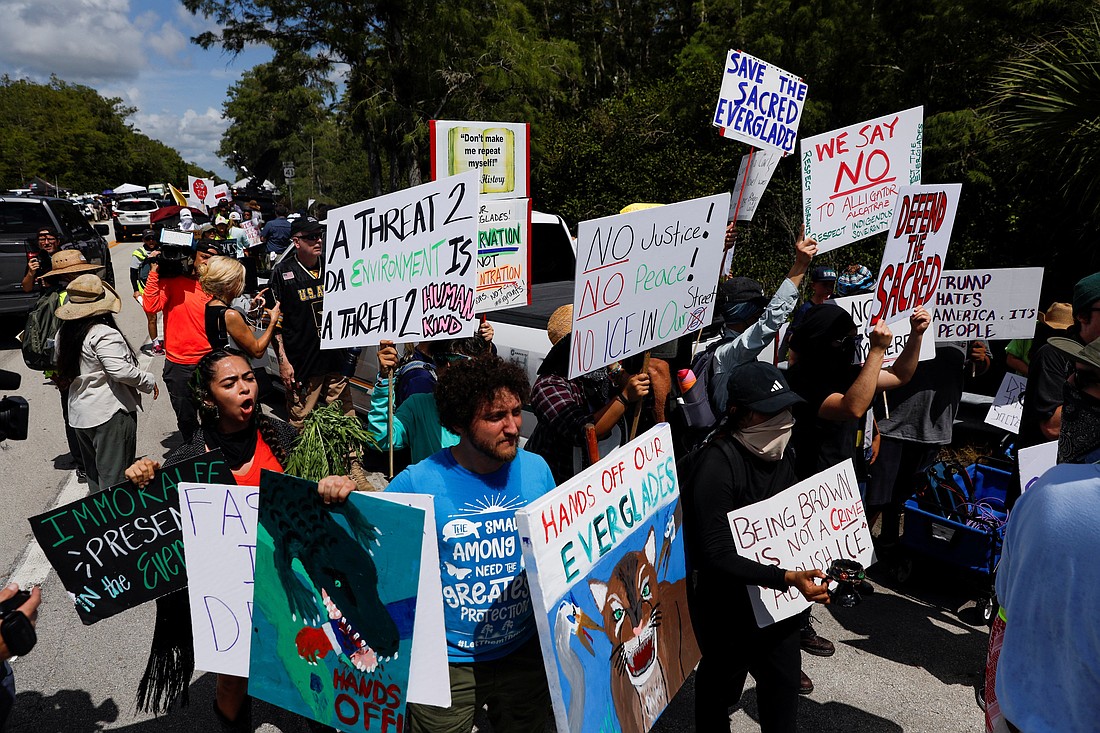
As the new detention center at Dade-Collier Airport, also known as "Alligator Alcatraz," becomes operational, it seems necessary to take stock of recent developments in immigration enforcement and reiterate the need for more than enforcement-only measures.
It is alarming to see enforcement tactics that treat all irregular immigrants as dangerous criminals. Masked, heavily armed agents who do not identify themselves during enforcement activities are surprising -- so is the apparent lack of due process in deportation proceedings in recent months.
Along these lines, much of the current rhetoric is obviously intentionally provocative. It is unbecoming of public officials and corrosive of the common good to speak of the deterrence value of "alligators and pythons" at the Collier-Dade facility.
Common decency requires that we remember the individuals being detained are fathers and mothers, brothers and sisters of distressed relatives. We wish to ensure that chaplains and pastoral ministers can serve those in custody, to their benefit and that of the staff.
We also raise concerns about the isolation of the detention facility, which is far from medical care centers and the precariousness of the temporary "tent" structures in the Florida heat and summer thunderstorms, not to mention the challenge of safely protecting detainees in the event of a hurricane.
We call on all people of goodwill to pray for our government officials, for those in immigration custody and their families, for those who work in enforcement, and for justice for all in this nation, whose prosperity immigrants have always contributed to.
Archbishop Thomas G. Wenski leads the Archdiocese of Miami.
Related Stories
Sunday, December 14, 2025



E-Editions

Events
The bishops of the United States have long been advocates of reforms to our broken immigration system.
Thoughtful observers of the challenges facing our country cannot help but recognize that serious reforms are necessary to preserve safety and the integrity of our borders, as well as to accommodate needs for labor, family stability and the ability of those at risk of grave harm to migrate. We continue to propose reforms that will enhance our immigration system, respect human dignity and promote the common good.
The administration has effectively achieved control of the border. It is aggressively moving to remove and deport "bad actors," those who have entered the country and committed serious crimes, but, as employers in the agricultural or services sectors of our economy can tell you, most immigrants are hardworking and honest and only want to build a hopeful future for themselves and their families.
The majority, although not having permanent legal status, do enjoy some form of status such as TPS (Temporary Protected Status), parole or a pending asylum application. Some (Haitians, Cubans, Venezuelans and Nicaraguans) came with special humanitarian visas good for two years, but conditions in their countries of origin have yet to improve.
Others came legally as students or visitors and fell out of status. The Dreamers were brought by their parents, and while the government has afforded them "deferred departure," they have no path to legal permanent residence.
The U.S. faces labor shortages in many industries, including health care, service and agriculture. Removing immigrant workers will only exacerbate these shortages.
Rather than spending billions to deport people who are already contributing positively to our nation's well-being, it would be more financially sensible and more morally acceptable for Congress, working with the administration, to expand legal pathways for non-criminal migrants to adjust to a permanent legal status. The administration is responsible for enforcing the laws, but Congress makes the laws and has the authority to change them.
As the new detention center at Dade-Collier Airport, also known as "Alligator Alcatraz," becomes operational, it seems necessary to take stock of recent developments in immigration enforcement and reiterate the need for more than enforcement-only measures.
It is alarming to see enforcement tactics that treat all irregular immigrants as dangerous criminals. Masked, heavily armed agents who do not identify themselves during enforcement activities are surprising -- so is the apparent lack of due process in deportation proceedings in recent months.
Along these lines, much of the current rhetoric is obviously intentionally provocative. It is unbecoming of public officials and corrosive of the common good to speak of the deterrence value of "alligators and pythons" at the Collier-Dade facility.
Common decency requires that we remember the individuals being detained are fathers and mothers, brothers and sisters of distressed relatives. We wish to ensure that chaplains and pastoral ministers can serve those in custody, to their benefit and that of the staff.
We also raise concerns about the isolation of the detention facility, which is far from medical care centers and the precariousness of the temporary "tent" structures in the Florida heat and summer thunderstorms, not to mention the challenge of safely protecting detainees in the event of a hurricane.
We call on all people of goodwill to pray for our government officials, for those in immigration custody and their families, for those who work in enforcement, and for justice for all in this nation, whose prosperity immigrants have always contributed to.
Archbishop Thomas G. Wenski leads the Archdiocese of Miami.