


Can we bring the Precious Blood to the sick?
July 15, 2025 at 2:22 p.m.
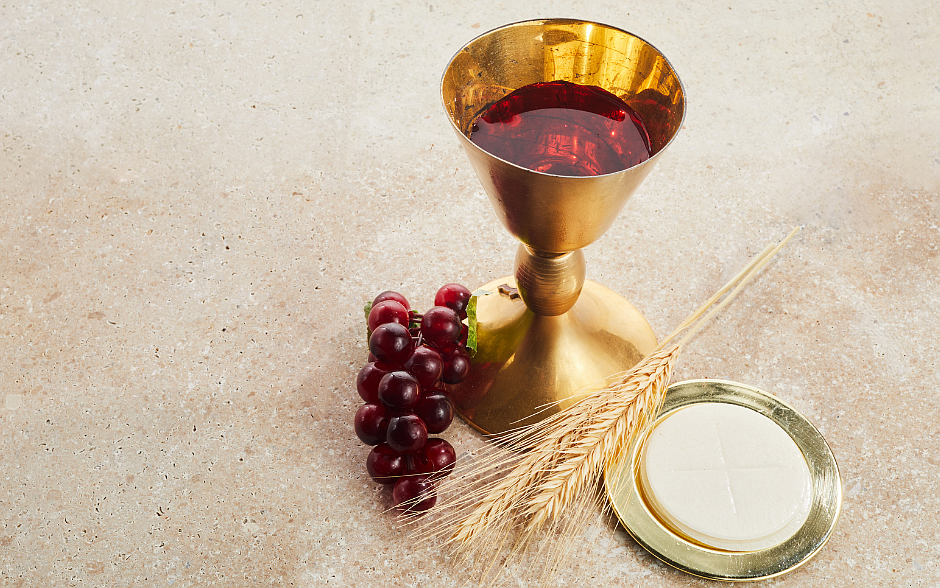
Q: I used to volunteer to bring Holy Communion to the sick in nursing homes and hospice, and I always wondered: Why can't we bring the precious blood to those who are very ill or at the point of death and can no longer eat any solid food? I asked several priests about this, and they all said it was not possible. I guess I would just like to know the Church's reasoning on why this is not permitted.
A: The short answer is that, with a few caveats, the Church does in fact allow Holy Communion under the form of wine to be taken to the sick in some cases.
Our clearest reference for this is in the U.S. bishops' conference document "Norms for the Distribution and Reception of Holy Communion Under Both Kinds in the Dioceses of the United States of America," which states:
"The Precious Blood may not be reserved, except for giving Communion to someone who is sick. Only sick people who are unable to receive Communion under the form of bread may receive it under the form of wine alone at the discretion of the Priest. If not consecrated at a Mass in the presence of the sick person, the Blood of the Lord is kept in a properly covered vessel and is placed in the tabernacle after Communion. The Precious Blood should be carried to the sick in a vessel that is closed in such a way as to eliminate all danger of spilling. If some of the Precious Blood remains after the sick person has received Communion, it should be consumed by the minister, who should also see to it that the vessel is properly purified."
It should be noted that in the context of the entire document, this paragraph is part of a discussion on the purification of sacred vessels and how to handle the Blessed Sacrament that is "leftover" after the celebration of a Mass; it is not actually a passage focused specifically on bringing Communion to the ill and homebound. So, this consideration of the pastoral needs of the sick is a valid but somewhat tangential point here, which is why it might be easy to overlook.
In any case, while it is possible to bring the Precious Blood to the sick, it is envisioned as an exception. The paragraph begins with the observation that any reservation of the Precious Blood at all is already exceptional. Communion for the sick is mentioned as the only reason to do this — unlike Communion under the form of bread, where the consecrated host might be reserved for other things, such as adoration of the Blessed Sacrament.
The document specifically indicates that sick communicants may receive the Precious Blood by itself only when they are unable to receive the host, as might be the case if they are gluten intolerant or too ill to swallow anything solid.
There also seems to be the suggestion that an ideal best-case scenario would be for a Mass to be celebrated in the presence of the sick person (e.g., perhaps in their hospital room) so that the Precious Blood could be administered at the Mass itself without needing to be reserved at all.
Finally, the document lists necessary precautions that are to be taken to avoid any possibility of the Precious Blood being accidentally spilled. My guess would be that this danger of spillage is probably the main reason why the reservation of the Precious Blood is so carefully restricted.
"Norms for the Distribution and Reception of Holy Communion Under Both Kinds in the Dioceses of the United States of America" is, as the name implies, intended for the United States. In my research, I could not find a more universal norm on reserving the Precious Blood for the sick. However, I do think this specific regional directive still reflects a universal principle: the Church wants to make the sacraments as accessible as possible, especially to the faithful in danger of death.
Jenna Marie Cooper, who holds a licentiate in canon law, is a consecrated virgin and a canonist whose column appears weekly at OSV News. Send your questions to [email protected].
Related Stories
Sunday, December 14, 2025



E-Editions
Events
Q: I used to volunteer to bring Holy Communion to the sick in nursing homes and hospice, and I always wondered: Why can't we bring the precious blood to those who are very ill or at the point of death and can no longer eat any solid food? I asked several priests about this, and they all said it was not possible. I guess I would just like to know the Church's reasoning on why this is not permitted.
A: The short answer is that, with a few caveats, the Church does in fact allow Holy Communion under the form of wine to be taken to the sick in some cases.
Our clearest reference for this is in the U.S. bishops' conference document "Norms for the Distribution and Reception of Holy Communion Under Both Kinds in the Dioceses of the United States of America," which states:
"The Precious Blood may not be reserved, except for giving Communion to someone who is sick. Only sick people who are unable to receive Communion under the form of bread may receive it under the form of wine alone at the discretion of the Priest. If not consecrated at a Mass in the presence of the sick person, the Blood of the Lord is kept in a properly covered vessel and is placed in the tabernacle after Communion. The Precious Blood should be carried to the sick in a vessel that is closed in such a way as to eliminate all danger of spilling. If some of the Precious Blood remains after the sick person has received Communion, it should be consumed by the minister, who should also see to it that the vessel is properly purified."
It should be noted that in the context of the entire document, this paragraph is part of a discussion on the purification of sacred vessels and how to handle the Blessed Sacrament that is "leftover" after the celebration of a Mass; it is not actually a passage focused specifically on bringing Communion to the ill and homebound. So, this consideration of the pastoral needs of the sick is a valid but somewhat tangential point here, which is why it might be easy to overlook.
In any case, while it is possible to bring the Precious Blood to the sick, it is envisioned as an exception. The paragraph begins with the observation that any reservation of the Precious Blood at all is already exceptional. Communion for the sick is mentioned as the only reason to do this — unlike Communion under the form of bread, where the consecrated host might be reserved for other things, such as adoration of the Blessed Sacrament.
The document specifically indicates that sick communicants may receive the Precious Blood by itself only when they are unable to receive the host, as might be the case if they are gluten intolerant or too ill to swallow anything solid.
There also seems to be the suggestion that an ideal best-case scenario would be for a Mass to be celebrated in the presence of the sick person (e.g., perhaps in their hospital room) so that the Precious Blood could be administered at the Mass itself without needing to be reserved at all.
Finally, the document lists necessary precautions that are to be taken to avoid any possibility of the Precious Blood being accidentally spilled. My guess would be that this danger of spillage is probably the main reason why the reservation of the Precious Blood is so carefully restricted.
"Norms for the Distribution and Reception of Holy Communion Under Both Kinds in the Dioceses of the United States of America" is, as the name implies, intended for the United States. In my research, I could not find a more universal norm on reserving the Precious Blood for the sick. However, I do think this specific regional directive still reflects a universal principle: the Church wants to make the sacraments as accessible as possible, especially to the faithful in danger of death.
Jenna Marie Cooper, who holds a licentiate in canon law, is a consecrated virgin and a canonist whose column appears weekly at OSV News. Send your questions to [email protected].