


Hispanic Heritage Month 2022 encourages unity, celebrates heritage of Hispanics, Latinos in U.S.
October 7, 2022 at 1:33 p.m.
Across the Diocese of Trenton, National Hispanic Heritage Month is an opportunity to recognize and celebrate the contributions made to American society and culture by citizens with roots in Spain, Mexico, Central America, South America and the Spanish-speaking countries of the Caribbean.
This year’s theme is "Unidos: Inclusivity for a Stronger Nation."
The celebration originated in 1968, when Congress authorized the president to issue an annual proclamation designating National Hispanic Heritage Week. Two decades later, lawmakers extended the duration of the celebration to one month, from Sept. 15 to Oct. 15.
The choice of dates is key. Hispanic Heritage Month, like the shorter precursor event, always begins on September 15, a historically significant day that marks the anniversary of the independence of five Latin American countries: Costa Rica, El Salvador, Guatemala, Honduras and Nicaragua.
The designated period is also in recognition of people from Mexico and Chile, who celebrate their independence on Sept. 16 and Sept. 18, respectively. “During these dates the students make project presentations about the Hispanic culture and population,” commented Patricia Conway, a Spanish teacher in St. James Elementary School, Red Bank.
“The idea is that they themselves investigate the biography of someone who has contributed positively to our society and that they share with others the impact these Hispanic people have had on our nation,” Conway said.
In the corridors of the school, different data about Spanish-speaking countries are exalted in colorful murals that attract the eye during this month. In the schools of the Diocese, foreign languages are taught from preschool to high school, including Spanish, which is spoken by 53 million people in the United States – 41 million native Spanish speakers and approximately 11.6 million bilingual Spanish speakers live in the United States.
[[In-content Ad]]
“This is why it is important for students to learn not only the language but also the culture of Spanish-speakers,” said Casey Shields, a social studies teacher in St. James School. “Furthermore, as students are able to learn more about Hispanic cultures, languages and traditions, it broadens their world view allowing them to become 21st century students to an ever inclusive and changing world,” Shields commented.
In Mother of Mercy Parish, Asbury Park, Hispanic Heritage Month was commemorated with a daylong festival held Sept. 24.
According to Divine Word Father Miguel Virella, pastor, and Maria Santiago, event coordinator, the festival served as a fundraiser with proceeds benefiting the parish’s Our Lady of Guadalupe Ministry and other expenses.
“What better way to celebrate our heritage and help out our parish” than to hold a festival, Santiago said, noting that the parish’s Hispanic community is comprised of folks mostly from Mexico, Puerto Rico, Peru and Nicaragua.
Santiago shared that festival participants enjoyed sampling ethnic foods such as Nicaraguan pupusas, Mexican pozole and tacos, along with Puerto Rican pernil, arroz con gandules and empanadas.
In St. Ann School, Lawrenceville, Spanish culture and language are also taught from Preschool through eighth grade. During Hispanic Heritage Month, students investigate and learn fun facts about famous Hispanics and their culture through "The Trivia of the Weein”
Jayden Barillas, Jacqueline Fuller and Isabella Maldari, Hispanic students in St. Ann School, acknowledged, “We are proud and blessed to have our own month because Hispanics have worked hard throughout the history of this nation; they have greatly affected the history of our country.”
There are also activities for the little ones. The reading of bilingual books, the teaching of typical dances and songs, are not only part of the Spanish class during these four weeks but have also become part of the regular foreign language classes because they are so popular with the younger students.
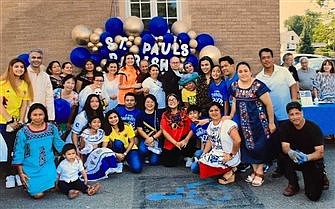
In St. Paul Parish, Princeton, a multi-cultural Parish Fest is an opportunity to celebrate the varied cultures of the parish family. After a two-year delay due to COVID-19, this year’s fest, one of the largest events in the parish, took place on Sept. 28.
More than 350 people gathered for a multicultural Mass in the church, followed by a feast in the tented parking lot featuring food from 14 different countries – many of them Hispanic in origin. With DJ-provided music as a backdrop, children enjoyed pony rides, a photo booth, face painting, balloons and a bubbles-and-magic show.
“The festival's primary purpose is to give thanks,” said Father Miguel Valle, pastor. “There's such excitement about just coming together as a people. Our motto this year was, ‘We're back!’ We were pleased to see so many parishioners coming back who claim St. Paul as home, mother and family … so lots of gratitude on our hearts.”
For more than four years, St. Ann Parish, Browns Mills, has hosted an annual Hispanic Festival each September in the parish hall, complete with traditional dishes and dances, artifacts and the display of native flags representing the various cultures, according to Amanda Kleinmann, a parish secretary.
The main goal of the festival is to foster a sense of community among all parishioners, Kleinmann said. She noted that the majority of the Hispanic parishioners hail from Mexico, Peru, Puerto Rico and Guatemala and that there are smaller groups of parishioners who are from Cuba and the Dominican Republic.
Describing this year’s event on Sept. 18, Kleinmann said that each table represented a particular country, allowing parishioners from that country to share traditional foods and display artifacts and memorabilia. Two examples Kleinmann cited were the parishioners from Mexico, who shared native tamales and flautas while the Peruvians shared arroz chaufa.
“We were able to taste a little bit of everything,” Kleinmann said. She added that on a personal note, she has developed a deep appreciation for people of other cultures and has made efforts to learn their language by studying Spanish.
What makes an occasion such as the Hispanic Festival so special, she said, is that “We are working toward breaking down barriers and, instead, building one parish community.”
Related Stories
Sunday, December 14, 2025

E-Editions
Events
Across the Diocese of Trenton, National Hispanic Heritage Month is an opportunity to recognize and celebrate the contributions made to American society and culture by citizens with roots in Spain, Mexico, Central America, South America and the Spanish-speaking countries of the Caribbean.
This year’s theme is "Unidos: Inclusivity for a Stronger Nation."
The celebration originated in 1968, when Congress authorized the president to issue an annual proclamation designating National Hispanic Heritage Week. Two decades later, lawmakers extended the duration of the celebration to one month, from Sept. 15 to Oct. 15.
The choice of dates is key. Hispanic Heritage Month, like the shorter precursor event, always begins on September 15, a historically significant day that marks the anniversary of the independence of five Latin American countries: Costa Rica, El Salvador, Guatemala, Honduras and Nicaragua.
The designated period is also in recognition of people from Mexico and Chile, who celebrate their independence on Sept. 16 and Sept. 18, respectively. “During these dates the students make project presentations about the Hispanic culture and population,” commented Patricia Conway, a Spanish teacher in St. James Elementary School, Red Bank.
“The idea is that they themselves investigate the biography of someone who has contributed positively to our society and that they share with others the impact these Hispanic people have had on our nation,” Conway said.
In the corridors of the school, different data about Spanish-speaking countries are exalted in colorful murals that attract the eye during this month. In the schools of the Diocese, foreign languages are taught from preschool to high school, including Spanish, which is spoken by 53 million people in the United States – 41 million native Spanish speakers and approximately 11.6 million bilingual Spanish speakers live in the United States.
[[In-content Ad]]
“This is why it is important for students to learn not only the language but also the culture of Spanish-speakers,” said Casey Shields, a social studies teacher in St. James School. “Furthermore, as students are able to learn more about Hispanic cultures, languages and traditions, it broadens their world view allowing them to become 21st century students to an ever inclusive and changing world,” Shields commented.
In Mother of Mercy Parish, Asbury Park, Hispanic Heritage Month was commemorated with a daylong festival held Sept. 24.
According to Divine Word Father Miguel Virella, pastor, and Maria Santiago, event coordinator, the festival served as a fundraiser with proceeds benefiting the parish’s Our Lady of Guadalupe Ministry and other expenses.
“What better way to celebrate our heritage and help out our parish” than to hold a festival, Santiago said, noting that the parish’s Hispanic community is comprised of folks mostly from Mexico, Puerto Rico, Peru and Nicaragua.
Santiago shared that festival participants enjoyed sampling ethnic foods such as Nicaraguan pupusas, Mexican pozole and tacos, along with Puerto Rican pernil, arroz con gandules and empanadas.
In St. Ann School, Lawrenceville, Spanish culture and language are also taught from Preschool through eighth grade. During Hispanic Heritage Month, students investigate and learn fun facts about famous Hispanics and their culture through "The Trivia of the Weein”
Jayden Barillas, Jacqueline Fuller and Isabella Maldari, Hispanic students in St. Ann School, acknowledged, “We are proud and blessed to have our own month because Hispanics have worked hard throughout the history of this nation; they have greatly affected the history of our country.”
There are also activities for the little ones. The reading of bilingual books, the teaching of typical dances and songs, are not only part of the Spanish class during these four weeks but have also become part of the regular foreign language classes because they are so popular with the younger students.
In St. Paul Parish, Princeton, a multi-cultural Parish Fest is an opportunity to celebrate the varied cultures of the parish family. After a two-year delay due to COVID-19, this year’s fest, one of the largest events in the parish, took place on Sept. 28.
More than 350 people gathered for a multicultural Mass in the church, followed by a feast in the tented parking lot featuring food from 14 different countries – many of them Hispanic in origin. With DJ-provided music as a backdrop, children enjoyed pony rides, a photo booth, face painting, balloons and a bubbles-and-magic show.
“The festival's primary purpose is to give thanks,” said Father Miguel Valle, pastor. “There's such excitement about just coming together as a people. Our motto this year was, ‘We're back!’ We were pleased to see so many parishioners coming back who claim St. Paul as home, mother and family … so lots of gratitude on our hearts.”
For more than four years, St. Ann Parish, Browns Mills, has hosted an annual Hispanic Festival each September in the parish hall, complete with traditional dishes and dances, artifacts and the display of native flags representing the various cultures, according to Amanda Kleinmann, a parish secretary.
The main goal of the festival is to foster a sense of community among all parishioners, Kleinmann said. She noted that the majority of the Hispanic parishioners hail from Mexico, Peru, Puerto Rico and Guatemala and that there are smaller groups of parishioners who are from Cuba and the Dominican Republic.
Describing this year’s event on Sept. 18, Kleinmann said that each table represented a particular country, allowing parishioners from that country to share traditional foods and display artifacts and memorabilia. Two examples Kleinmann cited were the parishioners from Mexico, who shared native tamales and flautas while the Peruvians shared arroz chaufa.
“We were able to taste a little bit of everything,” Kleinmann said. She added that on a personal note, she has developed a deep appreciation for people of other cultures and has made efforts to learn their language by studying Spanish.
What makes an occasion such as the Hispanic Festival so special, she said, is that “We are working toward breaking down barriers and, instead, building one parish community.”