


The essential wholeness of palliative care
April 30, 2021 at 1:51 p.m.
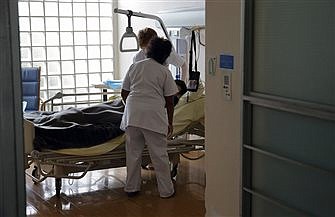
Science alone is unable to offer a fully adequate answer to all the questions that continue to emerge, and the pandemic has highlighted this inadequacy in a sensational way.
The Pontifical Academy for Life and its president, Archbishop Vincenzo Paglia, have stressed the need to guarantee and safeguard those aspects of health that are not immediately reflected in data and that, however, require full focus in this period: relationships, the psychological and spiritual dimensions of the person. These demand new attention.
Palliative care, in its authentic meaning, expresses a truly new way of providing care by promoting attention to the sick person in his or her entirety. At the core is a commitment to caring for the sick person, his or her family and the staff who are part of the health care team.
In 2019, the Pontifical Academy for Life, in collaboration with the professionals working in this area, published the "White Book for Global Palliative Care Advocacy."
A characteristic of palliative care, as Cicely Saunders – its recognized founder – conceived and codified it, is to focus attention on the whole person, particularly in four dimensions: physical, social, psychological and spiritual.
Attention to each of these four dimensions is equally necessary to offer and ensure the best accompaniment of people from the moment of diagnosis and not only in the last stages of their earthly existence.
Palliative care demands attention to every aspect of the person's life and this goal can be effectively achieved only when professionals work together harmoniously.
Care is no longer the responsibility of the doctor alone, but the doctor working in synergy with other professionals as a team to offer real support to patients and their family members, as well as to the health care workers closest to them.
This situation requires us to rethink, in a very particular way, also the role of spirituality in medical care.
If, on the one hand, biological explanations provide the rational basis for understanding the dynamics of diseases, on the other hand it is necessary to recognize the existence of a psychological and spiritual level which is no less important for the individual processing of life events.
Within the scientific community, a renewed consideration has developed for the role of spirituality in the field of medical care. There is much research that shows that faith and spirituality are among the most important resources reported by people facing serious illnesses.
Within this framework, it is necessary to intervene to support the importance and effectiveness of proper attention to the spiritual dimension of the patient as well, not as some sign of benevolence but as an essential part of care.
Father Tullio Proserpio is chaplain at National Cancer Institute in Milan and the Pontifical Academy for Life.
Related Stories
Monday, December 15, 2025

E-Editions
Events
Science alone is unable to offer a fully adequate answer to all the questions that continue to emerge, and the pandemic has highlighted this inadequacy in a sensational way.
The Pontifical Academy for Life and its president, Archbishop Vincenzo Paglia, have stressed the need to guarantee and safeguard those aspects of health that are not immediately reflected in data and that, however, require full focus in this period: relationships, the psychological and spiritual dimensions of the person. These demand new attention.
Palliative care, in its authentic meaning, expresses a truly new way of providing care by promoting attention to the sick person in his or her entirety. At the core is a commitment to caring for the sick person, his or her family and the staff who are part of the health care team.
In 2019, the Pontifical Academy for Life, in collaboration with the professionals working in this area, published the "White Book for Global Palliative Care Advocacy."
A characteristic of palliative care, as Cicely Saunders – its recognized founder – conceived and codified it, is to focus attention on the whole person, particularly in four dimensions: physical, social, psychological and spiritual.
Attention to each of these four dimensions is equally necessary to offer and ensure the best accompaniment of people from the moment of diagnosis and not only in the last stages of their earthly existence.
Palliative care demands attention to every aspect of the person's life and this goal can be effectively achieved only when professionals work together harmoniously.
Care is no longer the responsibility of the doctor alone, but the doctor working in synergy with other professionals as a team to offer real support to patients and their family members, as well as to the health care workers closest to them.
This situation requires us to rethink, in a very particular way, also the role of spirituality in medical care.
If, on the one hand, biological explanations provide the rational basis for understanding the dynamics of diseases, on the other hand it is necessary to recognize the existence of a psychological and spiritual level which is no less important for the individual processing of life events.
Within the scientific community, a renewed consideration has developed for the role of spirituality in the field of medical care. There is much research that shows that faith and spirituality are among the most important resources reported by people facing serious illnesses.
Within this framework, it is necessary to intervene to support the importance and effectiveness of proper attention to the spiritual dimension of the patient as well, not as some sign of benevolence but as an essential part of care.
Father Tullio Proserpio is chaplain at National Cancer Institute in Milan and the Pontifical Academy for Life.