


Watchman implant helps to reduce risk of blood clots, stroke
July 29, 2019 at 12:37 p.m.
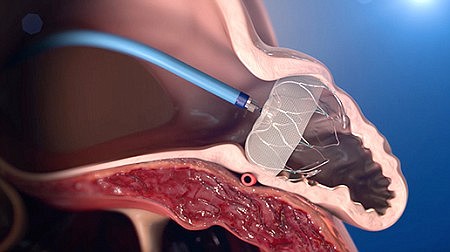
St. Francis Medical Center, Trenton, is the first hospital in Mercer County to offer patients with atrial fibrillation (afib) the Watchman implant. The device prevents clot formation in the heart from traveling through the bloodstream and blocking a blood vessel in the brain that could lead to a stroke.
“This is exciting news for afib patients,” said the medical center’s Dr. Christina Wjasow, electrophysiologist and medical director, Electrophysiology Laboratory, as she told of how the advanced technology can serve as an important alternative for patients affected by afib, which causes an irregular heart rhythm. Doctors often prescribe a blood thinner to prevent clots from forming. Despite its proven efficacy in reducing stroke, blood thinners are not well-tolerated by some patients and carry a significant risk for bleeding complications.
“The Watchman is the only procedure that has proven to be equal to blood thinners for stroke reduction. After the procedure, most patients over time are able to stop taking a blood thinner,” she said.
To implant the Watchman, doctors thread a catheter through a vein in the patient’s leg to the heart. A tiny hole is made through the wall between the two upper chambers of the heart so the catheter can reach the left atrium of the heart. The procedure takes about an hour and includes an overnight stay in the hospital.
Within about a month after the procedure, a layer of tissue grows over the implant, securing it in place closes off part of the heart where clots in afib patients often form. The hole in the heart wall heals quickly as well. Patients take a blood thinner and aspirin for six months following the procedure. After that, only a daily aspirin is needed.
About 2.7 million Americans have afib, according to the American Heart Association. About 15 to 20 percent of people who have strokes have afib. Stroke is frequently disabling and can be fatal.
In people with afib, the electrical signal that normally starts the heartbeat short circuits, causing the heart to beat irregularly. The atria (the two upper chambers) quiver rather than squeezing, resulting in very slow blood flow. With slow blood flow, the blood tends to pool and then clot in an area of the heart called the left atrial appendage.
“When these blood clots dislodge from the left atrial appendage, 75 percent of the time they go to the brain and cause a stroke. Brain tissue dies, leading to major disability or death,” said Dr. Wjasow. “If the appendage is sealed off, clots may still form, but you don’t have to worry about them getting out.”
The implant isn't right for everyone, so it's important for patients to discuss the WATCHMAN™ procedure with their doctor, Dr. Wjasow advised.
St. Francis Medical Center was recently recognized by the American Heart Association/American Stroke Association’s Get With The Guidelines®-Stroke Gold Plus Quality Achievement Award for the second year in a row. The award recognizes the hospital’s long-term commitment to ensuring stroke patients receive the most appropriate treatment according to nationally recognized, research-based guidelines based on the latest scientific evidence. St. Francis was the first accredited Stroke Center in Mercer County.
“We are very pleased to be able to offer this device to the Mercer County community,” said Dr. Wjasow. “This is a very important technological advance that will benefit the people of our area in the prevention of stroke. It is part of St. Francis’ commitment to cardiac care to offer effective treatment options that improve the day-to-day lives of our patients. The Watchman implant implant helps us do that.”
[[In-content Ad]]
Related Stories
Monday, December 15, 2025




E-Editions

Events
St. Francis Medical Center, Trenton, is the first hospital in Mercer County to offer patients with atrial fibrillation (afib) the Watchman implant. The device prevents clot formation in the heart from traveling through the bloodstream and blocking a blood vessel in the brain that could lead to a stroke.
“This is exciting news for afib patients,” said the medical center’s Dr. Christina Wjasow, electrophysiologist and medical director, Electrophysiology Laboratory, as she told of how the advanced technology can serve as an important alternative for patients affected by afib, which causes an irregular heart rhythm. Doctors often prescribe a blood thinner to prevent clots from forming. Despite its proven efficacy in reducing stroke, blood thinners are not well-tolerated by some patients and carry a significant risk for bleeding complications.
“The Watchman is the only procedure that has proven to be equal to blood thinners for stroke reduction. After the procedure, most patients over time are able to stop taking a blood thinner,” she said.
To implant the Watchman, doctors thread a catheter through a vein in the patient’s leg to the heart. A tiny hole is made through the wall between the two upper chambers of the heart so the catheter can reach the left atrium of the heart. The procedure takes about an hour and includes an overnight stay in the hospital.
Within about a month after the procedure, a layer of tissue grows over the implant, securing it in place closes off part of the heart where clots in afib patients often form. The hole in the heart wall heals quickly as well. Patients take a blood thinner and aspirin for six months following the procedure. After that, only a daily aspirin is needed.
About 2.7 million Americans have afib, according to the American Heart Association. About 15 to 20 percent of people who have strokes have afib. Stroke is frequently disabling and can be fatal.
In people with afib, the electrical signal that normally starts the heartbeat short circuits, causing the heart to beat irregularly. The atria (the two upper chambers) quiver rather than squeezing, resulting in very slow blood flow. With slow blood flow, the blood tends to pool and then clot in an area of the heart called the left atrial appendage.
“When these blood clots dislodge from the left atrial appendage, 75 percent of the time they go to the brain and cause a stroke. Brain tissue dies, leading to major disability or death,” said Dr. Wjasow. “If the appendage is sealed off, clots may still form, but you don’t have to worry about them getting out.”
The implant isn't right for everyone, so it's important for patients to discuss the WATCHMAN™ procedure with their doctor, Dr. Wjasow advised.
St. Francis Medical Center was recently recognized by the American Heart Association/American Stroke Association’s Get With The Guidelines®-Stroke Gold Plus Quality Achievement Award for the second year in a row. The award recognizes the hospital’s long-term commitment to ensuring stroke patients receive the most appropriate treatment according to nationally recognized, research-based guidelines based on the latest scientific evidence. St. Francis was the first accredited Stroke Center in Mercer County.
“We are very pleased to be able to offer this device to the Mercer County community,” said Dr. Wjasow. “This is a very important technological advance that will benefit the people of our area in the prevention of stroke. It is part of St. Francis’ commitment to cardiac care to offer effective treatment options that improve the day-to-day lives of our patients. The Watchman implant implant helps us do that.”
[[In-content Ad]]