


Q&A with Bishop David M. O'Connell, C.M.
July 29, 2019 at 12:37 p.m.
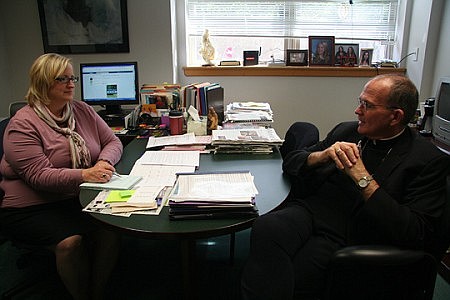
Bishop David M. O’Connell, C.M., recently answered questions about the magazine interview with Pope Francis published this month.
1. Were you surprised by the interview with Pope Francis that appeared in America magazine?
I must confess that I was surprised, very surprised by the interview, more by its tone than its substance. We are not accustomed to popes speaking so frankly or even giving interviews to journalists, so that surprised me. His candor was refreshing on many levels. I had to read the article translated from its original Italian, however, several times to make sure I understood what Pope Francis had actually said, not simply the characterizations of it as it appeared immediately in the media.
It is quite clear that the Holy Father did not intend to present or interpret Church teachings in the form of an interview. He has other ways to do that. I think he was simply sharing his thoughts and feelings about life in the Church based upon his many years of service as a pastor in response to questions posed to him. He has only been pope for a few months.
The interview may, indeed, give us a window into Pope Francis’ broad perspective and thinking on a lot of things but I would be slow to conclude that he intends to translate this interview into more definitive doctrinal teaching. A sense of a change in papal emphasis, however, would be a reasonable conclusion. That will make some folks happy and others, less so. And the interpretations of his remarks will be spun accordingly.
2. Out of the many things he said, which statements resonated most for you or articulated positions you have long held?
I do believe the institutional Church has an “image problem.” I do not believe, however, that it comes from teaching “too much” but, rather, from teaching “too little.” There are many aspects of our Church’s teachings that remain misunderstood, misrepresented, mischaracterized because, in the face of a radical secularism and the rampant desire to “do whatever and only what WE want,” Catholics don’t really know how to speak up and defend themselves and their Church. If our focus is too narrow, however, we can lose the bigger picture.
3. Which of his statements took you by the greatest surprise, or challenged your own long-held positions or philosophies?
The media was quick to isolate all the so-called “hot button” social issues which are so much a part of what people have labeled the “culture wars” in the Church and society at large. Although I tend to be more traditional in my approach to Church teaching and practice, I do not consider myself a “culture warrior.” That does not diminish my conviction about or commitment to the underlying causes. Again, my surprise with the interview was one of tone and the Holy Father’s frankness in speaking. I believe what I have always believed and my conviction about the Church’s faith and moral teachings remain unwavering.
It is unfortunate that people in society and, yes, even in the Church, are so willing and eager to reduce them to merely “issues” or, worse, “rights.” It is a way of anesthetizing themselves to what is fundamentally at stake.
Abortion is not simply an “issue” — it affects all of humanity because it affects human life at its very beginnings. Euthanasia is not simply an “issue”— it affects all of humanity because it affects human life at its most vulnerable points. Artificial contraception is not simply an “issue” — it affects all of humanity because it affects human life and its continuity within a proper context. The redefinition of marriage is not simple an “issue” — it affects all of humanity because it affects human life and the nature of the commitment that only a man and a woman can make to each other in a way that is faithful and fruitful and forever. The treatment of homosexual persons is not simply an “issue” — it affects all of humanity because it affects human life and dignity and respect for every person. The list goes on.
But there are other concerns that are — or should be — critically important to us. That’s what our Holy Father appears to be saying. He is telling us, “Turn down the volume a bit, take a deep breath” and broaden your focus, not to the exclusion of these concerns — or “issues” if you prefer — but, rather, to become more inclusive of other things as well.
We are not a “one or two issue” Church. While some Catholics emphasize social justice concerns and others stress topics that are more doctrinal in nature as though these are totally separate, all of us — together as Catholics — must acknowledge that our approach to social justice as well as to Church doctrine must be rooted in Jesus Christ, his Gospel and the rich deposit of our faith in a living, active Church. It’s not an either/ or set of propositions. The Church is “one, holy, catholic and apostolic” in teaching AND practice. As such, the Church and its shepherds must reveal and leads us all to Jesus Christ.
4. What do you think that Pope Francis was attempting to do in giving this interview?
As I read it, this interview was a conversation between two Jesuits sharing a common spiritual heritage in the context of a free, unfiltered exchange of ideas. Pope Francis was giving an “interview” for a Jesuit magazine not “pontificating,” excuse the pun.
Make no mistake about it. Pope Francis is quite bright and not careless in his responsibility to teach and guide the Church. He is just more transparent, more simple and more candid in his speech, in the best sense of those terms. Although he does not seem to prefer “being pope” to being a pastor, nevertheless, he IS the pope.
His words, even when off-the-cuff and unscripted, exert influence and carry weight with a lot of people. The role he has is still new to him — you only get one chance to be pope for the first time. I think we all need to give him the chance to grow in the papacy before putting him “in a box” the way people did of his predecessor.
5. Do you think that the interview will result in concrete changes in the way that the Church moves forward?
What do you think are the greatest potential benefits and risks flowing from the Pope’s interview?
I think an interview with a journalist is just an interview with a journalist. It seems to have captured the whole world’s attention, at least for now (and we have all seem how fleeting that attention span is!) and that is not a bad thing. If it softens the image of the Church a bit and creates a more welcome feeling for those who have drifted or feel alienated. That, in itself, could be a positive consequence.
If it leads people to think the Church has changed its fundamental convictions, that could be a negative.
Again, people will spin this interview and give it more significance than it warrants to advance their own perspectives. You know, whether you fall off the ship on its right side or its left, you still end up in the water with the potential of drowning. Stay in the center and you’ll remain “on board.”
And the center is Christ.
6. How would you like your people to approach the information in this interview? What do you hope would be their take away from the interview?
You cannot help but love this Pope. His warm and welcoming manner; his gentleness; his smile and obvious love for people; his willingness to share what he thinks; his simplicity; his concern for the poor: these are all good, deeply human, deeply Christian qualities that draw us to Pope Francis.
At the same time, if people conclude that he is not supportive of what the Church believes and teaches, I think they are mistaken. He is, after all is said and done, “the Pope” and we believe that the Holy Spirit brought him forward to serve the Church as its Chief Shepherd and the Vicar of Christ.
[[In-content Ad]]
Related Stories
Monday, December 15, 2025



E-Editions
Events
Bishop David M. O’Connell, C.M., recently answered questions about the magazine interview with Pope Francis published this month.
1. Were you surprised by the interview with Pope Francis that appeared in America magazine?
I must confess that I was surprised, very surprised by the interview, more by its tone than its substance. We are not accustomed to popes speaking so frankly or even giving interviews to journalists, so that surprised me. His candor was refreshing on many levels. I had to read the article translated from its original Italian, however, several times to make sure I understood what Pope Francis had actually said, not simply the characterizations of it as it appeared immediately in the media.
It is quite clear that the Holy Father did not intend to present or interpret Church teachings in the form of an interview. He has other ways to do that. I think he was simply sharing his thoughts and feelings about life in the Church based upon his many years of service as a pastor in response to questions posed to him. He has only been pope for a few months.
The interview may, indeed, give us a window into Pope Francis’ broad perspective and thinking on a lot of things but I would be slow to conclude that he intends to translate this interview into more definitive doctrinal teaching. A sense of a change in papal emphasis, however, would be a reasonable conclusion. That will make some folks happy and others, less so. And the interpretations of his remarks will be spun accordingly.
2. Out of the many things he said, which statements resonated most for you or articulated positions you have long held?
I do believe the institutional Church has an “image problem.” I do not believe, however, that it comes from teaching “too much” but, rather, from teaching “too little.” There are many aspects of our Church’s teachings that remain misunderstood, misrepresented, mischaracterized because, in the face of a radical secularism and the rampant desire to “do whatever and only what WE want,” Catholics don’t really know how to speak up and defend themselves and their Church. If our focus is too narrow, however, we can lose the bigger picture.
3. Which of his statements took you by the greatest surprise, or challenged your own long-held positions or philosophies?
The media was quick to isolate all the so-called “hot button” social issues which are so much a part of what people have labeled the “culture wars” in the Church and society at large. Although I tend to be more traditional in my approach to Church teaching and practice, I do not consider myself a “culture warrior.” That does not diminish my conviction about or commitment to the underlying causes. Again, my surprise with the interview was one of tone and the Holy Father’s frankness in speaking. I believe what I have always believed and my conviction about the Church’s faith and moral teachings remain unwavering.
It is unfortunate that people in society and, yes, even in the Church, are so willing and eager to reduce them to merely “issues” or, worse, “rights.” It is a way of anesthetizing themselves to what is fundamentally at stake.
Abortion is not simply an “issue” — it affects all of humanity because it affects human life at its very beginnings. Euthanasia is not simply an “issue”— it affects all of humanity because it affects human life at its most vulnerable points. Artificial contraception is not simply an “issue” — it affects all of humanity because it affects human life and its continuity within a proper context. The redefinition of marriage is not simple an “issue” — it affects all of humanity because it affects human life and the nature of the commitment that only a man and a woman can make to each other in a way that is faithful and fruitful and forever. The treatment of homosexual persons is not simply an “issue” — it affects all of humanity because it affects human life and dignity and respect for every person. The list goes on.
But there are other concerns that are — or should be — critically important to us. That’s what our Holy Father appears to be saying. He is telling us, “Turn down the volume a bit, take a deep breath” and broaden your focus, not to the exclusion of these concerns — or “issues” if you prefer — but, rather, to become more inclusive of other things as well.
We are not a “one or two issue” Church. While some Catholics emphasize social justice concerns and others stress topics that are more doctrinal in nature as though these are totally separate, all of us — together as Catholics — must acknowledge that our approach to social justice as well as to Church doctrine must be rooted in Jesus Christ, his Gospel and the rich deposit of our faith in a living, active Church. It’s not an either/ or set of propositions. The Church is “one, holy, catholic and apostolic” in teaching AND practice. As such, the Church and its shepherds must reveal and leads us all to Jesus Christ.
4. What do you think that Pope Francis was attempting to do in giving this interview?
As I read it, this interview was a conversation between two Jesuits sharing a common spiritual heritage in the context of a free, unfiltered exchange of ideas. Pope Francis was giving an “interview” for a Jesuit magazine not “pontificating,” excuse the pun.
Make no mistake about it. Pope Francis is quite bright and not careless in his responsibility to teach and guide the Church. He is just more transparent, more simple and more candid in his speech, in the best sense of those terms. Although he does not seem to prefer “being pope” to being a pastor, nevertheless, he IS the pope.
His words, even when off-the-cuff and unscripted, exert influence and carry weight with a lot of people. The role he has is still new to him — you only get one chance to be pope for the first time. I think we all need to give him the chance to grow in the papacy before putting him “in a box” the way people did of his predecessor.
5. Do you think that the interview will result in concrete changes in the way that the Church moves forward?
What do you think are the greatest potential benefits and risks flowing from the Pope’s interview?
I think an interview with a journalist is just an interview with a journalist. It seems to have captured the whole world’s attention, at least for now (and we have all seem how fleeting that attention span is!) and that is not a bad thing. If it softens the image of the Church a bit and creates a more welcome feeling for those who have drifted or feel alienated. That, in itself, could be a positive consequence.
If it leads people to think the Church has changed its fundamental convictions, that could be a negative.
Again, people will spin this interview and give it more significance than it warrants to advance their own perspectives. You know, whether you fall off the ship on its right side or its left, you still end up in the water with the potential of drowning. Stay in the center and you’ll remain “on board.”
And the center is Christ.
6. How would you like your people to approach the information in this interview? What do you hope would be their take away from the interview?
You cannot help but love this Pope. His warm and welcoming manner; his gentleness; his smile and obvious love for people; his willingness to share what he thinks; his simplicity; his concern for the poor: these are all good, deeply human, deeply Christian qualities that draw us to Pope Francis.
At the same time, if people conclude that he is not supportive of what the Church believes and teaches, I think they are mistaken. He is, after all is said and done, “the Pope” and we believe that the Holy Spirit brought him forward to serve the Church as its Chief Shepherd and the Vicar of Christ.
[[In-content Ad]]