


Pastoral care ministers bring Christ's presence to the sick
July 29, 2019 at 12:37 p.m.
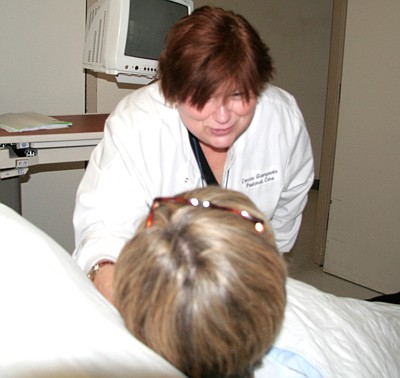
When Connie Giampaolo walks into Lourdes Medical Center of Burlington County each morning, she never knows what the day will bring.
Some days, she will spend time with patients receiving end-of-life care, comforting them during their final hours on earth. Other patients she meets are in critical condition, facing an uncertain future and searching for signs of hope. And some are on the road to recovery, looking forward to the day that they can return home.
But in each case Giampaolo, the Willingboro hospital’s certified Catholic chaplain, brings patients the same thing – a warm, friendly presence and a willing ear.
“You have to really listen to what people are saying, you have to see what they are feeling and you have to bring the presence of the Lord Jesus Christ to their bedside,” she said. “And then you let the Holy Spirit do the rest.”
When Giampaolo enters a patient’s room, she is ready for whatever direction their interaction may take. She carries a bag filled with rosaries, prayer cards – including Jewish and Muslim prayers, since not all patients are Catholic – and even sheet music, should the patient be in the mood for a song.
In some cases, the people Giampaolo meets are very open to talking about their spiritual life and how their illness factors in to God’s plan. Other times, religion doesn’t even come into the conversation.
Sometimes, they just talk about the quality of the hospital’s food.
Either way, Giampaolo is glad to help however she can.
“It is all the patient’s agenda,” she said. “Whatever the patient expresses in that visit, that’s what we provide.
“Sometimes they really let me know their burdens and sometimes they don’t want to talk,” she explained. “But that is okay. I can still be there, let them know we care and let them know that God has not abandoned them.”
Pastoral Presence
While Giampaolo considers her work to be a unique aspect of the presence of the Church in people’s lives, she is not alone in her ministry. All over the diocese, in hospitals, nursing homes, hospices, healthcare facilities and even in people’s homes, pastoral care ministers bring the presence of Christ to the sick.
According to Deanna Sass, director of the diocesan Office of Pastoral Care, there are approximately 1,100 pastoral caregivers working in various capacities throughout the diocese, including 65 professional staff chaplains. Many of the others are volunteers who offer compassion and care to the homebound, the ill and the dying in various ways.
The diocese helps to coordinate and facilitate the efforts of pastoral care ministers at all levels, including offering training, educational opportunities and certification programs that equip caregivers with the tools necessary to reach out to those in need.
In addition to the ministries that exist in healthcare facilities, the diocese has helped to develop a growing network of pastoral care ministries on the parish level. The ministries vary in size and scope, providing a wide array of services and support to people in need within their communities.
At Visitation Parish in Brick, a seven-member core team and more than 40 volunteers comprise the “Visitation Visitors.” Services provided by the group include regular hospital and nursing home visits as well as bringing Communion to people’s homes or just offering a source of spiritual and emotional companionship.
“Our goal is to provide a continuum of care for our people so that our parishioners know they are not alone, no matter what stage of life they are in,” said Barbara Holstein, coordinator of the parish’s pastoral care ministries. “We are always there to listen.
We always return calls and if there is anything we can do, we do it.”
Family Support
The holistic approach of the Church’s pastoral care ministry also recognizes another critical aspect of illness – the impact it has on family members dealing with the emotional repercussions of a loved one’s failing health, which in some cases requires them to become at-home caregivers.
Holstein said that Visitation’s pastoral care ministry includes emotional support for family members of the sick and dying. They are also willing to lend a hand to caregivers by helping them find available resources in the area or pitching in by giving someone a ride to the doctor.
“We want parishioners to feel that we are their extended family and anything they might need the family to do for them, maybe we can find somebody to do it,” Holstein said. “We work together to give the parishioner whatever they need, from start to finish.”
Giampaolo knows first hand how valuable that type of parish outreach can be to the family of someone who is battling illness. While her husband was undergoing intense chemotherapy treatment for cancer, which ultimately took his life, Giampaolo said that her parish, Sacred Heart in Riverton, was a tremendous source of comfort for her and her three children.
“They brought us meals, they kept us in prayer… they just gave us unconditional support and that really set the high standard for me as a professional chaplain,” Giampaolo recalled.
Since then, Giampaolo has been at the side of many others at the end of their lives, and she recognizes that reaching out to the family – both at the time of their loved one’s death and beyond – is a key component of pastoral care.
“You just stay there to be by the side of families who are saying, ‘Why us? Why is this happening to us?’” she said.
“Well, we don’t know why but we have hope and we have faith,” she added. “It is never easy for us to say goodbye to our loved ones but when you have the hope of a future in heaven and that you are going to be with God, that makes it feel different.
“And that is really what I try to bring to people – the hope that is in our faith.”
Related Stories
Monday, December 15, 2025

E-Editions
Events
When Connie Giampaolo walks into Lourdes Medical Center of Burlington County each morning, she never knows what the day will bring.
Some days, she will spend time with patients receiving end-of-life care, comforting them during their final hours on earth. Other patients she meets are in critical condition, facing an uncertain future and searching for signs of hope. And some are on the road to recovery, looking forward to the day that they can return home.
But in each case Giampaolo, the Willingboro hospital’s certified Catholic chaplain, brings patients the same thing – a warm, friendly presence and a willing ear.
“You have to really listen to what people are saying, you have to see what they are feeling and you have to bring the presence of the Lord Jesus Christ to their bedside,” she said. “And then you let the Holy Spirit do the rest.”
When Giampaolo enters a patient’s room, she is ready for whatever direction their interaction may take. She carries a bag filled with rosaries, prayer cards – including Jewish and Muslim prayers, since not all patients are Catholic – and even sheet music, should the patient be in the mood for a song.
In some cases, the people Giampaolo meets are very open to talking about their spiritual life and how their illness factors in to God’s plan. Other times, religion doesn’t even come into the conversation.
Sometimes, they just talk about the quality of the hospital’s food.
Either way, Giampaolo is glad to help however she can.
“It is all the patient’s agenda,” she said. “Whatever the patient expresses in that visit, that’s what we provide.
“Sometimes they really let me know their burdens and sometimes they don’t want to talk,” she explained. “But that is okay. I can still be there, let them know we care and let them know that God has not abandoned them.”
Pastoral Presence
While Giampaolo considers her work to be a unique aspect of the presence of the Church in people’s lives, she is not alone in her ministry. All over the diocese, in hospitals, nursing homes, hospices, healthcare facilities and even in people’s homes, pastoral care ministers bring the presence of Christ to the sick.
According to Deanna Sass, director of the diocesan Office of Pastoral Care, there are approximately 1,100 pastoral caregivers working in various capacities throughout the diocese, including 65 professional staff chaplains. Many of the others are volunteers who offer compassion and care to the homebound, the ill and the dying in various ways.
The diocese helps to coordinate and facilitate the efforts of pastoral care ministers at all levels, including offering training, educational opportunities and certification programs that equip caregivers with the tools necessary to reach out to those in need.
In addition to the ministries that exist in healthcare facilities, the diocese has helped to develop a growing network of pastoral care ministries on the parish level. The ministries vary in size and scope, providing a wide array of services and support to people in need within their communities.
At Visitation Parish in Brick, a seven-member core team and more than 40 volunteers comprise the “Visitation Visitors.” Services provided by the group include regular hospital and nursing home visits as well as bringing Communion to people’s homes or just offering a source of spiritual and emotional companionship.
“Our goal is to provide a continuum of care for our people so that our parishioners know they are not alone, no matter what stage of life they are in,” said Barbara Holstein, coordinator of the parish’s pastoral care ministries. “We are always there to listen.
We always return calls and if there is anything we can do, we do it.”
Family Support
The holistic approach of the Church’s pastoral care ministry also recognizes another critical aspect of illness – the impact it has on family members dealing with the emotional repercussions of a loved one’s failing health, which in some cases requires them to become at-home caregivers.
Holstein said that Visitation’s pastoral care ministry includes emotional support for family members of the sick and dying. They are also willing to lend a hand to caregivers by helping them find available resources in the area or pitching in by giving someone a ride to the doctor.
“We want parishioners to feel that we are their extended family and anything they might need the family to do for them, maybe we can find somebody to do it,” Holstein said. “We work together to give the parishioner whatever they need, from start to finish.”
Giampaolo knows first hand how valuable that type of parish outreach can be to the family of someone who is battling illness. While her husband was undergoing intense chemotherapy treatment for cancer, which ultimately took his life, Giampaolo said that her parish, Sacred Heart in Riverton, was a tremendous source of comfort for her and her three children.
“They brought us meals, they kept us in prayer… they just gave us unconditional support and that really set the high standard for me as a professional chaplain,” Giampaolo recalled.
Since then, Giampaolo has been at the side of many others at the end of their lives, and she recognizes that reaching out to the family – both at the time of their loved one’s death and beyond – is a key component of pastoral care.
“You just stay there to be by the side of families who are saying, ‘Why us? Why is this happening to us?’” she said.
“Well, we don’t know why but we have hope and we have faith,” she added. “It is never easy for us to say goodbye to our loved ones but when you have the hope of a future in heaven and that you are going to be with God, that makes it feel different.
“And that is really what I try to bring to people – the hope that is in our faith.”