


Key changes to Missal capture original meanings
July 29, 2019 at 12:37 p.m.
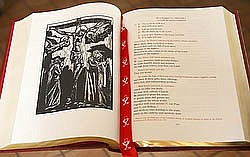
This article is the second in an ongoing series to educate Catholics about the changes to the Roman Missal
Casual observers of the Roman Catholic Church often remark that it hasn’t changed in 2,000 years. Actually, just like any living institution, it is constantly changing. Over the centuries, where and when the Mass is celebrated, how saints are chosen, and the method of electing popes are some of the ways the Church has adjusted its traditions and policies.
Now come changes to the Roman Missal, the book containing the prayers for the Mass. For years, the Church has been working to more accurately translate those prayers from the Latin in which the original Missal is promulgated into modern languages, including English. Msgr. Kevin Irwin, dean of the School of Theology and Religious Studies at The Catholic University of America in Washington, says those alterations were necessitated by two factors.
“First, the Committee charged with the English translation of the Roman Missal issued the post-Vatican II translations very quickly,” he notes, referring to the Second Vatican Council in the 1960s. “They realized, after a few years’ use of the Missal, that some translations should have been more accurate. Second, some feasts have been added to the Church’s liturgical calendar in recent years, for example, St. Padre Pio’s. Those Latin Masses need to be translated into English.”
Peter Finn, associate director of the International Commission on English in the Liturgy (ICEL), compares the changes “to the cleaning of an old painting whose images are brought to clearer light in the cleaning process. …The translations have sought to achieve a suitable balance between the word-for-word, literal meaning of the Latin and the demands of good proclamation, style and intelligibility.”
One of the most significant changes, Msgr. Irwin says, involves the familiar phrase, “And also with you,” which the congregation recites after the celebrant of the Mass says, “The Lord be with you.”
He explains that “the congregation will now say, ‘and with your spirit.’ This places the English translation in line with most other languages. The response is not to the person of the priest but to the Spirit of God, who ordained him to permanent service in the Church. It is an acknowledgment of the ‘spirit’ and grace which is in him.”
Msgr. Anthony Sherman, executive director of the U.S. bishops’ Secretariat of Divine Worship, offers another example: Instead of saying “we believe” at the beginning of the Creed, Catholics will soon recite, “I believe.” The reason for the shift, he says, is “to underline the fact that, although we share our belief together with our brothers and sisters, each one of us is called to make an individual profession of faith.”
As the changes are introduced, parishioners will have many guides to help them learn their new responses.
“Plans are underway by a number of publishers to print up Mass booklets or cards containing the changes,” Msgr. Irwin notes. Adds Msgr. Sherman: “Eventually all participation aids and hymnals will include the new responses of the people.” Finn notes that “today, the people’s responses can be made more readily available not only in printed editions but also on websites, CDs, iPhones etc.”
One website already available to help people become familiar with the new translation of the Roman Missal is sponsored by the U.S. Bishops: www.usccb.org/romanmissal
Average Catholics may not immediately grasp the necessity and benefits of the changes, Msgr. Irwin admits, but the familiarity that comes with time should lead people to comfort with and understanding of the words.
“All of us – laity, clergy and religious – will need to take time to review the changed words and come to appreciate what we may not have understood or appreciated before,” he says. “There are layers of meaning to liturgical texts, not just one meaning. These translations and the education we shall receive before they are implemented will offer us a chance to ‘brush up’ our knowledge of the Mass and of our beliefs.”
Msgr. Sherman believes the changes “will invite the faithful to pause and reflect on what, after so many years, we may have taken for granted. People will listen more attentively to the various prayers proclaimed by the priest and these will convey a much deeper richness, which can be the basis for meditation and prayer for the enrichment of one’s spiritual life.”
This series is being provided by the United States Conference of Catholic Bishops’ Offices of Divine Worship and Media Relations. For more information, go to http://www.usccb.org/romanmissal/
Related Stories
Sunday, December 14, 2025

E-Editions
Events
This article is the second in an ongoing series to educate Catholics about the changes to the Roman Missal
Casual observers of the Roman Catholic Church often remark that it hasn’t changed in 2,000 years. Actually, just like any living institution, it is constantly changing. Over the centuries, where and when the Mass is celebrated, how saints are chosen, and the method of electing popes are some of the ways the Church has adjusted its traditions and policies.
Now come changes to the Roman Missal, the book containing the prayers for the Mass. For years, the Church has been working to more accurately translate those prayers from the Latin in which the original Missal is promulgated into modern languages, including English. Msgr. Kevin Irwin, dean of the School of Theology and Religious Studies at The Catholic University of America in Washington, says those alterations were necessitated by two factors.
“First, the Committee charged with the English translation of the Roman Missal issued the post-Vatican II translations very quickly,” he notes, referring to the Second Vatican Council in the 1960s. “They realized, after a few years’ use of the Missal, that some translations should have been more accurate. Second, some feasts have been added to the Church’s liturgical calendar in recent years, for example, St. Padre Pio’s. Those Latin Masses need to be translated into English.”
Peter Finn, associate director of the International Commission on English in the Liturgy (ICEL), compares the changes “to the cleaning of an old painting whose images are brought to clearer light in the cleaning process. …The translations have sought to achieve a suitable balance between the word-for-word, literal meaning of the Latin and the demands of good proclamation, style and intelligibility.”
One of the most significant changes, Msgr. Irwin says, involves the familiar phrase, “And also with you,” which the congregation recites after the celebrant of the Mass says, “The Lord be with you.”
He explains that “the congregation will now say, ‘and with your spirit.’ This places the English translation in line with most other languages. The response is not to the person of the priest but to the Spirit of God, who ordained him to permanent service in the Church. It is an acknowledgment of the ‘spirit’ and grace which is in him.”
Msgr. Anthony Sherman, executive director of the U.S. bishops’ Secretariat of Divine Worship, offers another example: Instead of saying “we believe” at the beginning of the Creed, Catholics will soon recite, “I believe.” The reason for the shift, he says, is “to underline the fact that, although we share our belief together with our brothers and sisters, each one of us is called to make an individual profession of faith.”
As the changes are introduced, parishioners will have many guides to help them learn their new responses.
“Plans are underway by a number of publishers to print up Mass booklets or cards containing the changes,” Msgr. Irwin notes. Adds Msgr. Sherman: “Eventually all participation aids and hymnals will include the new responses of the people.” Finn notes that “today, the people’s responses can be made more readily available not only in printed editions but also on websites, CDs, iPhones etc.”
One website already available to help people become familiar with the new translation of the Roman Missal is sponsored by the U.S. Bishops: www.usccb.org/romanmissal
Average Catholics may not immediately grasp the necessity and benefits of the changes, Msgr. Irwin admits, but the familiarity that comes with time should lead people to comfort with and understanding of the words.
“All of us – laity, clergy and religious – will need to take time to review the changed words and come to appreciate what we may not have understood or appreciated before,” he says. “There are layers of meaning to liturgical texts, not just one meaning. These translations and the education we shall receive before they are implemented will offer us a chance to ‘brush up’ our knowledge of the Mass and of our beliefs.”
Msgr. Sherman believes the changes “will invite the faithful to pause and reflect on what, after so many years, we may have taken for granted. People will listen more attentively to the various prayers proclaimed by the priest and these will convey a much deeper richness, which can be the basis for meditation and prayer for the enrichment of one’s spiritual life.”
This series is being provided by the United States Conference of Catholic Bishops’ Offices of Divine Worship and Media Relations. For more information, go to http://www.usccb.org/romanmissal/