


FAITH ALIVE: Welcoming and sheltering the homeless stranger
July 29, 2019 at 12:37 p.m.
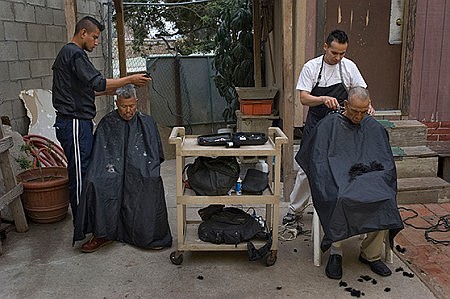
By David Gibson | Catholic News Service
I wonder how the prodigal son would have appeared to others as he made his way back to his father's home from the "distant country where he squandered his inheritance on a life of dissipation" (Lk 15:11-23).
Did he look unkempt? Were his clothes tattered? Perhaps he seemed malnourished, downcast and anxious.
The Gospel parable of the prodigal son is a story that quite naturally does not provide such details. Reading between the lines, however, it is tempting to fill in the blanks and to imagine that someone witnessing him along the road might have thought he was a homeless, destitute stranger.
In his last days in that "distant country," after freely spending the entire inheritance received from his father, the prodigal son "found himself in dire need." So he hired himself out to a local citizen, "who sent him to his farm to tend the swine."
The prodigal son longed on that farm "to eat his fill of the pods on which the swine fed, but nobody gave him any." That was when "he got up and went back to his father."
His father, in the best-loved part of the parable, defines through his actions what it means to be compassionate, welcoming and lovingly hospitable. He exhibits neither anger nor hostility over his son's past actions.
Upon the son's arrival home, his father immediately embraces him. Quickly deciding to celebrate his son's return with a banquet, the father instructs his servants to "bring the finest robe" for the young man to wear.
Thus, the father happily and generously accepts his son, treating him as someone worthy of respect, care and happiness. Before he arrived home, however, some surely would have thought he was an aimless wanderer.
Many wanderers in today's world are homeless, but not always for the same reason. Some temporarily lack a place to call home, having lost their jobs during an economic downturn. Others suffered a lasting illness that drained their financial resources.
Still others, like the prodigal son, become homeless after making self-destructive lifestyle decisions. It is well known, too, that many homeless people suffer from mental illness.
Refugees fleeing violence, hunger and religious persecution enter the ranks of the homeless for months or years. Some others become homeless after being abandoned by a spouse, or due to a lack of affordable housing, or in the wake of a natural disaster.
Still others suddenly discover, having had no choice but to live for a very long time from paycheck to paycheck, that events have overtaken them; their funds have run out.
It is hard to know why someone is homeless unless we ask. Appearances do not tell the whole story. But in communities everywhere, short-term and long-term homelessness are not rare.
In fact, homelessness is so common that it is possible for society at large to take it for granted, something that concerns Pope Francis. In June 2013 he famously remarked:
"That some homeless people should freeze to death on the street -- this doesn't make news. On the contrary, when the stock market drops 10 points in some cities, it constitutes a tragedy. In this way people are thrown aside as if they were trash."
Possibly some people wondered in biblical times if Jesus was homeless, Pope Francis remarked on another occasion, pointing out that the Lord was a wanderer. "Jesus' life was on the road," the pope told the pastors of Rome during Lent 2014.
Jesus identified with this world's wanderers, it frequently is noted. Jesus could see himself in their shoes. He considered himself at one with them. He respected their humanity and dignity.
This was noted in January 2014 testimony on the Syrian refugee crisis delivered before a U.S. Senate subcommittee by Auxiliary Bishop Eusebio Elizondo of Seattle, who chairs the U.S. Catholic bishops' Committee on Migration.
"The image of the migrant is seen in the life and teachings of Jesus Christ," the bishop said. "In his own life and work Jesus identified himself with newcomers and with other marginalized persons in a special way" by saying, "I was a stranger and you welcomed me" (Mt 25:35).
By identifying with the stranger and others who suffer, Jesus indicates that he wants believers to view these very people as signs of his presence.
It all reveals, moreover, that Jesus is genuinely hospitable toward the homeless stranger, the naked, the thirsty, the hungry, the sick and the imprisoned. "Whatever you did for one of these least brothers of mine, you did for me," Jesus explains (Mt 25:40).
The hospitality of Jesus -- his acceptance and welcome of others -- is a form of love put into action. It confirms, to borrow the words of Pope Francis, that "to love God and neighbor is not something abstract."
Boston's Cardinal Sean P. O'Malley commented in a spring 2015 homily that "the hospitality of the Gospel is about welcoming the stranger and, like the good Samaritan, making the stranger the object of our love, part of our community, even a brother."
Gibson served on Catholic News Service's editorial staff for 37 years.
Seeking -- and offering -- shelter from the storms of life
By Mike Nelson |Catholic News Service
The closest I have ever come to being without shelter was after the 1994 Northridge earthquake. Our mobile home in the San Fernando Valley was far too mobile that early morning, tilting off several of the supports holding it level and becoming lopsided. Amazingly, it was intact enough that it could be saved with some restorative work.
But it was uninhabitable for three months, which meant my wife, our 13-year-old son and I needed new living quarters. We stayed a couple of nights at my parents' house and then, because of a good insurance policy, we stayed in hotels until our home was repaired and ready.
Some hotels even offered price breaks to the "earthquake homeless," a gesture of kindness and mercy that did not get written about much back then, but one we appreciated.
Throughout that period, I never once believed we wouldn't be OK in the end, that we wouldn't find ourselves without shelter (as many did, at least initially). I had faith that God would look out for us, as God always looks out for us, and it was a matter of being awake, alert and prepared to follow the path God had chosen for us to follow.
But I know there are many people across America who have faith greater and stronger than mine, and have suffered far worse (hurricanes, tornadoes, blizzards, floods and fire).
For thousands, their homes weren't simply damaged, they were destroyed, destruction that also claimed basic items of need, precious memories and -- perhaps most of all -- a sense of safety and security that shelter ought to provide.
As I write this, the weather has turned chilly in southern California, at least by our standards (much of the U.S. would gladly accept lows in the 40s this time of year, I am sure).
And once again, throughout the region, several places -- including churches -- have opened their doors at night to accommodate those without homes.
The East San Gabriel Valley Coalition for the Homeless, for example, includes four Catholic parishes that are participating in this year's "Winter Shelter" program (from Dec. 1 to Feb. 29).
Each participating church offers two weeks of overnight shelter (usually in its parish hall) and on an ongoing basis provides food, clothing, hygiene and referrals for jobs, education and health care.
Parish volunteers staff the shelters, offering not simply the comfort of a warm place to sleep but fellowship in an area where the homeless population is estimated to have risen 21 percent this year, with a particularly disturbing increase in homeless families.
In the words of Matthew's Gospel, these parishes and volunteers "welcome the stranger" by offering shelter, a corporal work of mercy.
This, of course, is how we model Jesus, who, ironically, seemed not to have a home in his adult preaching years. "Foxes have dens and birds of the sky have nests," he said (in Lk 9:58), "but the Son of Man has nowhere to lay his head."
Or does he?
You may be familiar with the image of Jesus knocking on a door. It is said that this image represents Jesus seeking to enter our hearts, and it is up to us to decide whether to let him in. Does this mean Jesus is seeking shelter?
I would suggest Jesus seeks to offer us shelter, the shelter of his caring heart, the shelter of God's love and mercy from anyone and anything that would cause us fear and anxiety.
And, most of all, the shelter and comfort of knowing that a place in God's kingdom is waiting for us -- provided that we respond to Jesus' invitation to let him enter our hearts.
That, it seems to me, is the best shelter anyone could offer. It is better than earthquake insurance. The kind of shelter we are called to share with one another.
Nelson is former editor of The Tidings, newspaper of the Archdiocese of Los Angeles.
Welcoming those without a home
By Daniel S. Mulhall |Catholic News Service
The Catechism of the Catholic Church (No. 2447) states that one of the corporal works of mercy is "sheltering the homeless." The Gospel of Matthew, from where the works of mercy are taken, says that those who are "blessed by my Father" are those who welcome the stranger.
While the wording here is somewhat different, the meaning is clear: Believers are called to provide shelter for those in need, especially those who are refugees.
Judaism identifies strongly with caring for those fleeing from their homeland. Abraham, the great patriarch of Judaism, Christianity and Islam, was himself a refugee, having fled to Egypt to escape famine, guided there by God "to go forth from your land, your relatives, and from your father's house to a land that I will show you" (Gn 12:1).
Later, in Genesis 23 Abraham is an invited guest in Canaan, and Jacob and his family are refugees in Genesis 46. Deuteronomy 26:5 says that when the Hebrews reach the Promised Land they are to identify themselves this way:
"Then you shall declare in the presence of the Lord, your God, 'My father was a refugee Aramean who went down to Egypt with a small household and lived there as a resident alien.'"
Numerous passages lay out how visitors are to be treated, including Leviticus 25:35 ("When one of your kindred is reduced to poverty and becomes indebted to you, you shall support that person like a resident alien; let your kindred live with you") and Exodus 22:20 ("You shall not oppress or afflict a resident alien, for you were once aliens residing in the land of Egypt").
Isaiah 58:7 declares that the fast God requires is "bringing the afflicted and the homeless into your house."
Leviticus 19:33-34 puts it quite strongly: "When an alien resides with you in your land, do not mistreat such a one. You shall treat the alien who resides with you no differently than the natives born among you; you shall love the alien as yourself; for you too were once aliens in the land of Egypt. I, the Lord, am your God."
Clearly, Jesus' teaching about welcoming the stranger comes from this understanding.
This teaching of Jesus also emphasizes the importance of providing hospitality to the stranger, as expressed in Hebrews 13:1-2, which connects the importance of hospitality to an experience of the divine: "Let mutual love continue. Do not neglect hospitality, for through it some have unknowingly entertained angels," a reference to Genesis 18.
If we are to shelter the homeless and welcome the stranger then we must act: Good intentions are not enough.
As James 2:14 puts it, "What good is it, my brothers, if someone says he has faith but does not have works?" As 1 John 3:18 says, "let us love not in word or speech but in deed and truth."
Shelter the homeless and welcome the stranger. That is what Jesus would do.
Mulhall is a catechist. He lives in Laurel, Maryland.
FOOD FOR THOUGHT
During the Year of Mercy, Pope Francis has urged Catholics not just to learn more about the works of mercy but also to take action.
When it comes to sheltering the homeless, Creighton University's online ministry has created a page with suggestions of possible ways to carry out this mandate.
"We think of shelter as a basic requirement of life, but many people simply don't have a roof over their heads or a safe place to live," says Creighton's online ministry page titled "Harbor the Harborless/Shelter the Homeless."
"For many of us, the line between our homes and being homeless is a thin one that can disappear with the death of a spouse, the loss of a job or an illness."
Something as small as making eye contact or saying "hello" to someone can help a person who doesn't feel welcome by society.
Other suggestions include making donations to help others set up a home, as well as getting involved with organizations such as Habitat for Humanity, which helps build homes for those who could not otherwise afford them.
Creighton also urges the public to learn about shelters in one's community, to learn about housing, advocate for the homeless and to work for fair housing for all.
[[In-content Ad]]
Related Stories
Sunday, December 14, 2025



E-Editions
Events
By David Gibson | Catholic News Service
I wonder how the prodigal son would have appeared to others as he made his way back to his father's home from the "distant country where he squandered his inheritance on a life of dissipation" (Lk 15:11-23).
Did he look unkempt? Were his clothes tattered? Perhaps he seemed malnourished, downcast and anxious.
The Gospel parable of the prodigal son is a story that quite naturally does not provide such details. Reading between the lines, however, it is tempting to fill in the blanks and to imagine that someone witnessing him along the road might have thought he was a homeless, destitute stranger.
In his last days in that "distant country," after freely spending the entire inheritance received from his father, the prodigal son "found himself in dire need." So he hired himself out to a local citizen, "who sent him to his farm to tend the swine."
The prodigal son longed on that farm "to eat his fill of the pods on which the swine fed, but nobody gave him any." That was when "he got up and went back to his father."
His father, in the best-loved part of the parable, defines through his actions what it means to be compassionate, welcoming and lovingly hospitable. He exhibits neither anger nor hostility over his son's past actions.
Upon the son's arrival home, his father immediately embraces him. Quickly deciding to celebrate his son's return with a banquet, the father instructs his servants to "bring the finest robe" for the young man to wear.
Thus, the father happily and generously accepts his son, treating him as someone worthy of respect, care and happiness. Before he arrived home, however, some surely would have thought he was an aimless wanderer.
Many wanderers in today's world are homeless, but not always for the same reason. Some temporarily lack a place to call home, having lost their jobs during an economic downturn. Others suffered a lasting illness that drained their financial resources.
Still others, like the prodigal son, become homeless after making self-destructive lifestyle decisions. It is well known, too, that many homeless people suffer from mental illness.
Refugees fleeing violence, hunger and religious persecution enter the ranks of the homeless for months or years. Some others become homeless after being abandoned by a spouse, or due to a lack of affordable housing, or in the wake of a natural disaster.
Still others suddenly discover, having had no choice but to live for a very long time from paycheck to paycheck, that events have overtaken them; their funds have run out.
It is hard to know why someone is homeless unless we ask. Appearances do not tell the whole story. But in communities everywhere, short-term and long-term homelessness are not rare.
In fact, homelessness is so common that it is possible for society at large to take it for granted, something that concerns Pope Francis. In June 2013 he famously remarked:
"That some homeless people should freeze to death on the street -- this doesn't make news. On the contrary, when the stock market drops 10 points in some cities, it constitutes a tragedy. In this way people are thrown aside as if they were trash."
Possibly some people wondered in biblical times if Jesus was homeless, Pope Francis remarked on another occasion, pointing out that the Lord was a wanderer. "Jesus' life was on the road," the pope told the pastors of Rome during Lent 2014.
Jesus identified with this world's wanderers, it frequently is noted. Jesus could see himself in their shoes. He considered himself at one with them. He respected their humanity and dignity.
This was noted in January 2014 testimony on the Syrian refugee crisis delivered before a U.S. Senate subcommittee by Auxiliary Bishop Eusebio Elizondo of Seattle, who chairs the U.S. Catholic bishops' Committee on Migration.
"The image of the migrant is seen in the life and teachings of Jesus Christ," the bishop said. "In his own life and work Jesus identified himself with newcomers and with other marginalized persons in a special way" by saying, "I was a stranger and you welcomed me" (Mt 25:35).
By identifying with the stranger and others who suffer, Jesus indicates that he wants believers to view these very people as signs of his presence.
It all reveals, moreover, that Jesus is genuinely hospitable toward the homeless stranger, the naked, the thirsty, the hungry, the sick and the imprisoned. "Whatever you did for one of these least brothers of mine, you did for me," Jesus explains (Mt 25:40).
The hospitality of Jesus -- his acceptance and welcome of others -- is a form of love put into action. It confirms, to borrow the words of Pope Francis, that "to love God and neighbor is not something abstract."
Boston's Cardinal Sean P. O'Malley commented in a spring 2015 homily that "the hospitality of the Gospel is about welcoming the stranger and, like the good Samaritan, making the stranger the object of our love, part of our community, even a brother."
Gibson served on Catholic News Service's editorial staff for 37 years.
Seeking -- and offering -- shelter from the storms of life
By Mike Nelson |Catholic News Service
The closest I have ever come to being without shelter was after the 1994 Northridge earthquake. Our mobile home in the San Fernando Valley was far too mobile that early morning, tilting off several of the supports holding it level and becoming lopsided. Amazingly, it was intact enough that it could be saved with some restorative work.
But it was uninhabitable for three months, which meant my wife, our 13-year-old son and I needed new living quarters. We stayed a couple of nights at my parents' house and then, because of a good insurance policy, we stayed in hotels until our home was repaired and ready.
Some hotels even offered price breaks to the "earthquake homeless," a gesture of kindness and mercy that did not get written about much back then, but one we appreciated.
Throughout that period, I never once believed we wouldn't be OK in the end, that we wouldn't find ourselves without shelter (as many did, at least initially). I had faith that God would look out for us, as God always looks out for us, and it was a matter of being awake, alert and prepared to follow the path God had chosen for us to follow.
But I know there are many people across America who have faith greater and stronger than mine, and have suffered far worse (hurricanes, tornadoes, blizzards, floods and fire).
For thousands, their homes weren't simply damaged, they were destroyed, destruction that also claimed basic items of need, precious memories and -- perhaps most of all -- a sense of safety and security that shelter ought to provide.
As I write this, the weather has turned chilly in southern California, at least by our standards (much of the U.S. would gladly accept lows in the 40s this time of year, I am sure).
And once again, throughout the region, several places -- including churches -- have opened their doors at night to accommodate those without homes.
The East San Gabriel Valley Coalition for the Homeless, for example, includes four Catholic parishes that are participating in this year's "Winter Shelter" program (from Dec. 1 to Feb. 29).
Each participating church offers two weeks of overnight shelter (usually in its parish hall) and on an ongoing basis provides food, clothing, hygiene and referrals for jobs, education and health care.
Parish volunteers staff the shelters, offering not simply the comfort of a warm place to sleep but fellowship in an area where the homeless population is estimated to have risen 21 percent this year, with a particularly disturbing increase in homeless families.
In the words of Matthew's Gospel, these parishes and volunteers "welcome the stranger" by offering shelter, a corporal work of mercy.
This, of course, is how we model Jesus, who, ironically, seemed not to have a home in his adult preaching years. "Foxes have dens and birds of the sky have nests," he said (in Lk 9:58), "but the Son of Man has nowhere to lay his head."
Or does he?
You may be familiar with the image of Jesus knocking on a door. It is said that this image represents Jesus seeking to enter our hearts, and it is up to us to decide whether to let him in. Does this mean Jesus is seeking shelter?
I would suggest Jesus seeks to offer us shelter, the shelter of his caring heart, the shelter of God's love and mercy from anyone and anything that would cause us fear and anxiety.
And, most of all, the shelter and comfort of knowing that a place in God's kingdom is waiting for us -- provided that we respond to Jesus' invitation to let him enter our hearts.
That, it seems to me, is the best shelter anyone could offer. It is better than earthquake insurance. The kind of shelter we are called to share with one another.
Nelson is former editor of The Tidings, newspaper of the Archdiocese of Los Angeles.
Welcoming those without a home
By Daniel S. Mulhall |Catholic News Service
The Catechism of the Catholic Church (No. 2447) states that one of the corporal works of mercy is "sheltering the homeless." The Gospel of Matthew, from where the works of mercy are taken, says that those who are "blessed by my Father" are those who welcome the stranger.
While the wording here is somewhat different, the meaning is clear: Believers are called to provide shelter for those in need, especially those who are refugees.
Judaism identifies strongly with caring for those fleeing from their homeland. Abraham, the great patriarch of Judaism, Christianity and Islam, was himself a refugee, having fled to Egypt to escape famine, guided there by God "to go forth from your land, your relatives, and from your father's house to a land that I will show you" (Gn 12:1).
Later, in Genesis 23 Abraham is an invited guest in Canaan, and Jacob and his family are refugees in Genesis 46. Deuteronomy 26:5 says that when the Hebrews reach the Promised Land they are to identify themselves this way:
"Then you shall declare in the presence of the Lord, your God, 'My father was a refugee Aramean who went down to Egypt with a small household and lived there as a resident alien.'"
Numerous passages lay out how visitors are to be treated, including Leviticus 25:35 ("When one of your kindred is reduced to poverty and becomes indebted to you, you shall support that person like a resident alien; let your kindred live with you") and Exodus 22:20 ("You shall not oppress or afflict a resident alien, for you were once aliens residing in the land of Egypt").
Isaiah 58:7 declares that the fast God requires is "bringing the afflicted and the homeless into your house."
Leviticus 19:33-34 puts it quite strongly: "When an alien resides with you in your land, do not mistreat such a one. You shall treat the alien who resides with you no differently than the natives born among you; you shall love the alien as yourself; for you too were once aliens in the land of Egypt. I, the Lord, am your God."
Clearly, Jesus' teaching about welcoming the stranger comes from this understanding.
This teaching of Jesus also emphasizes the importance of providing hospitality to the stranger, as expressed in Hebrews 13:1-2, which connects the importance of hospitality to an experience of the divine: "Let mutual love continue. Do not neglect hospitality, for through it some have unknowingly entertained angels," a reference to Genesis 18.
If we are to shelter the homeless and welcome the stranger then we must act: Good intentions are not enough.
As James 2:14 puts it, "What good is it, my brothers, if someone says he has faith but does not have works?" As 1 John 3:18 says, "let us love not in word or speech but in deed and truth."
Shelter the homeless and welcome the stranger. That is what Jesus would do.
Mulhall is a catechist. He lives in Laurel, Maryland.
FOOD FOR THOUGHT
During the Year of Mercy, Pope Francis has urged Catholics not just to learn more about the works of mercy but also to take action.
When it comes to sheltering the homeless, Creighton University's online ministry has created a page with suggestions of possible ways to carry out this mandate.
"We think of shelter as a basic requirement of life, but many people simply don't have a roof over their heads or a safe place to live," says Creighton's online ministry page titled "Harbor the Harborless/Shelter the Homeless."
"For many of us, the line between our homes and being homeless is a thin one that can disappear with the death of a spouse, the loss of a job or an illness."
Something as small as making eye contact or saying "hello" to someone can help a person who doesn't feel welcome by society.
Other suggestions include making donations to help others set up a home, as well as getting involved with organizations such as Habitat for Humanity, which helps build homes for those who could not otherwise afford them.
Creighton also urges the public to learn about shelters in one's community, to learn about housing, advocate for the homeless and to work for fair housing for all.
[[In-content Ad]]