


Despite danger and hostility, pope brought message of peace to Lebanon
July 29, 2019 at 12:37 p.m.
The following unsigned editorial first appeared in the Sept. 19 issue of The Catholic Register, the Toronto-based national Catholic Canadian newspaper. It is provided here through Catholic News Service.
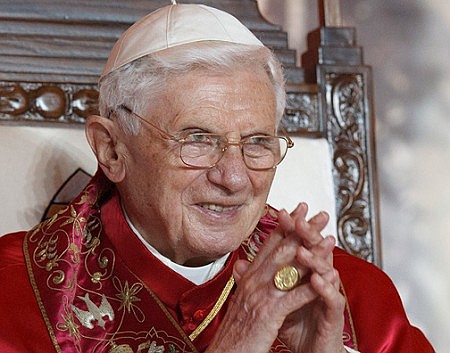
As war raged in Syria and an anti-Muslim film ignited violence across the Arab world, Pope Benedict calmly arrived last week in Lebanon as a “pilgrim of peace.”
The 85-year-old pontiff would have been excused if, citing age and security concerns, he’d postponed this trip. During his three-day stay, 25 people were injured and a man killed in Lebanon’s second-largest city, Tripoli, during protests aimed at an American film that mocks Islam. The day after he left, missiles from Syrian jets hit Lebanese territory. The region, habitually unsafe, is particularly dangerous right now.
The purpose of the trip was to officially endorse the apostolic exhortation that was drafted following the 2010 Synod of Bishops for the Middle East. That task could have been accomplished in the Vatican, of course, and transmitted live worldwide by video-conferencing and Internet technology. Yet the pope dismissed that option.
Instead, he made the right and courageous decision to stand beside the Christians of the region and, by his physical presence, acknowledge the hardships they endure by living in nations that are often hostile to Christianity. That simple act alone says much about the pope. Then, addressing some 20,000 young people from several Middle East countries, he urged them to be the vanguard to keep Christianity alive in the lands of its birth.
Middle East Christians, facing social and economic discrimination and seeking safety for their families, have been immigrating in droves to Europe and North America. At the current pace, Christianity might virtually disappear from the region in a generation. It is asking much of young Christians to endure financial and religious hardship, but that is exactly what the pope implored. To be effective, the message had to be delivered in person.
“I am aware of the difficulties you face daily, on account of instability and a lack of security, and your sense of being alone and on the margins,” he said. But, he added, “You are meant to be protagonists of your country’s future.”
The pope’s apostolic exhortation lays a common-sense framework for Middle East Christianity to endure. It emphasizes dialogue, respect, equality, tolerance and forgiveness among Christians, Muslims and Jews, while denouncing secularism and fun damentalism. The pope urged young people to never be afraid or ashamed of being Christian and he affirmed their right to religious liberty, to live publicly as Christians and to participate fully in civil life.
The pope arrived in Lebanon as a pilgrim of peace but departed as an emissary of inspiration and hope. He ignored the latest regional upheaval and chose boldly to stand among the anxious Christians to let them know in person that he will not abandon them. That may have been the most important message of all.
The views or positions presented in this or any guest commentary are those of the individual publication and do not necessarily represent the views of Catholic News Service or of the U.S. Conference of Catholic Bishops.
[[In-content Ad]]Related Stories
Thursday, December 18, 2025



E-Editions
Events
The following unsigned editorial first appeared in the Sept. 19 issue of The Catholic Register, the Toronto-based national Catholic Canadian newspaper. It is provided here through Catholic News Service.
As war raged in Syria and an anti-Muslim film ignited violence across the Arab world, Pope Benedict calmly arrived last week in Lebanon as a “pilgrim of peace.”
The 85-year-old pontiff would have been excused if, citing age and security concerns, he’d postponed this trip. During his three-day stay, 25 people were injured and a man killed in Lebanon’s second-largest city, Tripoli, during protests aimed at an American film that mocks Islam. The day after he left, missiles from Syrian jets hit Lebanese territory. The region, habitually unsafe, is particularly dangerous right now.
The purpose of the trip was to officially endorse the apostolic exhortation that was drafted following the 2010 Synod of Bishops for the Middle East. That task could have been accomplished in the Vatican, of course, and transmitted live worldwide by video-conferencing and Internet technology. Yet the pope dismissed that option.
Instead, he made the right and courageous decision to stand beside the Christians of the region and, by his physical presence, acknowledge the hardships they endure by living in nations that are often hostile to Christianity. That simple act alone says much about the pope. Then, addressing some 20,000 young people from several Middle East countries, he urged them to be the vanguard to keep Christianity alive in the lands of its birth.
Middle East Christians, facing social and economic discrimination and seeking safety for their families, have been immigrating in droves to Europe and North America. At the current pace, Christianity might virtually disappear from the region in a generation. It is asking much of young Christians to endure financial and religious hardship, but that is exactly what the pope implored. To be effective, the message had to be delivered in person.
“I am aware of the difficulties you face daily, on account of instability and a lack of security, and your sense of being alone and on the margins,” he said. But, he added, “You are meant to be protagonists of your country’s future.”
The pope’s apostolic exhortation lays a common-sense framework for Middle East Christianity to endure. It emphasizes dialogue, respect, equality, tolerance and forgiveness among Christians, Muslims and Jews, while denouncing secularism and fun damentalism. The pope urged young people to never be afraid or ashamed of being Christian and he affirmed their right to religious liberty, to live publicly as Christians and to participate fully in civil life.
The pope arrived in Lebanon as a pilgrim of peace but departed as an emissary of inspiration and hope. He ignored the latest regional upheaval and chose boldly to stand among the anxious Christians to let them know in person that he will not abandon them. That may have been the most important message of all.
The views or positions presented in this or any guest commentary are those of the individual publication and do not necessarily represent the views of Catholic News Service or of the U.S. Conference of Catholic Bishops.
[[In-content Ad]]