


A message from Bishop O'Connell: Render to God the Things that are His
July 29, 2019 at 12:37 p.m.
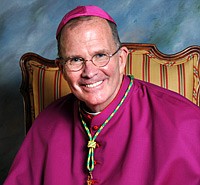
The Death with Dignity Act is scheduled to be heard before the New Jersey Assembly Health and Senior Services Committee June 5 at 10 a.m. In light of this scheduled hearing, we are reposting an essay by Bishop David M. O’Connell, C.M., that was originally published back in October.
To read background on the Death with Dignity Act, click here.
There are a number of issues that are open for debate and disagreement within the Catholic community. Physician assisted suicide and euthanasia are not among them.
Catholics, all Catholics, believe that God is the author of life: he created us in his own image, he sent his own Son, Jesus Christ, to redeem us, he sustains us during our earthly life and he eventually calls us home to himself, in death, so that in and through our belief in Jesus Christ, we might share eternal life. That’s what we believe as Catholics. The Catechism of the Catholic Church reminds us that “we are stewards, not owners, of the life God has entrusted to us. It is not ours to dispose of (CCC, 2280).” Earlier this year, the Assembly Health Committee of the New Jersey Assembly passed the so-called “New Jersey Death with Dignity Act (A2270/S382).” According to New Jersey press reports, this act “would allow adults diagnosed with a terminal disease and deemed to have only six months to live to voluntarily obtain medication “that the patient may administer” to kill themselves, according to the bill (A2270/S3328). The diagnosis must be made by the patient’s treating doctor and affirmed by a consulting physician. Before the prescription is filled, patients must complete a form stating they are making this choice of their own free will. The form must be signed by two witnesses attesting the patient is capable of making the decision.”
As the Catholic Bishop of the Diocese of Trenton, I am not trying to stick my nose into politics. That is not my role. As Bishop, however, I am sticking my nose into principles, “moral principles,” that are influenced and determined by our Catholic faith and beliefs. Concern for life, all human life in all its stages from conception through natural death, is my business and the business of every baptized Catholic.
Again, the Catechism of the Catholic Church clearly states that “whatever the motives and means, direct euthanasia consists in putting an end to the lives of the handicapped, sick or dying persons. It is morally unacceptable (2277).” The “NJ Death with Dignity Act” is immoral and, therefore, unacceptable for Catholics to support.
Many of us have had the experience of dealing with terminally ill relatives and friends. I have. I watched for months as my own father lay dying with cancer and I was with him in his final moments on earth. He received potent dosages of morphine to spare him pain and my family and I did everything possible to make him comfortable in his dying days. I prayed that God would end his suffering and take him home. But that was God’s decision in his own time, not mine, not my family’s, not even my father’s.
Suffering is a part of life, no matter how difficult it is to experience or watch. And death awaits us all but in God’s moment, according to his will. Physician assisted suicide and euthanasia “in order to eliminate suffering constitutes a murder gravely contrary to the dignity of the human person and to the respect due to the living God (CCC, 2277).”
In its publication, “A Catholic Guide to End-of-Life Decisions,” the National Catholic Bioethics Center (NCBC) agrees that “suffering at times may be a profoundly distressing experience that raises deep and troubling questions about the meaning of life and even the nature of God. How can a merciful God allow us to experience the suffering of illness? It should be comforting to reflect on the fact that God Himself entered into human suffering through His Son who suffered and died so that we could overcome death.” But it also states that “human life is an inviolable gift from God. Our love of God and His creation should cause us to shun any thought of violating this great gift through suicide or euthanasia. We read in Wisdom: ‘God did not make death, nor does He rejoice in the destruction of the living. For He fashioned all things that they may have being [Wisdom 1:13].’ St. Paul teaches us: ‘If we live, we live to the Lord, and if we die, we die to the Lord [Romans 14:8].’” Acknowledging that end-of-life decisions are always difficult, NCBC recognizes that there is a moral distinction within such decisions between “ordinary” and “extraordinary” means to preserve life. “Ordinary means” are those aspects of medical treatment or caring for a person that are ordinarily or regularly provided to any living person, including those who are sick (food, water, oxygen, medicine, even “painkillers”). Pope Pius XII stated that “normally one is held to use only ordinary means—according to the circumstances of persons, places, times and culture—that is to say, means that do not involve any grave burden for oneself or another (Pius XII, address “The Prolongation of Life,” November 24, 1957). On the other hand, “extraordinary means” are understood as those medical procedures that carry with them “little hope of benefit” and that are unduly “burdensome” and offer no reasonable expectation of success in preserving or prolonging life.
How does an individual or those entrusted with his/her care make such a distinction and decision? Precisely because they are so difficult, one must trust in the best judgment of qualified physicians as well as the advice and counsel of those competent and trained in making good Catholic moral decisions. A Catholic is obliged to weigh all aspects of a person’s medical care and to render a decision based upon prayerful, wise reflection.
No one claims — and I certainly do not — to have all the answers in every single situation or case. It is for that reason that prudent counsel, moral principles binding the conscience and prayer are needed when confronting the end of life for oneself or those for whom we are responsible. An essay such as this could not possibly hope to address every situation and circumstance with absolute certainty. It can identify the moral principles at stake.
For Catholics, however, the moral teachings of the Catholic Church provide a critically important resource for our reflection and conscience formation when facing a decision involving the preservation and prolongation of human life. Legislation and social support for physician assisted suicide are certainly not the answer for Catholics struggling in good conscience to know what to do.
The American “Declaration of Independence” affirms three basic human rights and their source when it states that “we hold these truths to be self-evident, that all men are created equal, that they are endowed by their Creator with certain unalienable rights, that among these are life, liberty and the pursuit of happiness.”
Long before our Founding Fathers penned those immortal words, Moses gave the Chosen People of God the divine command “you shall not kill.” Long after Moses presented the “Ten Commandments,” the Catholic Church developed its moral tradition and teachings based upon God’s word to guide Catholics in the formation of their conscience.
The “Hippocratic Oath” defining the work of physicians for centuries urges them to promise “I will neither give a deadly drug to anybody if asked for it, nor will I make a suggestion to this effect.”
The “New Jersey Death with Dignity Act (A2270/S382)” creates the situation when that oath and promise can be willingly betrayed along with the intentional violation of God’s commandments, the Church’s moral teachings and the principles upon which this nation was founded.
As I watched my father lay dying, I wanted his suffering to end and I prayed that God would take him. But I left the decision “when,” not to lawmakers, not to physicians, not to me but to the God who created him.
For information on how to send a message to your NJ State Legislators about this bill, go to the NJCC Faith in Action Center.
[[In-content Ad]]Related Stories
Monday, December 15, 2025

E-Editions
Events
The Death with Dignity Act is scheduled to be heard before the New Jersey Assembly Health and Senior Services Committee June 5 at 10 a.m. In light of this scheduled hearing, we are reposting an essay by Bishop David M. O’Connell, C.M., that was originally published back in October.
To read background on the Death with Dignity Act, click here.
There are a number of issues that are open for debate and disagreement within the Catholic community. Physician assisted suicide and euthanasia are not among them.
Catholics, all Catholics, believe that God is the author of life: he created us in his own image, he sent his own Son, Jesus Christ, to redeem us, he sustains us during our earthly life and he eventually calls us home to himself, in death, so that in and through our belief in Jesus Christ, we might share eternal life. That’s what we believe as Catholics. The Catechism of the Catholic Church reminds us that “we are stewards, not owners, of the life God has entrusted to us. It is not ours to dispose of (CCC, 2280).” Earlier this year, the Assembly Health Committee of the New Jersey Assembly passed the so-called “New Jersey Death with Dignity Act (A2270/S382).” According to New Jersey press reports, this act “would allow adults diagnosed with a terminal disease and deemed to have only six months to live to voluntarily obtain medication “that the patient may administer” to kill themselves, according to the bill (A2270/S3328). The diagnosis must be made by the patient’s treating doctor and affirmed by a consulting physician. Before the prescription is filled, patients must complete a form stating they are making this choice of their own free will. The form must be signed by two witnesses attesting the patient is capable of making the decision.”
As the Catholic Bishop of the Diocese of Trenton, I am not trying to stick my nose into politics. That is not my role. As Bishop, however, I am sticking my nose into principles, “moral principles,” that are influenced and determined by our Catholic faith and beliefs. Concern for life, all human life in all its stages from conception through natural death, is my business and the business of every baptized Catholic.
Again, the Catechism of the Catholic Church clearly states that “whatever the motives and means, direct euthanasia consists in putting an end to the lives of the handicapped, sick or dying persons. It is morally unacceptable (2277).” The “NJ Death with Dignity Act” is immoral and, therefore, unacceptable for Catholics to support.
Many of us have had the experience of dealing with terminally ill relatives and friends. I have. I watched for months as my own father lay dying with cancer and I was with him in his final moments on earth. He received potent dosages of morphine to spare him pain and my family and I did everything possible to make him comfortable in his dying days. I prayed that God would end his suffering and take him home. But that was God’s decision in his own time, not mine, not my family’s, not even my father’s.
Suffering is a part of life, no matter how difficult it is to experience or watch. And death awaits us all but in God’s moment, according to his will. Physician assisted suicide and euthanasia “in order to eliminate suffering constitutes a murder gravely contrary to the dignity of the human person and to the respect due to the living God (CCC, 2277).”
In its publication, “A Catholic Guide to End-of-Life Decisions,” the National Catholic Bioethics Center (NCBC) agrees that “suffering at times may be a profoundly distressing experience that raises deep and troubling questions about the meaning of life and even the nature of God. How can a merciful God allow us to experience the suffering of illness? It should be comforting to reflect on the fact that God Himself entered into human suffering through His Son who suffered and died so that we could overcome death.” But it also states that “human life is an inviolable gift from God. Our love of God and His creation should cause us to shun any thought of violating this great gift through suicide or euthanasia. We read in Wisdom: ‘God did not make death, nor does He rejoice in the destruction of the living. For He fashioned all things that they may have being [Wisdom 1:13].’ St. Paul teaches us: ‘If we live, we live to the Lord, and if we die, we die to the Lord [Romans 14:8].’” Acknowledging that end-of-life decisions are always difficult, NCBC recognizes that there is a moral distinction within such decisions between “ordinary” and “extraordinary” means to preserve life. “Ordinary means” are those aspects of medical treatment or caring for a person that are ordinarily or regularly provided to any living person, including those who are sick (food, water, oxygen, medicine, even “painkillers”). Pope Pius XII stated that “normally one is held to use only ordinary means—according to the circumstances of persons, places, times and culture—that is to say, means that do not involve any grave burden for oneself or another (Pius XII, address “The Prolongation of Life,” November 24, 1957). On the other hand, “extraordinary means” are understood as those medical procedures that carry with them “little hope of benefit” and that are unduly “burdensome” and offer no reasonable expectation of success in preserving or prolonging life.
How does an individual or those entrusted with his/her care make such a distinction and decision? Precisely because they are so difficult, one must trust in the best judgment of qualified physicians as well as the advice and counsel of those competent and trained in making good Catholic moral decisions. A Catholic is obliged to weigh all aspects of a person’s medical care and to render a decision based upon prayerful, wise reflection.
No one claims — and I certainly do not — to have all the answers in every single situation or case. It is for that reason that prudent counsel, moral principles binding the conscience and prayer are needed when confronting the end of life for oneself or those for whom we are responsible. An essay such as this could not possibly hope to address every situation and circumstance with absolute certainty. It can identify the moral principles at stake.
For Catholics, however, the moral teachings of the Catholic Church provide a critically important resource for our reflection and conscience formation when facing a decision involving the preservation and prolongation of human life. Legislation and social support for physician assisted suicide are certainly not the answer for Catholics struggling in good conscience to know what to do.
The American “Declaration of Independence” affirms three basic human rights and their source when it states that “we hold these truths to be self-evident, that all men are created equal, that they are endowed by their Creator with certain unalienable rights, that among these are life, liberty and the pursuit of happiness.”
Long before our Founding Fathers penned those immortal words, Moses gave the Chosen People of God the divine command “you shall not kill.” Long after Moses presented the “Ten Commandments,” the Catholic Church developed its moral tradition and teachings based upon God’s word to guide Catholics in the formation of their conscience.
The “Hippocratic Oath” defining the work of physicians for centuries urges them to promise “I will neither give a deadly drug to anybody if asked for it, nor will I make a suggestion to this effect.”
The “New Jersey Death with Dignity Act (A2270/S382)” creates the situation when that oath and promise can be willingly betrayed along with the intentional violation of God’s commandments, the Church’s moral teachings and the principles upon which this nation was founded.
As I watched my father lay dying, I wanted his suffering to end and I prayed that God would take him. But I left the decision “when,” not to lawmakers, not to physicians, not to me but to the God who created him.
For information on how to send a message to your NJ State Legislators about this bill, go to the NJCC Faith in Action Center.
[[In-content Ad]]