
The following news briefs were recently published by Catholic News Service.
North Carolina parishes still coping with Florence waters
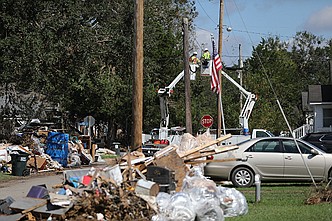
RALEIGH, N.C. — In the days and weeks since Hurricane Florence made landfall in mid-September, North Carolina residents are still coping with the massive amounts of water from the storm and the subsequent flooding of the state’s rivers. Families have been displaced by these rising waters and 27 churches or parish facilities in the Raleigh Diocese have been damaged. An update on the recovery on the diocesan website of Raleigh notes: “Hurricane Florence devastated our community, but together as a community we are recovering! Catholic Charities has been leading the recovery effort. They began providing assistance before the rain even stopped in Wilmington.” Daniel Altenau, director of communications and disaster services for Catholic Charities of the Diocese of Raleigh, said that days after the storm, local Catholic Charities volunteers loaded up a truck with diapers and supplies and began distributing items to families in need. Catholic Charities also has held more than 30 events for unloading, sorting and distributing supplies such as food and water, cleaning supplies and hygiene kits for families in the Cape Fear area. Websites for parishes in the Raleigh Diocese also indicate the extent of storm damage and recovery. The website of Annunciation Parish in Havelock notes that the church “sustained quite a bit of water damage” but would be resuming Masses the weekend of Sept. 29-30.
Citing contributions to U.S., migrants demand permanent status
WASHINGTON — Some attended the rally with hard hats on as others spoke about how an immigration program in peril helped them over the years pour millions into the U.S. economy, and also contributed to their role in physically rebuilding the country’s iconic structures and cities after disasters. “Honest workers who have been here more than 20 years rebuilt the Pentagon (after the 9/11 attacks), New Orleans and now Houston,” Edwin Murillo, of the National TPS Alliance, said Sept. 25, speaking at a rally about migrants protected by a program known as Temporary Protected Status, or TPS. Some beneficiaries, who have worked as construction workers, hotel workers, nurse’s aides and caretakers, looked on nearby as Murillo spoke near the base of the U.S. Capitol in Washington. Those who gathered at the rally called on Congress to help them keep benefits they have had for a decade or more under the program, which allows people from certain countries affected by humanitarian crises to legally live and work in the U.S. Like other immigration programs, TPS came under fire by the Trump administration, which has swiftly moved over the last year and a half to end it, threatening to take away work permits and legal documentation from some recipients. Last year, the Department of Homeland Security, which administers the program, announced it was ending TPS status for recipients from Sudan, Nicaragua, Haiti and El Salvador in late 2018 and throughout 2019, saying conditions in those countries had improved and the migrants could safely return, even as the U.S. Department of State warned against travel to those nations. In May, the administration added Honduras to the list of countries for which it was halting TPS.
Frat house where tragedy struck reborn as faith community for students
BATON ROUGE, La. — Out of the darkness of unspeakable tragedy, a light is rising, spreading a pharos of resurgence and, perhaps most importantly, one of faith. Christ the King Church in Baton Rouge, through the efforts of pastor Father Andrew Merrick, has transformed a former fraternity house where a college freshman died a year ago in a hazing incident into a community of nine Catholic male students living together, sharing their faith while also developing and deepening their own prayer lives. A year ago, Max Gruber, a student at Louisiana State University, died when he was allegedly forced to drink what amounted to a lethal amount of alcohol at what was then Phi Beta Theta fraternity house. During his 29 days at the university, he attended Mass at Christ the King. “I thank God for the opportunity for all of the things he has done in our lives and to be able to take what was a terrible tragedy and bring about a sort of victory to that, said LSU senior Michael Vu, adding that one of the “one of the biggest rules of the house is to continue a dedicated prayer life.” Establishing a house for young Catholic students to live in community and to be place of growth in the discipleship of Christ has been Father Merrick’s vision since he came to Christ the King two years ago. He said he wanted to develop a community to be more configured to the mind and heart of Christ as disciples growing together, and to assist students to be formed in the four pillars of formation: spiritual, human, intellectual, pastoral and apostolic.
Speakers address palliative care, pain management, treating ‘whole person’
HOUSTON — A woman religious suffering from metastatic breast cancer in the final stages received medication to ease severe pain and thanked the doctors and nurses. “Now that the pain is tolerable, I can start praying again,” the sister said, according to Dr. Constantino Benedetti, of Ohio State University, speaking on effective control of physical pain Sept. 17 at the Palliative Care and Spirituality for Life conference. The event, held at the Houston Methodist Research Institute, was a joint project of the Vatican’s Pontifical Academy for Life, Houston Methodist and the University of Texas MD Anderson Cancer Center with participation by the Archdiocese of Galveston-Houston. Dr. Eduardo Bruera, medical director of the Supportive Care Center at MD Anderson, said, “Where is your mother going to die? Where and how are you going to die?” Families must ask and answer these questions to help the medical staff treat the whole person, not just the disease, he said. They are important to discuss before any illness or accident since hospitals are the location of death for 65 percent of people. Many doctors are not specifically trained in pain management, Benedetti said. While 87 percent of veterinary medicine staff are trained in pain management for animals, only 31 percent of nurses and 16 percent of medical students have training to manage pain in people.
Report: Violence against indigenous Brazilians increased in 2017
SAO PAULO — During 2017, structured violence involving the indigenous populations in Brazil increased, especially when it came to their land, according to a report released Sept. 27 by the Brazilian bishops’ Indigenous Missionary Council. “This edition of the report makes explicit a reality of absolute legal uncertainty regarding the individual and collective rights of indigenous peoples in the country,” Roberto Liebgott, a coordinator at the council, said in the report. “To make matters worse, the three powers of the state have been complicit in the pressure on the territory, which allows for the exploitation of their natural resources and results in violence in the villages,” added Liebgott. Liebgott said the demarcation of indigenous land as well as monitoring of these lands to guard against invasion were halted last year. The report by the Indigenous Missionary Council, or CIMI, showed 110 cases of indigenous murders were registered. The two states with the highest number of murders were in the Amazon region: Roraima had 33, and Amazonas had 28.