


Peace Given
January 12, 2026 at 2:36 p.m.
The Baptism of the Lord
“The Lord will bless his people with peace.”
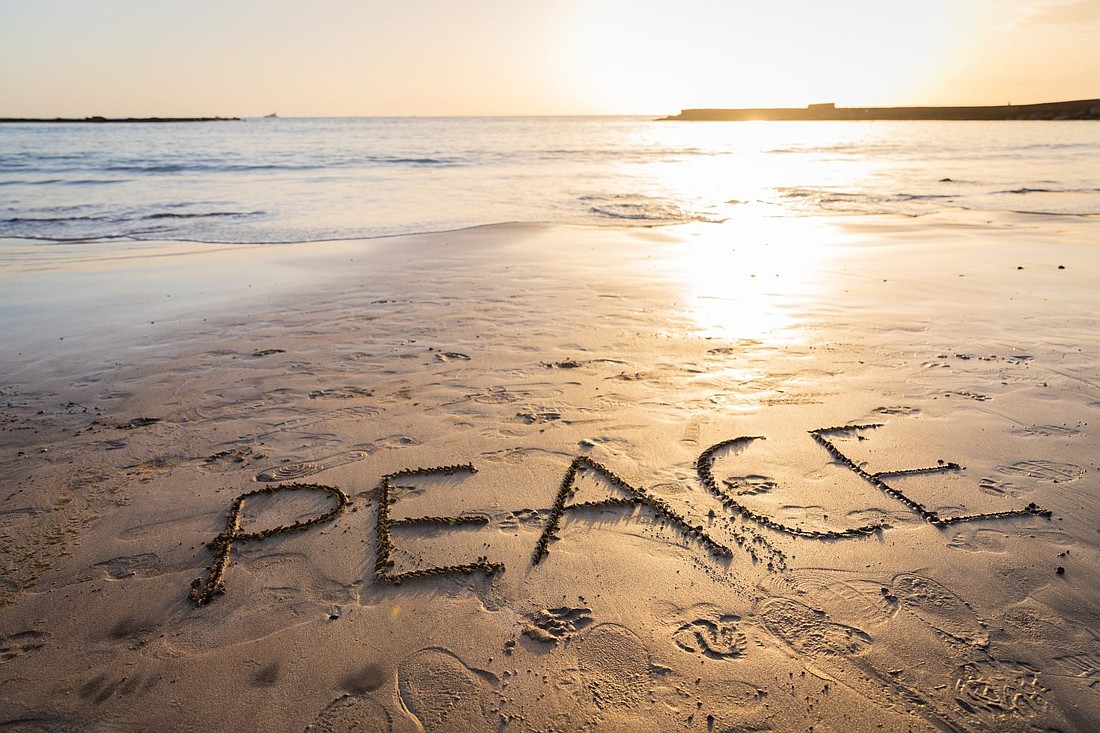
While praying with Sunday’s psalm, I was reminded that peace is not something we achieve through effort, but something God freely gives. Sometimes we chase it, or we think that the more we pray, the more peace we will have. Others say peace comes only when you achieve everything you’ve ever wanted. But most of the time what we want is not what we actually need. And even more, because we are human, we will always want more and never be fully satisfied.
From my own experience and what I have seen around me, the most peaceful people I know are often those who have less. I am not only talking about material poverty, but about a simpler way of life. There is a kind of rule here: the emptier the space, the more room there is for peace.
Jesus comes to give us His peace. And it is not by grasping for it that we receive it. Peace comes from making room, from letting God act, and from being open enough to receive what He freely gives. It requires realizing that He is the main character, that He is in control, not us. This is the movement the psalm invites us into: from trying to produce peace to trusting that peace comes another way.
“The Lord is enthroned above the flood.”
We live in the real world, not heaven, at least not yet. Chaos does exist, but it is not in control. Peace does not mean the flood disappears; peace comes from knowing who is seated above it. So often, our anxiety comes from trying to sit on that throne ourselves.
The act letting go is an act of trust. It is not passivity; it is trust. Receiving peace requires humility, and that can be extremely difficult. Letting go of outcomes, timelines, self-judgment, and especially the need to fix everything does not come easily, particularly for those of us who are wired that way.
As I prayed with Psalm 29, the question that kept returning to me was this: Where do I try to manage what only God can hold? Take sometime this week to ask yourself the same question and then wait to see what happens when you admit you are not in control.
Related Stories
Monday, January 12, 2026
E-Editions
Events
The Baptism of the Lord
“The Lord will bless his people with peace.”
While praying with Sunday’s psalm, I was reminded that peace is not something we achieve through effort, but something God freely gives. Sometimes we chase it, or we think that the more we pray, the more peace we will have. Others say peace comes only when you achieve everything you’ve ever wanted. But most of the time what we want is not what we actually need. And even more, because we are human, we will always want more and never be fully satisfied.
From my own experience and what I have seen around me, the most peaceful people I know are often those who have less. I am not only talking about material poverty, but about a simpler way of life. There is a kind of rule here: the emptier the space, the more room there is for peace.
Jesus comes to give us His peace. And it is not by grasping for it that we receive it. Peace comes from making room, from letting God act, and from being open enough to receive what He freely gives. It requires realizing that He is the main character, that He is in control, not us. This is the movement the psalm invites us into: from trying to produce peace to trusting that peace comes another way.
“The Lord is enthroned above the flood.”
We live in the real world, not heaven, at least not yet. Chaos does exist, but it is not in control. Peace does not mean the flood disappears; peace comes from knowing who is seated above it. So often, our anxiety comes from trying to sit on that throne ourselves.
The act letting go is an act of trust. It is not passivity; it is trust. Receiving peace requires humility, and that can be extremely difficult. Letting go of outcomes, timelines, self-judgment, and especially the need to fix everything does not come easily, particularly for those of us who are wired that way.
As I prayed with Psalm 29, the question that kept returning to me was this: Where do I try to manage what only God can hold? Take sometime this week to ask yourself the same question and then wait to see what happens when you admit you are not in control.