


Essays offer timely look at Jewish identity and Catholicism
January 12, 2026 at 2:32 p.m.
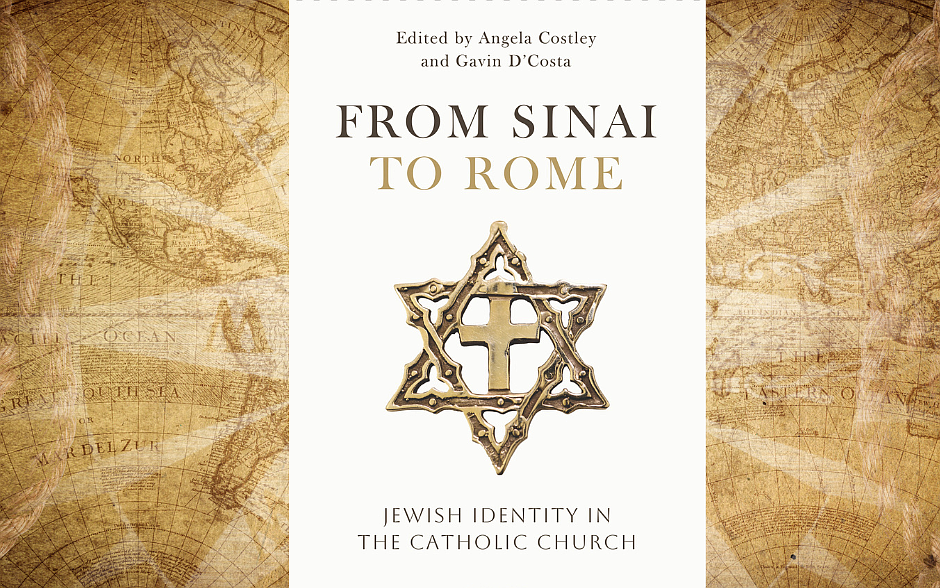
"From Sinai to Rome: Jewish Identity in the Catholic Church"
Edited by Angela Costley and Gavin D'Costa, Ignatius Press (2025)
312 pages, $19.95
Amid heightened violence in the conflict between Israel and Palestine, the U.S. Conference of Catholic Bishops issued a pastoral note in 2024 for inclusion in worship guides for the Passion of Christ on Good Friday.
The statement clarified that although the Gospel of John refers to "the Jews" as responsible for Jesus' death, neither the Jewish people as a whole nor Jewish people today are accountable for the death of Christ, who died for the sins of all.
This pastoral note is a rejection of hateful language and attitudes towards Jewish people, but it also highlights a tension that some Catholics may find intellectually challenging to hold respect for God's chosen people and their unique heritage along with the desire for them to know Jesus Christ as the Messiah.
"From Sinai to Rome: Jewish Identity in the Catholic Church" is a collection of essays from scholars and Jewish Catholics that speaks into this confusion with beautiful clarity.
"From Sinai to Rome" is divided into three parts that work together to create a primer on understanding Jewish history and culture within a Catholic framework. Beginning with a look at Scripture, the book then moves into historical perspectives on Jewish practice within the Church before concluding with a section on modern considerations with regards to Catholicism and the Hebrew people today.
A primary thread throughout the book is a rejection of the idea of "supersessionism," or the concept that the people of Israel were replaced as God's chosen people with the Messiah's coming and the institution of the Church. This framework has historically served as the basis for antisemitism, the patently incorrect view that the Jewish people of today are responsible for the death of Christ and have been rejected by God.
Instead, the authors offer an alternative perspective supported by Church teaching and Scripture which not only preserves the dignity of God's chosen people but also edifies the reader with a more comprehensive understanding of divine providence. Rather than replacing the Jewish people with the Church, God expanded Israel beyond the bounds of their race to include all the nations and all who came to believe in him.
Brant Pitre offers insights into figures of Mary and the Eucharist from the Old Testament, while Scott Hahn decodes the meaning of the "signs" that Jesus performs in the Gospel of John, laying the groundwork that encourages the reader to read the Gospels with a sense of the Jewish cultural context in which they took place.
A critical look at the writings of St. Thomas Aquinas and other Church documents suggests an ongoing struggle to reconcile the distinction of Israel as a chosen race while also the truth that salvation comes through Christ.
For this reason, Catholics who claim Jewish ancestry and heritage, witness to a unique reality within God's saving plan. While holding that strict observance of the laws of the Torah is not required for anyone, their cultural traditions nevertheless honor the unique role of God's chosen people in prefiguring and revealing the Savior. The Jewish people have played a privileged role in salvation history, a history that is continuing to unfold within the Church.
Tracking the understanding of Jewish identity through various points in Church history also highlights how the relationship between the two forces has developed over time. As Sts. Peter and Paul were initially primarily baptizing Jewish people, the situation described in the Acts of the Apostles was extremely particular, as the apostles navigated issues such as whether Gentiles needed to be circumcised before being baptized or follow kosher dietary laws.
Today, nearly 2,000 years later and following the horrors of the 20th century, the study of Jewish identity within the modern Church has necessarily evolved. Carmelite Father Elias Friedman founded the Association of Hebrew Catholics, whose membership includes several of the essay authors, to navigate this new moment in history especially in light of "Nostra Aetate," the Second Vatican Council's document on the relationship between the Church and non-Christian religions.
"From Sinai to Rome" features chapters filled with notes from Scripture, Church documents, historical records and cultural insights in a work that will appeal to the theologian and lay reader alike. It is a welcome primer to the complex topic of Jewish identity within the Church to combat any seeds of antisemitism that may be germinating in the minds of Catholics.
Cecilia Cicone is an author and communicator who works in diocesan ministry in Northwest Indiana.
Related Stories
Monday, January 12, 2026


E-Editions
Events
"From Sinai to Rome: Jewish Identity in the Catholic Church"
Edited by Angela Costley and Gavin D'Costa, Ignatius Press (2025)
312 pages, $19.95
Amid heightened violence in the conflict between Israel and Palestine, the U.S. Conference of Catholic Bishops issued a pastoral note in 2024 for inclusion in worship guides for the Passion of Christ on Good Friday.
The statement clarified that although the Gospel of John refers to "the Jews" as responsible for Jesus' death, neither the Jewish people as a whole nor Jewish people today are accountable for the death of Christ, who died for the sins of all.
This pastoral note is a rejection of hateful language and attitudes towards Jewish people, but it also highlights a tension that some Catholics may find intellectually challenging to hold respect for God's chosen people and their unique heritage along with the desire for them to know Jesus Christ as the Messiah.
"From Sinai to Rome: Jewish Identity in the Catholic Church" is a collection of essays from scholars and Jewish Catholics that speaks into this confusion with beautiful clarity.
"From Sinai to Rome" is divided into three parts that work together to create a primer on understanding Jewish history and culture within a Catholic framework. Beginning with a look at Scripture, the book then moves into historical perspectives on Jewish practice within the Church before concluding with a section on modern considerations with regards to Catholicism and the Hebrew people today.
A primary thread throughout the book is a rejection of the idea of "supersessionism," or the concept that the people of Israel were replaced as God's chosen people with the Messiah's coming and the institution of the Church. This framework has historically served as the basis for antisemitism, the patently incorrect view that the Jewish people of today are responsible for the death of Christ and have been rejected by God.
Instead, the authors offer an alternative perspective supported by Church teaching and Scripture which not only preserves the dignity of God's chosen people but also edifies the reader with a more comprehensive understanding of divine providence. Rather than replacing the Jewish people with the Church, God expanded Israel beyond the bounds of their race to include all the nations and all who came to believe in him.
Brant Pitre offers insights into figures of Mary and the Eucharist from the Old Testament, while Scott Hahn decodes the meaning of the "signs" that Jesus performs in the Gospel of John, laying the groundwork that encourages the reader to read the Gospels with a sense of the Jewish cultural context in which they took place.
A critical look at the writings of St. Thomas Aquinas and other Church documents suggests an ongoing struggle to reconcile the distinction of Israel as a chosen race while also the truth that salvation comes through Christ.
For this reason, Catholics who claim Jewish ancestry and heritage, witness to a unique reality within God's saving plan. While holding that strict observance of the laws of the Torah is not required for anyone, their cultural traditions nevertheless honor the unique role of God's chosen people in prefiguring and revealing the Savior. The Jewish people have played a privileged role in salvation history, a history that is continuing to unfold within the Church.
Tracking the understanding of Jewish identity through various points in Church history also highlights how the relationship between the two forces has developed over time. As Sts. Peter and Paul were initially primarily baptizing Jewish people, the situation described in the Acts of the Apostles was extremely particular, as the apostles navigated issues such as whether Gentiles needed to be circumcised before being baptized or follow kosher dietary laws.
Today, nearly 2,000 years later and following the horrors of the 20th century, the study of Jewish identity within the modern Church has necessarily evolved. Carmelite Father Elias Friedman founded the Association of Hebrew Catholics, whose membership includes several of the essay authors, to navigate this new moment in history especially in light of "Nostra Aetate," the Second Vatican Council's document on the relationship between the Church and non-Christian religions.
"From Sinai to Rome" features chapters filled with notes from Scripture, Church documents, historical records and cultural insights in a work that will appeal to the theologian and lay reader alike. It is a welcome primer to the complex topic of Jewish identity within the Church to combat any seeds of antisemitism that may be germinating in the minds of Catholics.
Cecilia Cicone is an author and communicator who works in diocesan ministry in Northwest Indiana.