


Minneapolis Catholic leaders speak out about community fear after ICE-involved shooting
January 9, 2026 at 12:08 p.m.
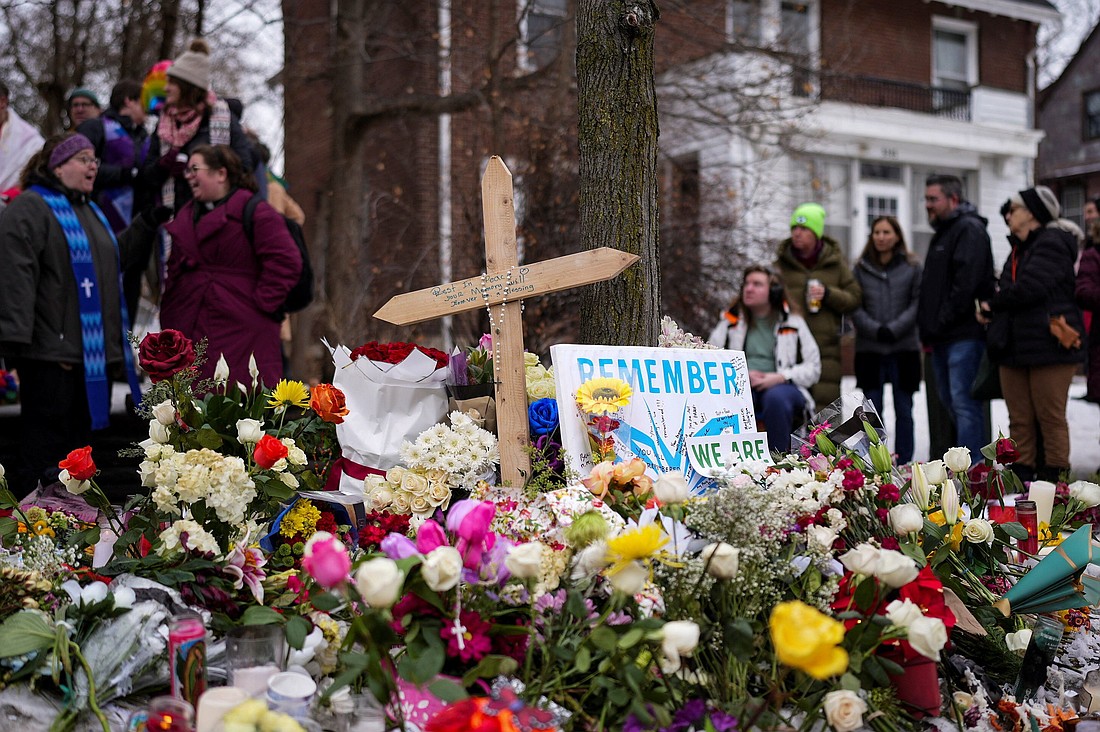
MINNEAPOLIS OSV News – An interfaith gathering of faith leaders in Minneapolis Jan. 8 drew a crowd as faith leaders raised concerns about the impact immigration enforcement actions are having on people in the community, including Catholic parishes in Minneapolis.
The outdoor gathering was held one day after a woman identified as 37-year-old Renee Nicole Macklin Good was shot and killed by a federal immigration agent in south Minneapolis. Police said a preliminary investigation indicated the victim was in her vehicle and was blocking the roadway, and that she had not been the target of U.S. Immigration and Customs Enforcement operations in the neighborhood.
Father Dale Korogi, pastor of Ascension Catholic Church in north Minneapolis, was among clergy and religious leaders who spoke at the interfaith gathering. He said his parish was founded by German and Irish immigrants and has been "sustained by Mexican and Latin American immigrants."
"The Catholic communion, therefore, has always been deeply concerned about the rights and the well-being of immigrants and migrants and refugees," Father Korogi said. "A faith community is home for so many immigrants to this place."
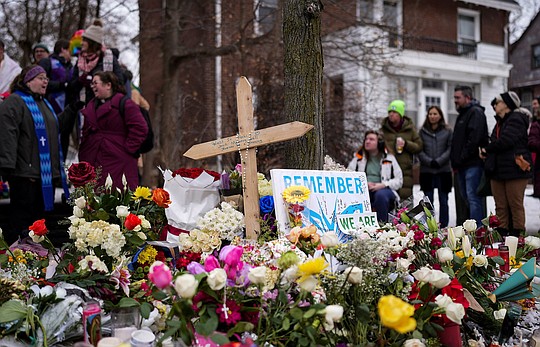
The gathering was held near a makeshift memorial for Good that included flowers, signs and a wooden cross draped with a rosary.
"In our parish's 130 years, I would argue that last month, December, was the most painful time we have ever experienced," Father Korogi said. "At a time when we would gather every evening for prayer and celebration, to celebrate Our Lady of Guadalupe and to celebrate Christmas, events were canceled. Our church was quiet. Our families, as you know, were afraid to leave their homes."
The Jan. 7 shooting occurred as immigration enforcement efforts increased in Minneapolis, St. Paul and some Twin Cities suburbs in what federal officials have called Operation Metro Surge. Similar immigration enforcement actions have taken place around the country, including Chicago; Portland, Oregon; and Charlotte, North Carolina.
The shooting has prompted other large gatherings, including a vigil held for the victim in Minneapolis Jan. 7. Public schools in Minneapolis were closed Jan. 8-9 due to safety concerns related to the shooting incident.
The public school closure impacted Catholic schools because many Catholic school students within the school district's boundaries rely on district busing services. Thus, "Catholic schools in Minneapolis are making site-level decisions on whether to remain open for families this week," the archdiocese's Office for the Mission of Catholic Education said in a statement.
OMCE urged parents to watch for updates from their Catholic schools and to pray for peace. "We urge all Catholic schools in the Archdiocese and people of goodwill to pray for peace in our community," OMCE officials said.
Archbishop Bernard A. Hebda of St. Paul and Minneapolis issued a call for prayer and peace in the hours after the shooting. He also joined the archdiocese's Auxiliary Bishops Michael Izen and Kevin Kenney in a Jan. 8 letter to pastors and lay leaders in the archdiocese stating that they were attending a bishops' retreat but had "received news from some of our priests of challenges at our parishes serving immigrants and have seen reports in the media that things may become even more challenging in the days to come."
"We believe that you, our pastors, and lay leaders, know your communities and what is best for helping them feel safe these days. We will stand with you as we all try to figure this out. You are not alone," the bishops said in the letter, which was issued in English and Spanish.
"It is important that we not give in to fear as we strive to serve our immigrant communities with dignity and love," the bishops continued. "We, as well as our brothers and sisters in the Archdiocesan Office of Latino Ministry, are ready to help where we can by offering our presence, an encouraging word of support or advice, or just a phone call."
In his Jan. 7 statement, Archbishop Hebda reiterated "the repeated call of the U.S. Catholic bishops that we come together as a nation and pass meaningful immigration reform that does justice to all parties." That call echoed a statement from Minnesota's Catholic bishops in a Feb. 7, 2025, document issued through the Minnesota Catholic Conference. That statement began with a verse from Leviticus 19:33: "When a foreigner resides among you in your land, do not mistreat them."
"Sadly, our nation's immigration system is broken," the bishops' statement said, in part. "For too long, our laws on paper said 'stop, no entry,' while in fact, for economic and political reasons, undocumented migrants were allowed inside, sometimes with the encouragement of business interests and even our government. As Pope Francis has said, migrants have been too often treated 'as pawns on the chessboard of humanity.'
"Elected officials in both major political parties have failed to rise above political calculation and collaborate on a solution rooted in respect for migrants and the common good of the nation. This leadership failure has resulted in repeated conflicts at the border and in our communities that have only grown worse," the statement continued.
The statement stressed the need to keep families together, noted contributions to the United States by immigrant communities, acknowledged that some migrants may have broken the law and proportionate penalties might be warranted, and stressed that public officials have a responsibility to protect citizens and institute orderly migration policies, including protection of a nation's borders.
Robert Haarman, the director of the Archdiocese of St. Paul and Minneapolis' Office of Indian Ministry and community minister at Gichitwaa Kateri – a parish less than a mile from the fatal shooting – said the parish's large Indigenous community has been made uncomfortable by the presence of ICE activity in the area, and now is especially disturbed by the shooting.
"This kind of killing can be triggering to the American Indian community because not yet even a generation away in Native (American) lives, families were torn apart," said Haarman, who also attended the Jan. 8 interfaith gathering. "The effects are still present."
Many people in the Indigenous community are married to people in the Latino and Black communities, which can contribute to a tension in the parish that people in the pews might be threatened by this activity, Haarman said.
"I'm unable and won't speak for the American Indian community, but I hear of these things, and of course, it raises concerns that I feel inclined to pay attention to," Haarman said.
Haarman said he prays for those who have to make difficult legislative decisions.
"That's a heavy burden," Haarman said. "I would not want that burden."
A positive response to the hardships being experienced is being together with others in grief and sharing that grief, Haarman said. He said there were so many people at the shooting site on 34th Street and Portland Avenue in Minneapolis the night Good was killed that he had trouble getting home. He said turning to Scripture and prayer are good responses to something like this.
During the gathering with other faith leaders, Haarman said he heard people shouting different things. Some could be heard in recordings shouting profanities about ICE. Despite what was being said, Haarman said he kept repeating the word "mercy."
"I found myself saying 'mercy' several different times. That could be viewed as a weak stance, but it didn't feel that way to me," Haarman said. As a response to the shooting, Haarman said that coming together in any fashion, "ecumenical or otherwise" is an appropriate, useful and productive response to tragedy.
"We ask for God to help us," he said. "We have a yearning in our heart to be with God, to be with the goodness of humanity, and man, I think we are struggling as a human species."
Haarman said Gichitwaa Kateri was open to anyone who would like to visit and pray.
The interfaith gathering in Minneapolis was held hours before another ICE-involved shooting in East Portland, Oregon. There, a federal agent shot and wounded a man and woman during a traffic stop also tied to the Trump administration's crackdown on illegal immigration. The victims were identified by the Department of Homeland Security as Venezuelan gang members and said the driver had tried to run over a federal agent.
Josh McGovern is a reporter and Joe Ruff is the editor in chief of The Catholic Spirit, newspaper of the Archdiocese of St. Paul and Minneapolis. This reporting first ran in The Catholic Spirit and is distributed in partnership with OSV News.
Related Stories
Friday, January 09, 2026

E-Editions
Events
MINNEAPOLIS OSV News – An interfaith gathering of faith leaders in Minneapolis Jan. 8 drew a crowd as faith leaders raised concerns about the impact immigration enforcement actions are having on people in the community, including Catholic parishes in Minneapolis.
The outdoor gathering was held one day after a woman identified as 37-year-old Renee Nicole Macklin Good was shot and killed by a federal immigration agent in south Minneapolis. Police said a preliminary investigation indicated the victim was in her vehicle and was blocking the roadway, and that she had not been the target of U.S. Immigration and Customs Enforcement operations in the neighborhood.
Father Dale Korogi, pastor of Ascension Catholic Church in north Minneapolis, was among clergy and religious leaders who spoke at the interfaith gathering. He said his parish was founded by German and Irish immigrants and has been "sustained by Mexican and Latin American immigrants."
"The Catholic communion, therefore, has always been deeply concerned about the rights and the well-being of immigrants and migrants and refugees," Father Korogi said. "A faith community is home for so many immigrants to this place."
The gathering was held near a makeshift memorial for Good that included flowers, signs and a wooden cross draped with a rosary.
"In our parish's 130 years, I would argue that last month, December, was the most painful time we have ever experienced," Father Korogi said. "At a time when we would gather every evening for prayer and celebration, to celebrate Our Lady of Guadalupe and to celebrate Christmas, events were canceled. Our church was quiet. Our families, as you know, were afraid to leave their homes."
The Jan. 7 shooting occurred as immigration enforcement efforts increased in Minneapolis, St. Paul and some Twin Cities suburbs in what federal officials have called Operation Metro Surge. Similar immigration enforcement actions have taken place around the country, including Chicago; Portland, Oregon; and Charlotte, North Carolina.
The shooting has prompted other large gatherings, including a vigil held for the victim in Minneapolis Jan. 7. Public schools in Minneapolis were closed Jan. 8-9 due to safety concerns related to the shooting incident.
The public school closure impacted Catholic schools because many Catholic school students within the school district's boundaries rely on district busing services. Thus, "Catholic schools in Minneapolis are making site-level decisions on whether to remain open for families this week," the archdiocese's Office for the Mission of Catholic Education said in a statement.
OMCE urged parents to watch for updates from their Catholic schools and to pray for peace. "We urge all Catholic schools in the Archdiocese and people of goodwill to pray for peace in our community," OMCE officials said.
Archbishop Bernard A. Hebda of St. Paul and Minneapolis issued a call for prayer and peace in the hours after the shooting. He also joined the archdiocese's Auxiliary Bishops Michael Izen and Kevin Kenney in a Jan. 8 letter to pastors and lay leaders in the archdiocese stating that they were attending a bishops' retreat but had "received news from some of our priests of challenges at our parishes serving immigrants and have seen reports in the media that things may become even more challenging in the days to come."
"We believe that you, our pastors, and lay leaders, know your communities and what is best for helping them feel safe these days. We will stand with you as we all try to figure this out. You are not alone," the bishops said in the letter, which was issued in English and Spanish.
"It is important that we not give in to fear as we strive to serve our immigrant communities with dignity and love," the bishops continued. "We, as well as our brothers and sisters in the Archdiocesan Office of Latino Ministry, are ready to help where we can by offering our presence, an encouraging word of support or advice, or just a phone call."
In his Jan. 7 statement, Archbishop Hebda reiterated "the repeated call of the U.S. Catholic bishops that we come together as a nation and pass meaningful immigration reform that does justice to all parties." That call echoed a statement from Minnesota's Catholic bishops in a Feb. 7, 2025, document issued through the Minnesota Catholic Conference. That statement began with a verse from Leviticus 19:33: "When a foreigner resides among you in your land, do not mistreat them."
"Sadly, our nation's immigration system is broken," the bishops' statement said, in part. "For too long, our laws on paper said 'stop, no entry,' while in fact, for economic and political reasons, undocumented migrants were allowed inside, sometimes with the encouragement of business interests and even our government. As Pope Francis has said, migrants have been too often treated 'as pawns on the chessboard of humanity.'
"Elected officials in both major political parties have failed to rise above political calculation and collaborate on a solution rooted in respect for migrants and the common good of the nation. This leadership failure has resulted in repeated conflicts at the border and in our communities that have only grown worse," the statement continued.
The statement stressed the need to keep families together, noted contributions to the United States by immigrant communities, acknowledged that some migrants may have broken the law and proportionate penalties might be warranted, and stressed that public officials have a responsibility to protect citizens and institute orderly migration policies, including protection of a nation's borders.
Robert Haarman, the director of the Archdiocese of St. Paul and Minneapolis' Office of Indian Ministry and community minister at Gichitwaa Kateri – a parish less than a mile from the fatal shooting – said the parish's large Indigenous community has been made uncomfortable by the presence of ICE activity in the area, and now is especially disturbed by the shooting.
"This kind of killing can be triggering to the American Indian community because not yet even a generation away in Native (American) lives, families were torn apart," said Haarman, who also attended the Jan. 8 interfaith gathering. "The effects are still present."
Many people in the Indigenous community are married to people in the Latino and Black communities, which can contribute to a tension in the parish that people in the pews might be threatened by this activity, Haarman said.
"I'm unable and won't speak for the American Indian community, but I hear of these things, and of course, it raises concerns that I feel inclined to pay attention to," Haarman said.
Haarman said he prays for those who have to make difficult legislative decisions.
"That's a heavy burden," Haarman said. "I would not want that burden."
A positive response to the hardships being experienced is being together with others in grief and sharing that grief, Haarman said. He said there were so many people at the shooting site on 34th Street and Portland Avenue in Minneapolis the night Good was killed that he had trouble getting home. He said turning to Scripture and prayer are good responses to something like this.
During the gathering with other faith leaders, Haarman said he heard people shouting different things. Some could be heard in recordings shouting profanities about ICE. Despite what was being said, Haarman said he kept repeating the word "mercy."
"I found myself saying 'mercy' several different times. That could be viewed as a weak stance, but it didn't feel that way to me," Haarman said. As a response to the shooting, Haarman said that coming together in any fashion, "ecumenical or otherwise" is an appropriate, useful and productive response to tragedy.
"We ask for God to help us," he said. "We have a yearning in our heart to be with God, to be with the goodness of humanity, and man, I think we are struggling as a human species."
Haarman said Gichitwaa Kateri was open to anyone who would like to visit and pray.
The interfaith gathering in Minneapolis was held hours before another ICE-involved shooting in East Portland, Oregon. There, a federal agent shot and wounded a man and woman during a traffic stop also tied to the Trump administration's crackdown on illegal immigration. The victims were identified by the Department of Homeland Security as Venezuelan gang members and said the driver had tried to run over a federal agent.
Josh McGovern is a reporter and Joe Ruff is the editor in chief of The Catholic Spirit, newspaper of the Archdiocese of St. Paul and Minneapolis. This reporting first ran in The Catholic Spirit and is distributed in partnership with OSV News.