


Why is Mary's perpetual virginity so important to Catholics?
January 6, 2026 at 4:03 p.m.
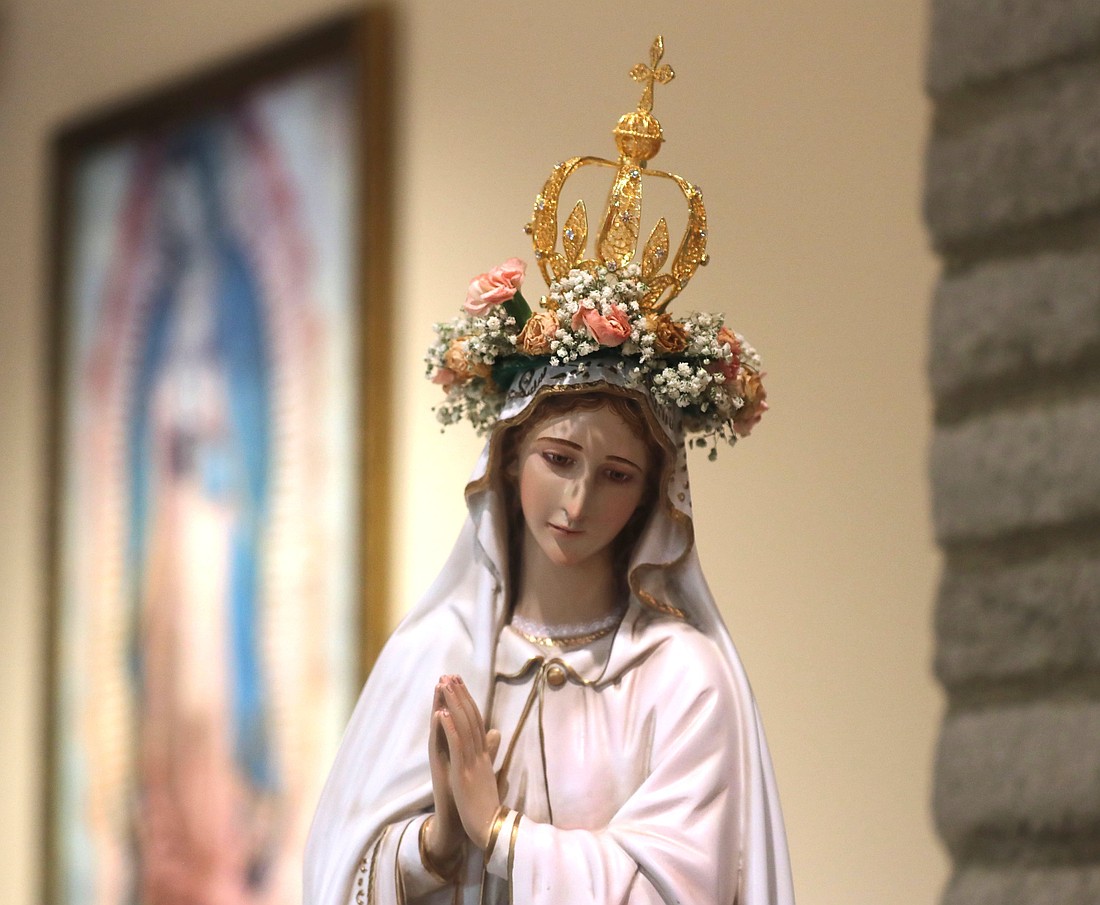
Q: Why is Mary's perpetual virginity so important to us Catholics? I've had discussions with my Protestant friends about this, and while they believe Mary was a virgin when Jesus was born, they don't understand why we're so "hung up on" the idea that Mary remained a virgin for the rest of her life. (Florida)
A: I think the first and most foundational reason why our belief in Mary's perpetual virginity is so important to us is because we believe this is simply the truth.
We see hints of Mary's commitment to a life of virginity within the text of the Gospel itself. For instance, in the first chapter of St. Luke's Gospel, when the angel Gabriel announces to Mary that she will be the mother of the Savior, Mary responds by asking: "How can this be, since I have no relations with a man" (Lk 1:34)?
Since Mary was already betrothed to Joseph, she would have had no reason to ask this question if she had intended on having normal marital relations at some point. That is, the thought that she would one day bear a son would not have surprised her if she was expecting her married life to unfold in the usual way – but this news would be quite shocking if she had committed herself to a special lifelong dedication to God in virginity.
Similarly, toward the end of St. John's Gospel, as Jesus is dying on the cross, he entrusts his now presumably widowed mother to the care of the beloved disciple, St. John (Jn 19:26-27).
Had Mary borne other children besides Jesus, as would have been expected in a normal marriage, there would have been no practical need for Jesus to do this. And although in some places the Gospels references the "brothers" of Jesus, early commenters such as St. Jerome have pointed out that a better translation of this word might be something like "kinsmen," since it could refer either to siblings born of the same parents or to cousins.
But beyond the Gospel accounts, Mary's perpetual virginity is something that has been continuously affirmed though our sacred tradition. And knowledge of the faith via tradition is something that sacred Scripture itself endorses (2 Thes 2:15).
One reflection of this tradition is a writing from the second century A.D. known as the "The Protoevangelium of James," which recounts stories of Mary's early life and her special consecration to God as a young child. This work can be a bit fanciful in some places, which is part of why it didn't "make the cut" in terms of becoming part of the New Testament and included in the canon of Scripture. Still, given its ancient source material and lasting effects on popular Christian piety in the church's early centuries, we can nevertheless appreciate this writing as a reflection of venerable oral traditions.
In terms of why Catholics are so, as your friends put it, "hung up" on the truth of Mary's virginity, I don't think there is any one quick and clearly defined answer to that question. But my own thought is that we treasure the doctrine of Mary's perpetual virginity because of the wider theology this relates to and points toward.
As the Catechism of the Catholic Church tells us: "Mary is a virgin because her virginity is the sign of her faith 'unadulterated by any doubt,' and of her undivided gift of herself to God's will" (CCC 506). And: "At once virgin and mother, Mary is the symbol and the most perfect realization of the Church: 'the Church indeed … herself is a virgin, who keeps in its entirety and purity the faith she pledged to her spouse'" (CCC 507).
That is, the fruitful virginity of Our Lady – and Christian consecrated virginity in general – points to the radical primacy of God. Virginity is also a living anticipation of the life of the world to come, where God will be our total and perfect fulfillment.
Jenna Marie Cooper, who holds a licentiate in canon law, is a consecrated virgin and a canonist whose column appears weekly at OSV News. Send your questions to [email protected].
Related Stories
Wednesday, January 07, 2026



E-Editions
Events
Q: Why is Mary's perpetual virginity so important to us Catholics? I've had discussions with my Protestant friends about this, and while they believe Mary was a virgin when Jesus was born, they don't understand why we're so "hung up on" the idea that Mary remained a virgin for the rest of her life. (Florida)
A: I think the first and most foundational reason why our belief in Mary's perpetual virginity is so important to us is because we believe this is simply the truth.
We see hints of Mary's commitment to a life of virginity within the text of the Gospel itself. For instance, in the first chapter of St. Luke's Gospel, when the angel Gabriel announces to Mary that she will be the mother of the Savior, Mary responds by asking: "How can this be, since I have no relations with a man" (Lk 1:34)?
Since Mary was already betrothed to Joseph, she would have had no reason to ask this question if she had intended on having normal marital relations at some point. That is, the thought that she would one day bear a son would not have surprised her if she was expecting her married life to unfold in the usual way – but this news would be quite shocking if she had committed herself to a special lifelong dedication to God in virginity.
Similarly, toward the end of St. John's Gospel, as Jesus is dying on the cross, he entrusts his now presumably widowed mother to the care of the beloved disciple, St. John (Jn 19:26-27).
Had Mary borne other children besides Jesus, as would have been expected in a normal marriage, there would have been no practical need for Jesus to do this. And although in some places the Gospels references the "brothers" of Jesus, early commenters such as St. Jerome have pointed out that a better translation of this word might be something like "kinsmen," since it could refer either to siblings born of the same parents or to cousins.
But beyond the Gospel accounts, Mary's perpetual virginity is something that has been continuously affirmed though our sacred tradition. And knowledge of the faith via tradition is something that sacred Scripture itself endorses (2 Thes 2:15).
One reflection of this tradition is a writing from the second century A.D. known as the "The Protoevangelium of James," which recounts stories of Mary's early life and her special consecration to God as a young child. This work can be a bit fanciful in some places, which is part of why it didn't "make the cut" in terms of becoming part of the New Testament and included in the canon of Scripture. Still, given its ancient source material and lasting effects on popular Christian piety in the church's early centuries, we can nevertheless appreciate this writing as a reflection of venerable oral traditions.
In terms of why Catholics are so, as your friends put it, "hung up" on the truth of Mary's virginity, I don't think there is any one quick and clearly defined answer to that question. But my own thought is that we treasure the doctrine of Mary's perpetual virginity because of the wider theology this relates to and points toward.
As the Catechism of the Catholic Church tells us: "Mary is a virgin because her virginity is the sign of her faith 'unadulterated by any doubt,' and of her undivided gift of herself to God's will" (CCC 506). And: "At once virgin and mother, Mary is the symbol and the most perfect realization of the Church: 'the Church indeed … herself is a virgin, who keeps in its entirety and purity the faith she pledged to her spouse'" (CCC 507).
That is, the fruitful virginity of Our Lady – and Christian consecrated virginity in general – points to the radical primacy of God. Virginity is also a living anticipation of the life of the world to come, where God will be our total and perfect fulfillment.
Jenna Marie Cooper, who holds a licentiate in canon law, is a consecrated virgin and a canonist whose column appears weekly at OSV News. Send your questions to [email protected].