


As Nantes cathedral opens after 2020 fire, Notre Dame in Paris presents reopened towers
September 29, 2025 at 10:12 p.m.
PARIS OSV News – The northwestern French city of Nantes waited for this moment for five long years and on Sept. 27, reopened its cathedral after the 2020 arson attack. The Church celebrated with local and state officials present, and topped its reopening with ballet dancers flying on the cathedral's square.
Meanwhile, Parisians and tourists enjoy the newly reopened towers of the Notre Dame Cathedral – one of the last major steps in bringing the jewel of Paris back to its former glory.
Bishop Laurent Percerou of Nantes – who presided over the first Mass at the cathedral in the presence of many bishops and the apostolic nuncio to France, Archbishop Celestino Migliore – thanked all those rebuilding the cathedral, saying their work contributed to "authentic beauty."
He said the work of "architects, masons, stonemasons, electricians" enabled the reopening of the Sts. Peter and Paul Cathedral, "still convalescing but standing firm, ready to regain its rightful place in the city."
"I must admit that I am truly moved today," Johanna Rolland, mayor of Nantes, said, as reported by Ouest France, adding that the day of "happiness and reunion" overlaps with the sadness of the 2020 arson
Rachida Dati, outgoing minister of culture, said during the ceremony that the sum provided by the state to rebuild the cathedral was more than $42 million and that this investment "reflects the nation's attachment to its heritage. The cathedral is a place of faith, memory, culture, and landmark. A legacy of the past. And, here, a symbol of resilience."
A volunteer Church assistant – a 39-year-old asylum seeker from Rwanda who has lived in France for several years – set the cathedral on fire July 18, 2020, after he was refused further asylum in the country and was facing deportation.
In March 2023, he was sentenced to four years in prison.
Although firefighters managed to bring the Nantes fire under control within two hours and preserve the cathedral's main structure – for which they were praised during the reopening ceremony – the historic organ, dating back to 1621 and having withstood both the French Revolution and World War II, was destroyed.
The blaze also claimed numerous priceless artifacts and artworks, including a painting by 19th-century artist Jean-Hippolyte Flandrin and stained glass windows featuring fragments of 16th-century glass.
Construction of the cathedral began in 1434 and spanned several centuries, finally concluding in 1891. It had previously suffered damage in a 1972 fire, after which concrete reinforcements were added during roof restoration efforts.
While the Nantes cathedral is still covered with scaffolding, Notre Dame in Paris – damaged 17 months before the sister Church in Nantes – has its iconic tower tour back to the spotlight of the best tourist attraction of the city.
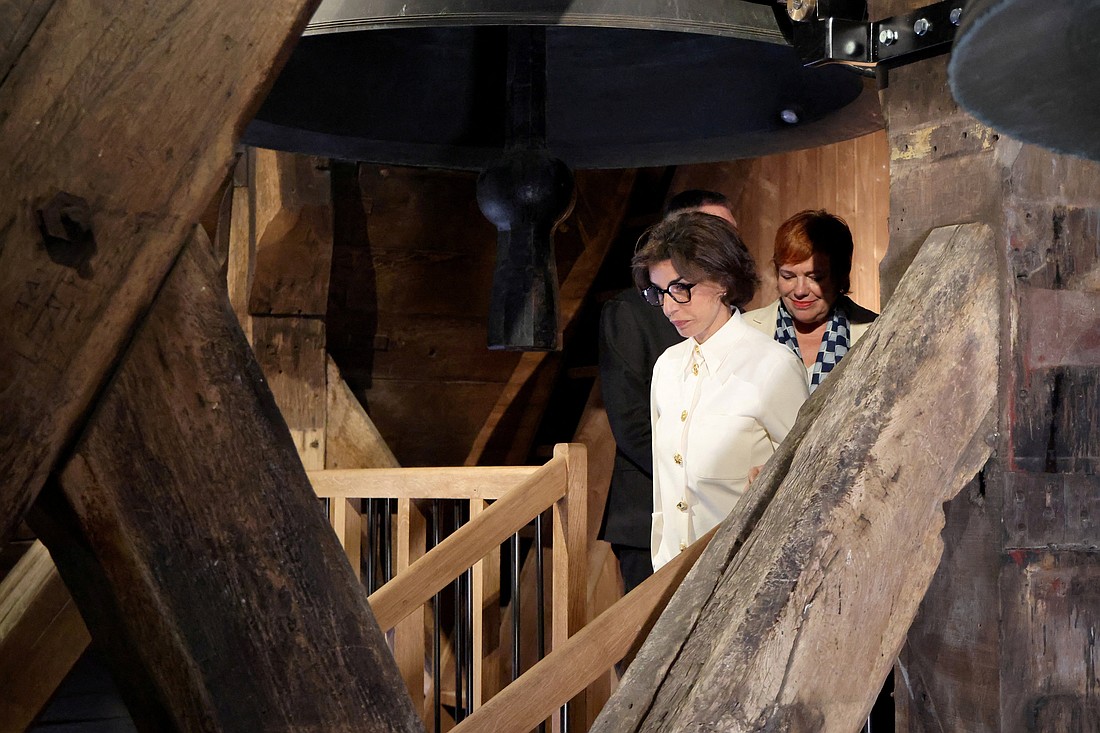
President Emmanuel Macron inaugurated the restored towers on Sept. 19. They have since been open to the public for the first time since the 2019 fire, with a modernized and completely renovated tour route compared to what it used to be before.
The French president's visit was scheduled on the eve of Heritage Days, which take place every year on the third weekend of September. Organized in France since 1984, they offer a unique opportunity to visit monuments, Churches, theaters, castles, and other public or private buildings free of charge, particularly those that are usually closed to the public.
The French president climbed the 424 steps leading to the top of the 226-foot-high towers, along with Archbishop Laurent Ulrich of Paris, rector of the cathedral Father Olivier Ribadeau Dumas, and head of Notre Dame rebuilding efforts Philippe Jost.
Built in the 13th century, the towers of Notre Dame were narrowly spared by the 2019 fire, which started in the north tower, raising fears that its belfry, the 65-feet-high wooden structure that supports its bells and reduces the effect of their vibrations on the masonry, would collapse. The fall of the bells could have led to the destruction of the cathedral's facade.
One stone spiral staircase of the tour dates back to the Middle Ages, leading to ancient rooms equipped with modern audio and lighting systems, illustrating important moments in the cathedral's history, such as General Charles de Gaulle's arrival at Notre Dame on Aug. 26, 1944, after the surrender of German troops in Paris.
The second staircase, this time brand new and designed by chief architect, Philippe Villeneuve, consists of 178 steps made of solid oak, which people can climb while others descend, without crossing paths – a staircase that announces that tradition will meet subtle modernity in reconstructed Notre Dame.
Visitors can also admire the cathedral's two largest bells, located in the south tower, known as "bourdons," and pass through the "courtyard of the cisterns," a terrace suspended between the two towers, where large rainwater collectors once stood.
The restored oak framework above the nave is also one to see, with a peak at the chimeras, decorative statues, and gargoyles that drain rainwater, famous not only for their 19th-century designer, Eugène Viollet-le-Duc, but also Victor Hugo's novel "Notre Dame de Paris" – which led to the first grand restoration of the crumbling cathedral, entrusted to Viollet-le-Duc as chief architect.
There is an admission fee for the tower visit, unlike the rest of the cathedral, which is primarily a place of worship. The limited space inside the towers means that the number of visitors has to be restricted. The towers can accommodate 400,000 visitors per year, which is much less than the rest of the cathedral, where 30,000 people enter every day.
Caroline de Sury writes for OSV News from Paris.
Catholic journalism is needed now more than ever. Please consider supporting this work by signing up for a SUBSCRIPTION (click HERE) or making a DONATION to The Monitor (click HERE). Thank you for your support.
Related Stories
Sunday, December 14, 2025




E-Editions

Events
PARIS OSV News – The northwestern French city of Nantes waited for this moment for five long years and on Sept. 27, reopened its cathedral after the 2020 arson attack. The Church celebrated with local and state officials present, and topped its reopening with ballet dancers flying on the cathedral's square.
Meanwhile, Parisians and tourists enjoy the newly reopened towers of the Notre Dame Cathedral – one of the last major steps in bringing the jewel of Paris back to its former glory.
Bishop Laurent Percerou of Nantes – who presided over the first Mass at the cathedral in the presence of many bishops and the apostolic nuncio to France, Archbishop Celestino Migliore – thanked all those rebuilding the cathedral, saying their work contributed to "authentic beauty."
He said the work of "architects, masons, stonemasons, electricians" enabled the reopening of the Sts. Peter and Paul Cathedral, "still convalescing but standing firm, ready to regain its rightful place in the city."
"I must admit that I am truly moved today," Johanna Rolland, mayor of Nantes, said, as reported by Ouest France, adding that the day of "happiness and reunion" overlaps with the sadness of the 2020 arson
Rachida Dati, outgoing minister of culture, said during the ceremony that the sum provided by the state to rebuild the cathedral was more than $42 million and that this investment "reflects the nation's attachment to its heritage. The cathedral is a place of faith, memory, culture, and landmark. A legacy of the past. And, here, a symbol of resilience."
A volunteer Church assistant – a 39-year-old asylum seeker from Rwanda who has lived in France for several years – set the cathedral on fire July 18, 2020, after he was refused further asylum in the country and was facing deportation.
In March 2023, he was sentenced to four years in prison.
Although firefighters managed to bring the Nantes fire under control within two hours and preserve the cathedral's main structure – for which they were praised during the reopening ceremony – the historic organ, dating back to 1621 and having withstood both the French Revolution and World War II, was destroyed.
The blaze also claimed numerous priceless artifacts and artworks, including a painting by 19th-century artist Jean-Hippolyte Flandrin and stained glass windows featuring fragments of 16th-century glass.
Construction of the cathedral began in 1434 and spanned several centuries, finally concluding in 1891. It had previously suffered damage in a 1972 fire, after which concrete reinforcements were added during roof restoration efforts.
While the Nantes cathedral is still covered with scaffolding, Notre Dame in Paris – damaged 17 months before the sister Church in Nantes – has its iconic tower tour back to the spotlight of the best tourist attraction of the city.
President Emmanuel Macron inaugurated the restored towers on Sept. 19. They have since been open to the public for the first time since the 2019 fire, with a modernized and completely renovated tour route compared to what it used to be before.
The French president's visit was scheduled on the eve of Heritage Days, which take place every year on the third weekend of September. Organized in France since 1984, they offer a unique opportunity to visit monuments, Churches, theaters, castles, and other public or private buildings free of charge, particularly those that are usually closed to the public.
The French president climbed the 424 steps leading to the top of the 226-foot-high towers, along with Archbishop Laurent Ulrich of Paris, rector of the cathedral Father Olivier Ribadeau Dumas, and head of Notre Dame rebuilding efforts Philippe Jost.
Built in the 13th century, the towers of Notre Dame were narrowly spared by the 2019 fire, which started in the north tower, raising fears that its belfry, the 65-feet-high wooden structure that supports its bells and reduces the effect of their vibrations on the masonry, would collapse. The fall of the bells could have led to the destruction of the cathedral's facade.
One stone spiral staircase of the tour dates back to the Middle Ages, leading to ancient rooms equipped with modern audio and lighting systems, illustrating important moments in the cathedral's history, such as General Charles de Gaulle's arrival at Notre Dame on Aug. 26, 1944, after the surrender of German troops in Paris.
The second staircase, this time brand new and designed by chief architect, Philippe Villeneuve, consists of 178 steps made of solid oak, which people can climb while others descend, without crossing paths – a staircase that announces that tradition will meet subtle modernity in reconstructed Notre Dame.
Visitors can also admire the cathedral's two largest bells, located in the south tower, known as "bourdons," and pass through the "courtyard of the cisterns," a terrace suspended between the two towers, where large rainwater collectors once stood.
The restored oak framework above the nave is also one to see, with a peak at the chimeras, decorative statues, and gargoyles that drain rainwater, famous not only for their 19th-century designer, Eugène Viollet-le-Duc, but also Victor Hugo's novel "Notre Dame de Paris" – which led to the first grand restoration of the crumbling cathedral, entrusted to Viollet-le-Duc as chief architect.
There is an admission fee for the tower visit, unlike the rest of the cathedral, which is primarily a place of worship. The limited space inside the towers means that the number of visitors has to be restricted. The towers can accommodate 400,000 visitors per year, which is much less than the rest of the cathedral, where 30,000 people enter every day.
Caroline de Sury writes for OSV News from Paris.
Catholic journalism is needed now more than ever. Please consider supporting this work by signing up for a SUBSCRIPTION (click HERE) or making a DONATION to The Monitor (click HERE). Thank you for your support.