


Workshop to explore Byzantine Catholic Church’s rich traditions
September 19, 2025 at 10:38 a.m.
For many Catholics familiar only with the Roman or Latin Rite of worship, learning that other Catholic rites exist in union with Rome can come as a surprise. That is something Father Yuriy Oros is hoping to change.
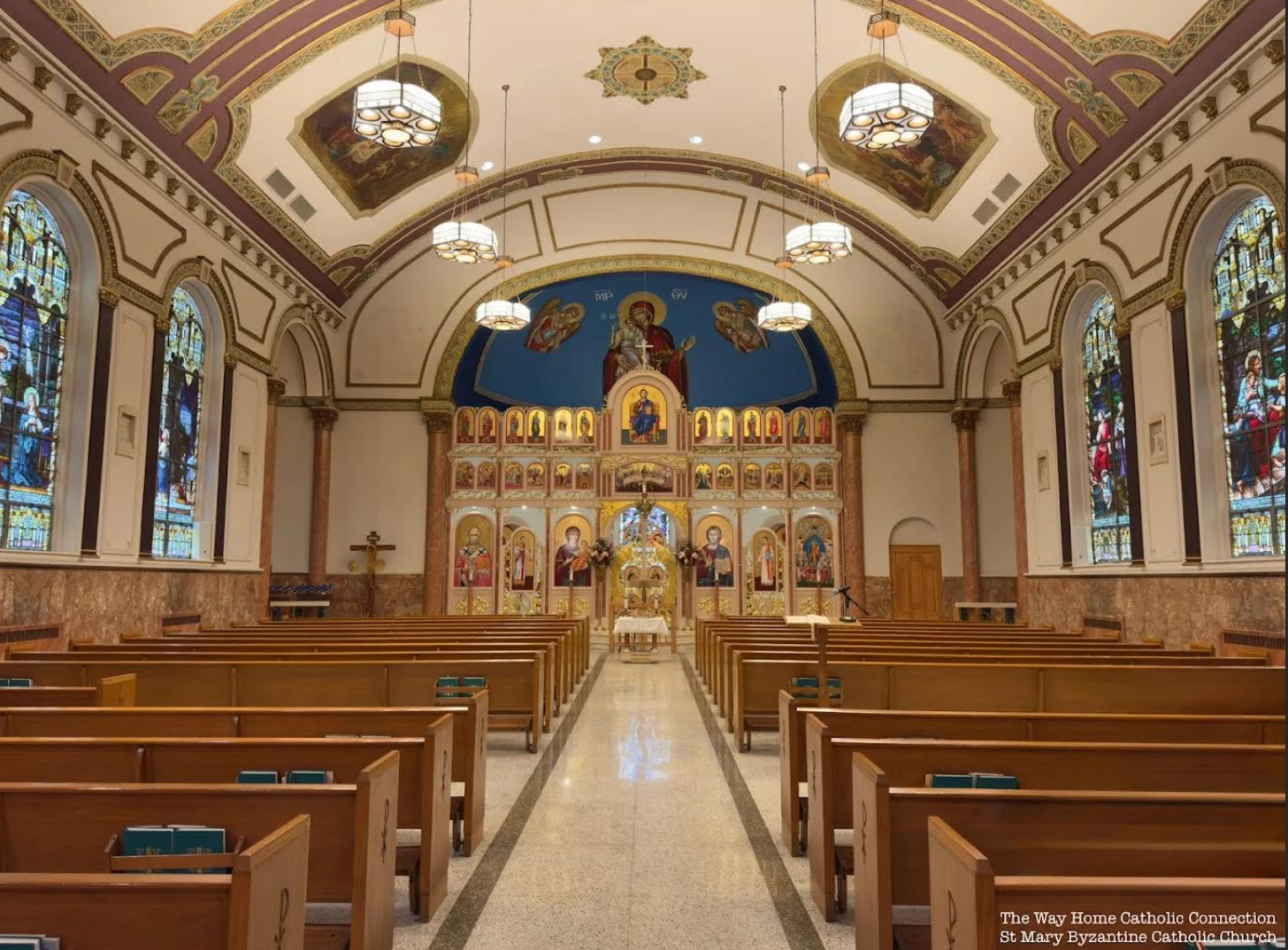
Interior shot of St. Mary Byzantine Catholic Church, Trenton. Courtesy photo
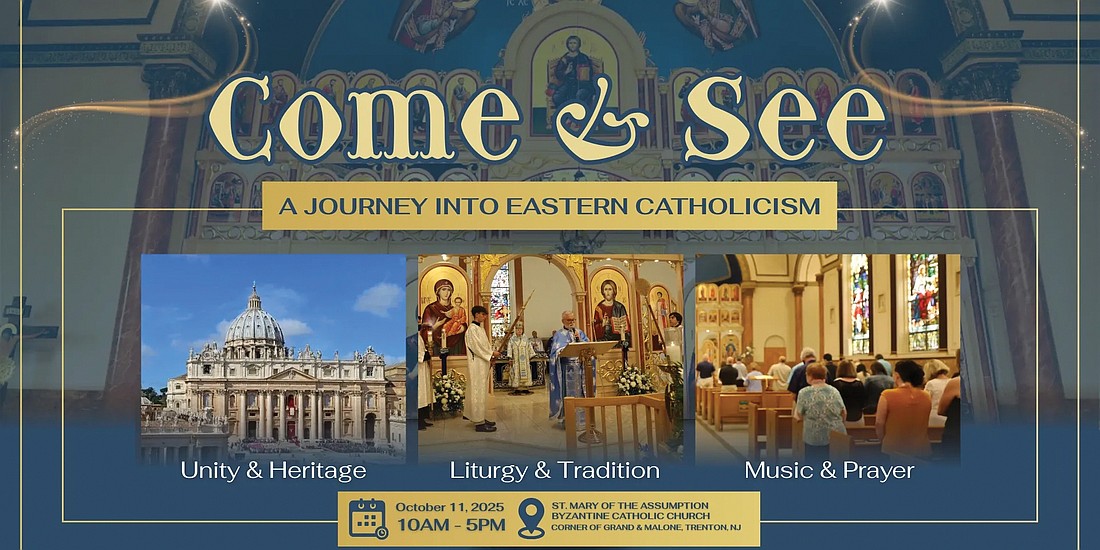
Father Oros’s parish, St. Mary of the Assumption Byzantine Catholic Church in Trenton, will offer a workshop, “Come and See: A Journey into Eastern Catholicism.” The workshop will be offered Oct. 11 from 10 a.m. to 5 p.m. in the church at the corner of Grand and Malone Streets; it will conclude with a Divine Liturgy.
“I believe many will be fascinated to learn about how Byzantine spirituality is expressed through the sacred music and the way our prayers are rooted in the writings of the Fathers of the Church,” said Father Oros, who has served since 2017 as parochial administrator of the Trenton church and of St. Nicholas Byzantine Catholic Church, Roebling.
Roman Catholics interested in exploring the Eastern Catholic tradition, as well as Eastern Catholics interested in exploring their heritage, are invited to learn about Eastern Catholic prayer and music, join in conversation and experience a sung Divine Liturgy.
Presenters from the Byzantine Catholic Eparchy of Passaic will be Father James Badeaux, on architecture, liturgy and iconography; Father Paul West, on the Byzantine musical tradition; and Father Edward Cimbala, who will be the main celebrant and homilist for the Divine Liturgy, the proper name used by many Eastern Catholics for the eucharistic liturgy.
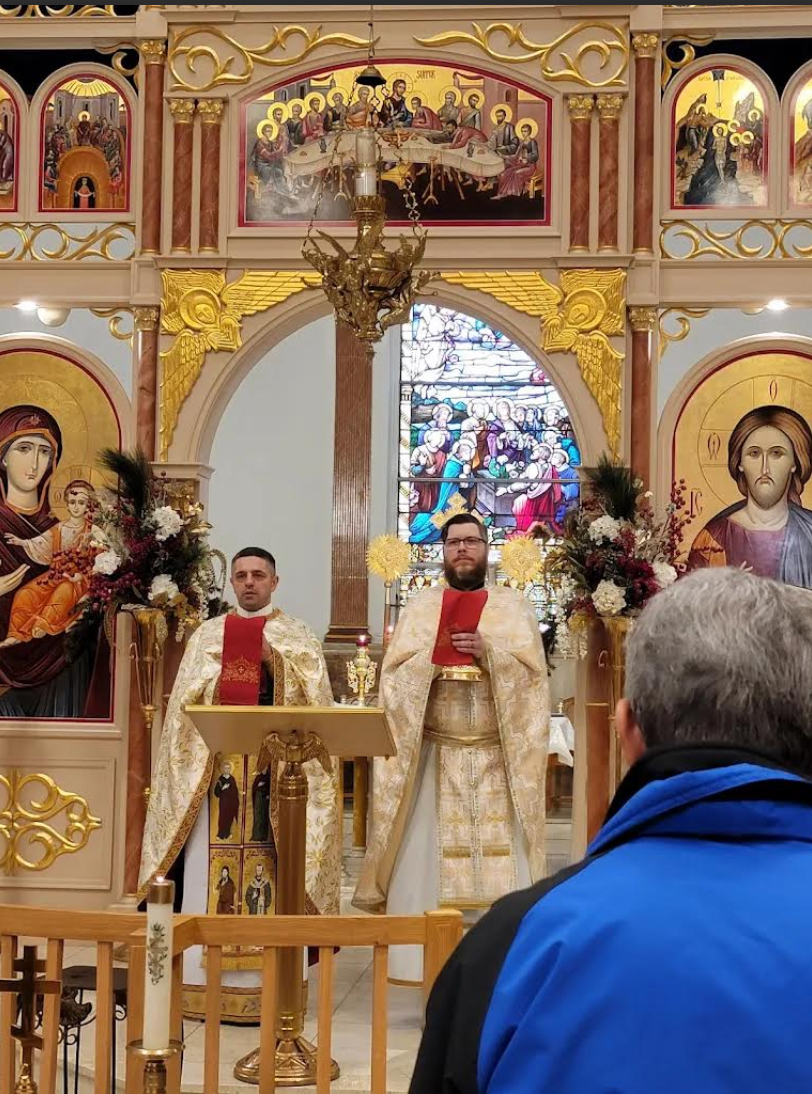
Father Yuriy Oros, left, pastor of St. Mary Byzantine Catholic Church, Trenton, and Father Paul Varchola West, pastor of Our Lady of Perpetual Help Byzantine Catholic Church, Levittown, celebrate the Divine Liturgy. Courtesy photo
Brother Alex Mosko from the Oratory of St. Philip Neri in Philadelphia, soon-to-be ordained to the priesthood in the Roman Catholic tradition with bi-ritual faculties, will present his perspective on the various traditions and expressions within the worldwide Catholic Church.
United Traditions
“During my eight years of ministry here in the United States, and six years of study and service in Rome, I discovered something striking,” said Father Oros, who moved with his family from Ukraine in 2017. “Even many devout Catholics – laypeople, religious, and even clergy – have never really encountered the Byzantine Catholic Church. Yet, our Church is the largest of all the Eastern Catholic Churches and has a deep, beautiful spiritual tradition.”
In communion with Rome and the Pope, the Byzantine Catholic Church is not to be confused with Eastern Orthodox or Greek Orthodox Churches, which do not accept the authority of the Holy Father, among other differences.
“This workshop is an opportunity for everyone to discover the richness of Byzantine Catholicism, which is expressed through our church architecture, music, sacred texts and iconography,” said Father Oros.
Alicia Brozovich, a Roman Catholic who serves as primary cantor for St. Nicholas Church, is coordinator of the event and will assist with the presentation on sung Divine Liturgy and lead music for the workshop’s concluding liturgy.
“I remember when I first learned that there are different rites within the Catholic Church,” she said, adding she was “a bit scandalized by this reality. I also recall the exhortation in ‘Orientale Lumen’ for the Church to ‘breathe with both lungs,’ and so I started exploring the East through music.”
“Orientale Lumen” was St. John Paul II’s 1995 apostolic letter, written 100 years after Pope Leo XIII wrote an apostolic letter to safeguard the significance of Eastern traditions for the Catholic Church.
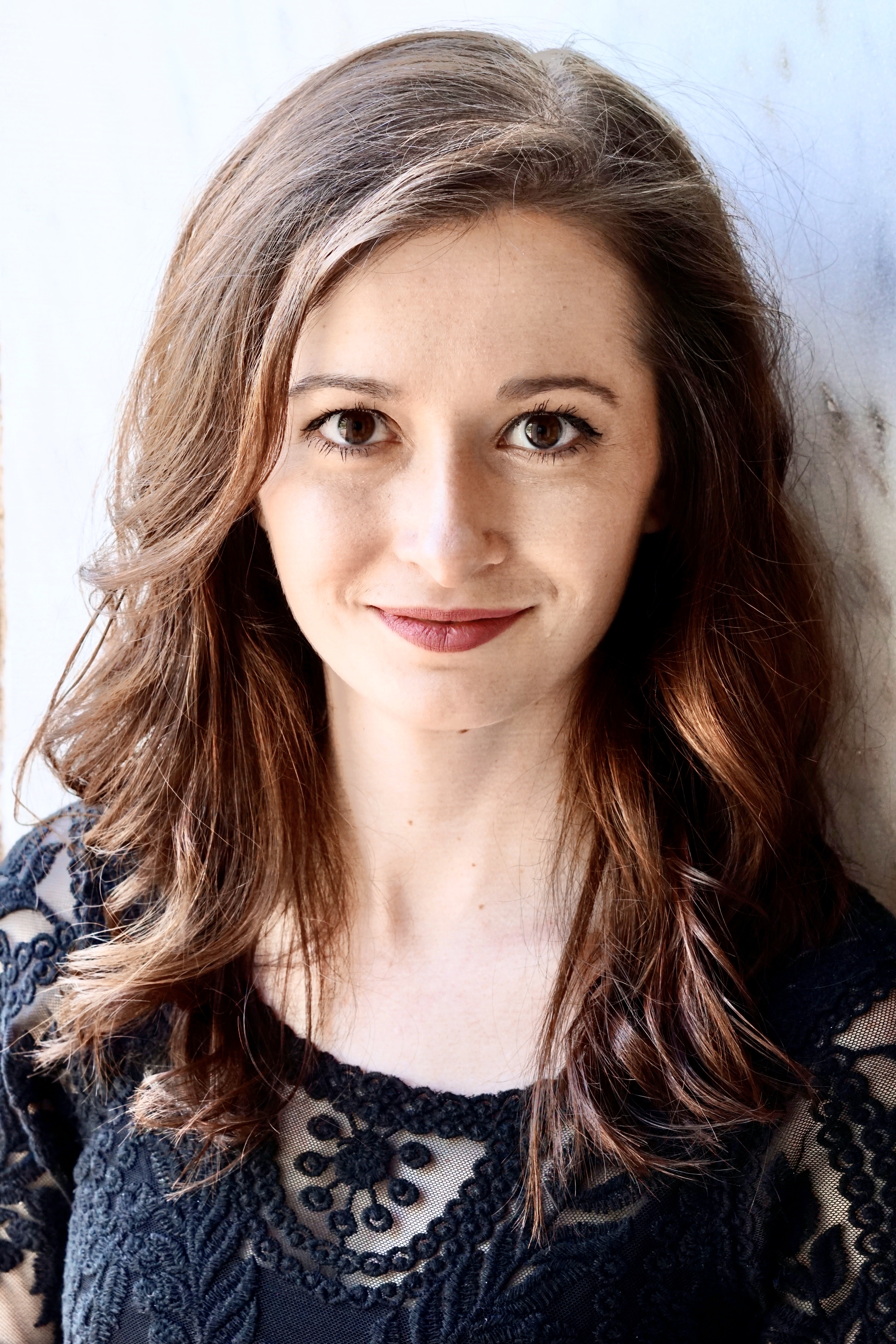 Image Caption
With a background in music and theology from Benedictine College, Atchison, Kan., Brozovich began her Byzantine experience with an invitation from Andrew Skitko, St. Mary’s cantor, to sing as part of Theoria – a professional octet providing full choral liturgies to two Ruthenian Catholic parishes in Trenton and Manhattan, N.Y.
“Byzantine” refers to the broader liturgical and cultural tradition; it is one of five families or groups of Catholic churches with origins in Eastern Europe, Asia or Africa that have their own distinctive liturgical and legal systems and are identified by the national or ethnic character of their region of origin. “Ruthenian” historically designates a specific subgroup within that family, especially those from Ruthenia – a historical region in Eastern Europe, primarily now Ukraine and Belarus.
Brozovich said learning about Eastern Catholicism’s differences, “liturgically, sacramentally, and even in how the Eucharist is distributed, has only made me appreciate both the Western and Eastern faith traditions more deeply.”
Workshop Experience
The Divine Liturgy incorporates more sung worship than the Mass and can run a bit longer due to additional prayers and blessings.
As in all Catholic churches, “everyone should remember that the church is a sacred place, so modest and respectful dress is always appropriate,” Father Oros said of how workshop participants should dress for the occasion.
Those who are properly disposed may receive Holy Communion during the Divine Liturgy. While Byzantine and Roman Catholics share Sacraments, reception of Communion in the Byzantine rite is a bit different.
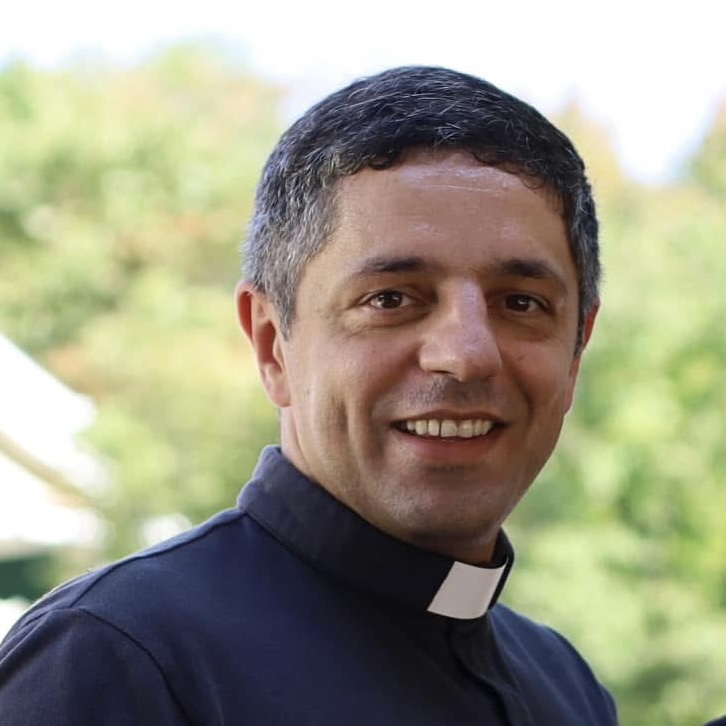
Father Yuriy Oros
“In the Byzantine tradition, you approach the priest, say your name (if he doesn’t already know it), cross your arms over your chest, tilt your head back and open your mouth,” Father Oros explained. “The priest will place the Body and Blood of Christ directly into your mouth with a spoon.”
Father Oros said he hopes the workshop will leave participants with a deeper awareness of the “beauty and universality of the Catholic Church.”
“The Catholic Church is not only the Roman Rite – she is made up of many different traditions, all united under the guidance of the Holy Father,” he said. “Each rite has its own treasures to offer. ... Perhaps for some, this experience will awaken a holy curiosity to learn more about Eastern Catholicism and to allow its beauty to deepen their own walk with Christ.”
Registration by Oct. 8 is $20 per person and includes lunch. To register, visit stmarybyzcatholictrenton.org.
To watch the “Better Together” interview on Domestic Church Media with Alicia Brozovich and Father Yuriy Oros, visit YouTube.com > Domestic Church Media Better Together.
Related Stories
Wednesday, January 07, 2026


E-Editions
Events
For many Catholics familiar only with the Roman or Latin Rite of worship, learning that other Catholic rites exist in union with Rome can come as a surprise. That is something Father Yuriy Oros is hoping to change.
Interior shot of St. Mary Byzantine Catholic Church, Trenton. Courtesy photo
Father Oros’s parish, St. Mary of the Assumption Byzantine Catholic Church in Trenton, will offer a workshop, “Come and See: A Journey into Eastern Catholicism.” The workshop will be offered Oct. 11 from 10 a.m. to 5 p.m. in the church at the corner of Grand and Malone Streets; it will conclude with a Divine Liturgy.
“I believe many will be fascinated to learn about how Byzantine spirituality is expressed through the sacred music and the way our prayers are rooted in the writings of the Fathers of the Church,” said Father Oros, who has served since 2017 as parochial administrator of the Trenton church and of St. Nicholas Byzantine Catholic Church, Roebling.
Roman Catholics interested in exploring the Eastern Catholic tradition, as well as Eastern Catholics interested in exploring their heritage, are invited to learn about Eastern Catholic prayer and music, join in conversation and experience a sung Divine Liturgy.
Presenters from the Byzantine Catholic Eparchy of Passaic will be Father James Badeaux, on architecture, liturgy and iconography; Father Paul West, on the Byzantine musical tradition; and Father Edward Cimbala, who will be the main celebrant and homilist for the Divine Liturgy, the proper name used by many Eastern Catholics for the eucharistic liturgy.
Father Yuriy Oros, left, pastor of St. Mary Byzantine Catholic Church, Trenton, and Father Paul Varchola West, pastor of Our Lady of Perpetual Help Byzantine Catholic Church, Levittown, celebrate the Divine Liturgy. Courtesy photo
Brother Alex Mosko from the Oratory of St. Philip Neri in Philadelphia, soon-to-be ordained to the priesthood in the Roman Catholic tradition with bi-ritual faculties, will present his perspective on the various traditions and expressions within the worldwide Catholic Church.
United Traditions
“During my eight years of ministry here in the United States, and six years of study and service in Rome, I discovered something striking,” said Father Oros, who moved with his family from Ukraine in 2017. “Even many devout Catholics – laypeople, religious, and even clergy – have never really encountered the Byzantine Catholic Church. Yet, our Church is the largest of all the Eastern Catholic Churches and has a deep, beautiful spiritual tradition.”
In communion with Rome and the Pope, the Byzantine Catholic Church is not to be confused with Eastern Orthodox or Greek Orthodox Churches, which do not accept the authority of the Holy Father, among other differences.
“This workshop is an opportunity for everyone to discover the richness of Byzantine Catholicism, which is expressed through our church architecture, music, sacred texts and iconography,” said Father Oros.
Alicia Brozovich, a Roman Catholic who serves as primary cantor for St. Nicholas Church, is coordinator of the event and will assist with the presentation on sung Divine Liturgy and lead music for the workshop’s concluding liturgy.
“I remember when I first learned that there are different rites within the Catholic Church,” she said, adding she was “a bit scandalized by this reality. I also recall the exhortation in ‘Orientale Lumen’ for the Church to ‘breathe with both lungs,’ and so I started exploring the East through music.”
“Orientale Lumen” was St. John Paul II’s 1995 apostolic letter, written 100 years after Pope Leo XIII wrote an apostolic letter to safeguard the significance of Eastern traditions for the Catholic Church.
Image CaptionWith a background in music and theology from Benedictine College, Atchison, Kan., Brozovich began her Byzantine experience with an invitation from Andrew Skitko, St. Mary’s cantor, to sing as part of Theoria – a professional octet providing full choral liturgies to two Ruthenian Catholic parishes in Trenton and Manhattan, N.Y.
“Byzantine” refers to the broader liturgical and cultural tradition; it is one of five families or groups of Catholic churches with origins in Eastern Europe, Asia or Africa that have their own distinctive liturgical and legal systems and are identified by the national or ethnic character of their region of origin. “Ruthenian” historically designates a specific subgroup within that family, especially those from Ruthenia – a historical region in Eastern Europe, primarily now Ukraine and Belarus.
Brozovich said learning about Eastern Catholicism’s differences, “liturgically, sacramentally, and even in how the Eucharist is distributed, has only made me appreciate both the Western and Eastern faith traditions more deeply.”
Workshop Experience
The Divine Liturgy incorporates more sung worship than the Mass and can run a bit longer due to additional prayers and blessings.
As in all Catholic churches, “everyone should remember that the church is a sacred place, so modest and respectful dress is always appropriate,” Father Oros said of how workshop participants should dress for the occasion.
Those who are properly disposed may receive Holy Communion during the Divine Liturgy. While Byzantine and Roman Catholics share Sacraments, reception of Communion in the Byzantine rite is a bit different.
Father Yuriy Oros
“In the Byzantine tradition, you approach the priest, say your name (if he doesn’t already know it), cross your arms over your chest, tilt your head back and open your mouth,” Father Oros explained. “The priest will place the Body and Blood of Christ directly into your mouth with a spoon.”
Father Oros said he hopes the workshop will leave participants with a deeper awareness of the “beauty and universality of the Catholic Church.”
“The Catholic Church is not only the Roman Rite – she is made up of many different traditions, all united under the guidance of the Holy Father,” he said. “Each rite has its own treasures to offer. ... Perhaps for some, this experience will awaken a holy curiosity to learn more about Eastern Catholicism and to allow its beauty to deepen their own walk with Christ.”
Registration by Oct. 8 is $20 per person and includes lunch. To register, visit stmarybyzcatholictrenton.org.
To watch the “Better Together” interview on Domestic Church Media with Alicia Brozovich and Father Yuriy Oros, visit YouTube.com > Domestic Church Media Better Together.