


Father Koch: God’s mercy is greater than our sins
September 19, 2025 at 3:15 p.m.
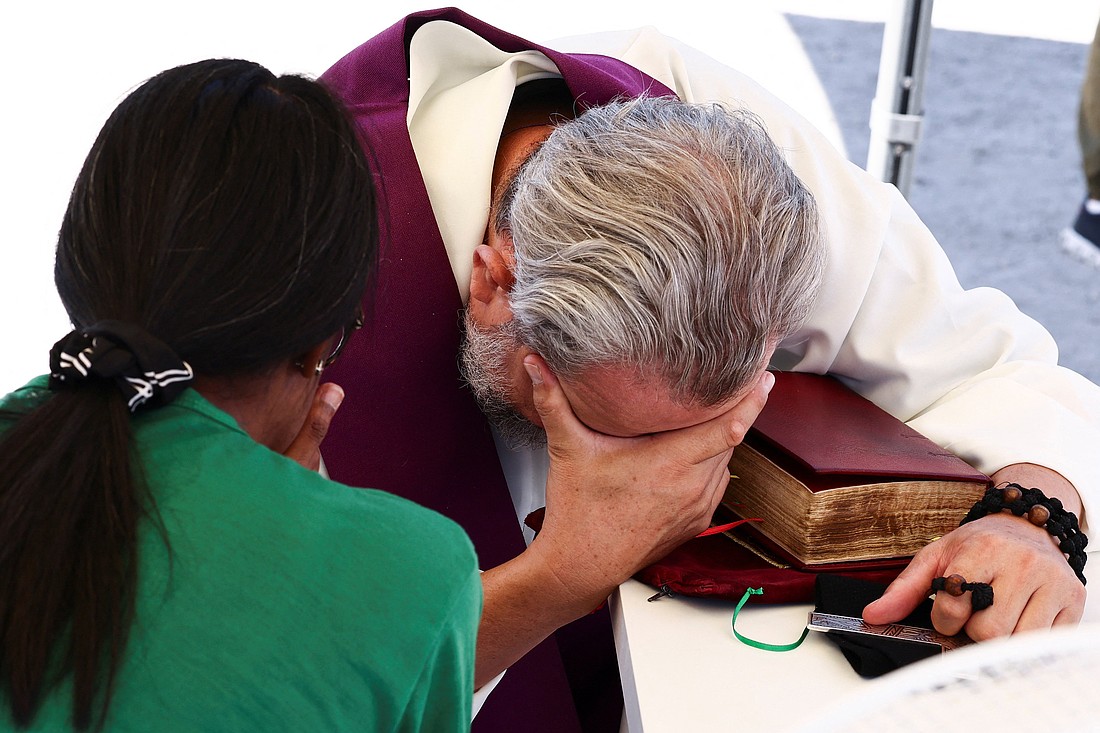
Gospel reflection for Sept. 21, 2025, 25th Sunday in Ordinary Time
The parable of the prudent steward expresses the tension that exists within us as we struggle with our own sinfulness in light of God’s mercy. Recognizing his own need to settle debts in order to placate others, the steward writes new invoices for each of his master’s debtors. Here he reduces their debt so that he can make their burden easier. Origen, the early apologist, commented: “It is evident from this that the documents of sin are ours, but God writes documents of justice.”
We are inclined to carry the burden of our own sins long after the debt has been paid and forgiven. It can take a long time to accept the fullness of God’s mercy.
We generally don’t like to think of our sins as incurring a debt that has to be paid, but that image is found repeatedly in the Scriptures and the writing of the early Church. Since we are in a covenantal relationship with God we carry certain obligations. We have signed-on to the Commandments, and as Catholics, to the precepts of the Church. We need to uphold our end of the bargain, as God has promised to uphold his. Our sins, then, result in a breach of the contract, thus incurring a debt.
For the disciple this debt can feel burdensome as overtime we become more acutely aware of the burden of our own sins. The careful practice of the Examen reveals to us the depth of our own sinfulness. We recognize that not all of our sins are grave, and that many of our sinful actions are unintentional, thus in a sense alleviating our moral obligation, yet for the believer growing ever-deeper in a relationship with God, even the slightest short-coming, missed opportunity to exercise love, mercy, compassion, forgiveness or justice, can become disheartening.
At this point in our spiritual journey, we can feel overwhelmed by our sins. Some people fall into discouragement, others develop a pattern of scrupulosity which then becomes a tremendous burden to carry.
While some Christians hold that Jesus paid the debt in full and therefore the individual carries no obligation, our Catholic tradition informs us that instead we participate in Christ’s redemptive act through our own acts of penance and as we receive sacramental absolution.
Our sins are not ours alone, they affect the entire Body of Christ. Acting in persona Christi the priest pronounces the words of absolution and assigns a penance as a sign of our contrition and to make some atonement for our sins.
We live in a world of tension between a Christian view of complete atonement and therefore lose focus on their sins, and those who feel that they are so depraved and destroyed by their sins, that they never accept forgiveness.
Our understanding is more balanced and is seen in this parable.
None of us is capable of making a full atonement for our sins, much less for the sins of others. Through the Blood of Jesus Christ shed on the cross for us, our sins are forgiven, yet I still bear the weight of the actual sins and sins which I commit each and every day. I should not be obsessed with those sins, nor should I ignore them, let them pile up, and then seek forgiveness on rare occasions.
By the practice of a regular Examen, the at least daily praying of an Act of Contrition, and frequent use of the Sacrament of Confession, we pay the partial debt that we owe for the sins we willfully commit against the Body of Christ.
Yet, we must accept forgiveness. I recently heard someone say that they do not expect to be forgiven and that it is not important, but rather they want their life to be transformed going forward. The past is the past.
Yes, the past is the past. But we can only be healed and truly reconciled to the Father when we authentically and totally accept the forgiveness achieved by the Son, but only as I participate in that atonement through my own contrition and penance.
We all sin. The Lord has written off most of the debt, the rest is forgiven through my own participation in the dispensation of salvation in and through the sacramental life of the Church.
Father Garry Koch is pastor of St. Benedict Parish, Holmdel
Related Stories
Sunday, December 28, 2025


E-Editions
Events
Gospel reflection for Sept. 21, 2025, 25th Sunday in Ordinary Time
The parable of the prudent steward expresses the tension that exists within us as we struggle with our own sinfulness in light of God’s mercy. Recognizing his own need to settle debts in order to placate others, the steward writes new invoices for each of his master’s debtors. Here he reduces their debt so that he can make their burden easier. Origen, the early apologist, commented: “It is evident from this that the documents of sin are ours, but God writes documents of justice.”
We are inclined to carry the burden of our own sins long after the debt has been paid and forgiven. It can take a long time to accept the fullness of God’s mercy.
We generally don’t like to think of our sins as incurring a debt that has to be paid, but that image is found repeatedly in the Scriptures and the writing of the early Church. Since we are in a covenantal relationship with God we carry certain obligations. We have signed-on to the Commandments, and as Catholics, to the precepts of the Church. We need to uphold our end of the bargain, as God has promised to uphold his. Our sins, then, result in a breach of the contract, thus incurring a debt.
For the disciple this debt can feel burdensome as overtime we become more acutely aware of the burden of our own sins. The careful practice of the Examen reveals to us the depth of our own sinfulness. We recognize that not all of our sins are grave, and that many of our sinful actions are unintentional, thus in a sense alleviating our moral obligation, yet for the believer growing ever-deeper in a relationship with God, even the slightest short-coming, missed opportunity to exercise love, mercy, compassion, forgiveness or justice, can become disheartening.
At this point in our spiritual journey, we can feel overwhelmed by our sins. Some people fall into discouragement, others develop a pattern of scrupulosity which then becomes a tremendous burden to carry.
While some Christians hold that Jesus paid the debt in full and therefore the individual carries no obligation, our Catholic tradition informs us that instead we participate in Christ’s redemptive act through our own acts of penance and as we receive sacramental absolution.
Our sins are not ours alone, they affect the entire Body of Christ. Acting in persona Christi the priest pronounces the words of absolution and assigns a penance as a sign of our contrition and to make some atonement for our sins.
We live in a world of tension between a Christian view of complete atonement and therefore lose focus on their sins, and those who feel that they are so depraved and destroyed by their sins, that they never accept forgiveness.
Our understanding is more balanced and is seen in this parable.
None of us is capable of making a full atonement for our sins, much less for the sins of others. Through the Blood of Jesus Christ shed on the cross for us, our sins are forgiven, yet I still bear the weight of the actual sins and sins which I commit each and every day. I should not be obsessed with those sins, nor should I ignore them, let them pile up, and then seek forgiveness on rare occasions.
By the practice of a regular Examen, the at least daily praying of an Act of Contrition, and frequent use of the Sacrament of Confession, we pay the partial debt that we owe for the sins we willfully commit against the Body of Christ.
Yet, we must accept forgiveness. I recently heard someone say that they do not expect to be forgiven and that it is not important, but rather they want their life to be transformed going forward. The past is the past.
Yes, the past is the past. But we can only be healed and truly reconciled to the Father when we authentically and totally accept the forgiveness achieved by the Son, but only as I participate in that atonement through my own contrition and penance.
We all sin. The Lord has written off most of the debt, the rest is forgiven through my own participation in the dispensation of salvation in and through the sacramental life of the Church.
Father Garry Koch is pastor of St. Benedict Parish, Holmdel