


Sensory-friendly Masses have a place in the life of the Church
September 16, 2025 at 3:01 p.m.
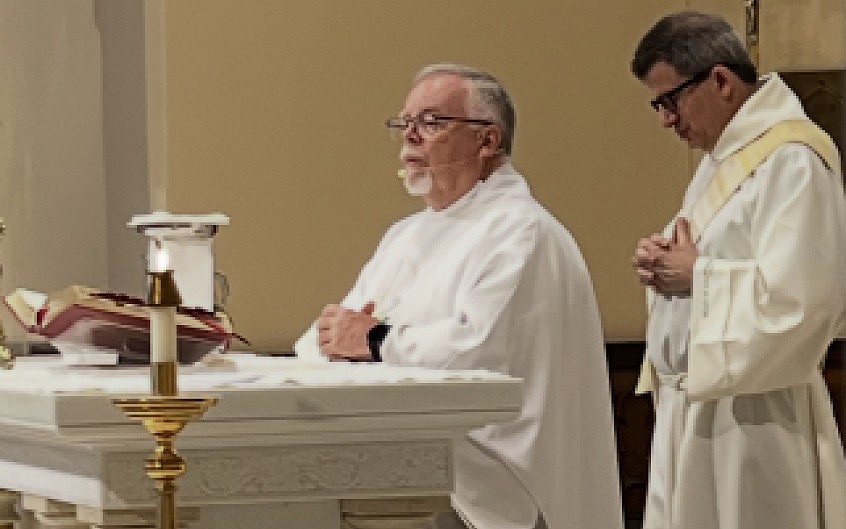
In delivering his talk on the “important service” sensory friendly Masses are to families – especially the parents – of persons with disabilities, Father Jim Grogan, pastor of Our Lady of Good Counsel Parish, Moorestown, noted how families “often feel awkward when their child makes noises or uncontrollable outbursts during a regular parish Mass, which in many cases lead them to refrain from attending Mass with their disabled child.”
“For these parishioners and their special needs, such special Masses provide a wonderful opportunity for full and active participation in the Eucharist,” he said during the Aug. 8 workshop for persons who minister to persons with disabilities.
Another point Father Grogan made was about welcoming the same persons with disabilities at all Masses.
“While most priests would affirm that they are welcome, sometimes the pushback from parishioners can make them feel unwelcome.” He shared an exchange he had years ago when he was asked why he doesn’t have a “cry room for these families.”
“They were not pleased with my response that I don’t believe in cry rooms and wanted these children or special-needs adults to feel welcome at any and every Mass,” he said.
Based on his current experience as pastor of Our Lady of Good Counsel Parish and his previous assignment as pastor of Nativity Parish, Fair Haven, Father Grogan also shared suggestions on what might be done during a low-sensory Mass.
“While our Catholic liturgies are rich with symbols, where every action has a meaning, when leading a low-sensory or sensory-friendly” Mass, every effort should be made to simplify the words, actions and setting out of respect for the unique needs of the congregation.
One idea he noted has been to minimize movements. “For some of the congregation, movement can be distracting; consider no entrance or recessional processions and no music. Have preparatory actions, such as lighting candles, preparing the altar done before the congregation arrives.” He also recommended that depending on the church environment, options for lighting might be considered and whether the timing of the Mass will take place as a separate Mass or if it will be celebrated at one of the usual weekend Mass times.
“I have found that the separate time for the low-sensory Mass allows for greater flexibility in planning the liturgy and a welcoming, stigma-free environment,” Father Grogan said. “This also facilitates hospitality actions that may follow the Mass for the particular community.”
The Church needs quality Catholic journalism now more than ever. Please consider supporting this work by signing up for a SUBSCRIPTION (click HERE) or making a DONATION to The Monitor (click HERE). Thank you for your support.
 Walking Together in Hope: Workshop advocates for persons with disabilities as integral members of the Church
Monday, January 05, 2026

E-Editions
Events
In delivering his talk on the “important service” sensory friendly Masses are to families – especially the parents – of persons with disabilities, Father Jim Grogan, pastor of Our Lady of Good Counsel Parish, Moorestown, noted how families “often feel awkward when their child makes noises or uncontrollable outbursts during a regular parish Mass, which in many cases lead them to refrain from attending Mass with their disabled child.”
“For these parishioners and their special needs, such special Masses provide a wonderful opportunity for full and active participation in the Eucharist,” he said during the Aug. 8 workshop for persons who minister to persons with disabilities.
Another point Father Grogan made was about welcoming the same persons with disabilities at all Masses.
“While most priests would affirm that they are welcome, sometimes the pushback from parishioners can make them feel unwelcome.” He shared an exchange he had years ago when he was asked why he doesn’t have a “cry room for these families.”
“They were not pleased with my response that I don’t believe in cry rooms and wanted these children or special-needs adults to feel welcome at any and every Mass,” he said.
Based on his current experience as pastor of Our Lady of Good Counsel Parish and his previous assignment as pastor of Nativity Parish, Fair Haven, Father Grogan also shared suggestions on what might be done during a low-sensory Mass.
“While our Catholic liturgies are rich with symbols, where every action has a meaning, when leading a low-sensory or sensory-friendly” Mass, every effort should be made to simplify the words, actions and setting out of respect for the unique needs of the congregation.
One idea he noted has been to minimize movements. “For some of the congregation, movement can be distracting; consider no entrance or recessional processions and no music. Have preparatory actions, such as lighting candles, preparing the altar done before the congregation arrives.” He also recommended that depending on the church environment, options for lighting might be considered and whether the timing of the Mass will take place as a separate Mass or if it will be celebrated at one of the usual weekend Mass times.
“I have found that the separate time for the low-sensory Mass allows for greater flexibility in planning the liturgy and a welcoming, stigma-free environment,” Father Grogan said. “This also facilitates hospitality actions that may follow the Mass for the particular community.”
The Church needs quality Catholic journalism now more than ever. Please consider supporting this work by signing up for a SUBSCRIPTION (click HERE) or making a DONATION to The Monitor (click HERE). Thank you for your support.