


Bishop Persaud: Jamaicans trust 'God is with us' through planet's worst storm of 2025
October 28, 2025 at 2:18 p.m.
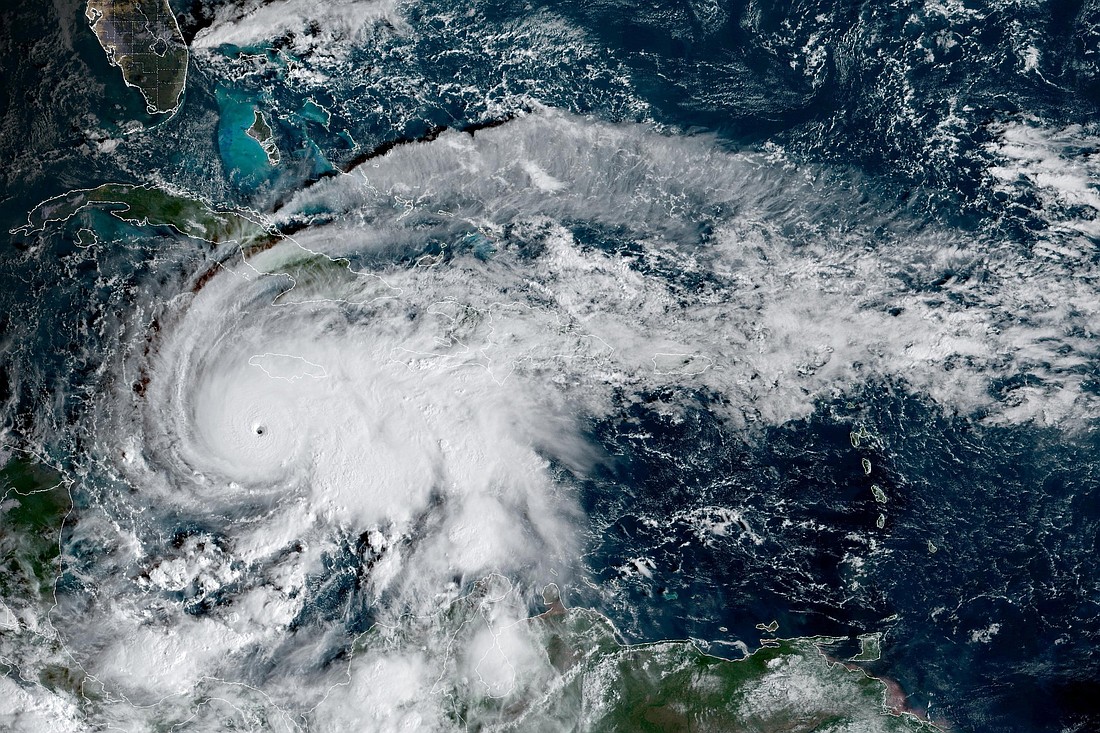
OSV News – As Hurricane Melissa approached Jamaica Oct. 27, OSV News spoke with Bishop John Persaud, who shepherds the Diocese of Mandeville and is also apostolic administrator of the Diocese of Montego Bay, which together with the Archdiocese of Kingston serve the faithful on the Caribbean island nation.
The slow-moving hurricane, a Category 5 storm with winds of ranging from 175-185 mph, has already killed at least seven – three in Haiti, one in the Dominican Republic, and three in Jamaica ahead of landfall on Oct. 28. The hurricane is the strongest storm the planet has seen this year.
This interview has been edited for length and clarity.
OSV News: What preparations have you and your parishioners made for Hurricane Melissa?
Bishop Persaud: Before Hurricane Melissa came to be, I actually had organized two weeks' vacation in Canada, and so I'm at the moment in Canada. I'm not on the island. I've been kept continuously briefed from there. ... But my heart is in Jamaica, and I am clearly worried about our people there.
OSV News: In a way, that's providential, so that you can be the point of connectivity for the Church amid the storm, with a stable telecommunications connection.
Bishop Persaud: A lot of people are saying that to me, but I'm not feeling that, to be honest. I would love to be at home at this time with the people. I'm scheduled to go home on Friday (Oct. 31), but I don't know what will happen, if the airports will be open.
But it's probably providential. Even some of my priests back home said, "You know, God has worked it out this way, that you could be outside and you could help to coordinate our efforts from that place."
A lot of people are trying to make contact with me, because I have the connectivity, being off the island. I've still been in touch with teams from both of the dioceses that I manage. We're trying to set up the three dioceses with one person each who will be the coordinator with Catholic Relief Services, Caritas and so on.
OSV News: What have you heard from the faithful on the island so far, especially as the storm has been a slow-moving one?
Bishop Persaud: Some people are very nervous and anxious, because it's been such a long week. So that waiting game has taken its toll psychologically, I think, on many people.
We have tried to do as much preparation as we are capable of with limited resources. Preparation has been done at different levels from the central government, taking all the necessary precautions, setting up shelters.
Local government, the various municipal corporations, Churches and our own Church, the Catholic Church, in the three dioceses have been trying to do as much as we are capable of. A lot of that is making sure that we are in touch with people who are most vulnerable – the ones who live alone, who live in buildings that will certainly be vulnerable – trying to get them to safer spaces in the shelters created by government, which might include in some instances our own school buildings in some of our communities.
Jamaicans know about hurricanes, so in that sense, the preparations include making sure you have enough foodstuffs as you're capable of having. Some of our poorer families don't have money to buy too much, so it's going to be limited what they can have – you know, having some water stored, that kind of thing.
But I think the most important right now for us, from a Church perspective, is making sure that the most vulnerable are cared for: those who are living alone and those who are in buildings that we know will be destroyed by such a storm.
OSV News: And, of course, persons with disabilities and persons in the hospital.
Bishop Persaud: Precisely. So in terms of that kind of preparation, I think we have tried as much as possible there.
OSV News: What are your directives for safeguarding the Blessed Sacrament during such disasters?
Bishop Persaud: My directions to the priests in both dioceses was for them to make that call. In other words, unless the Blessed Sacrament is at risk of being desecrated, then there's no reason to move it. But in some of our Churches that are vulnerable – those that are low-lying, near to the sea – then they may need to remove the Blessed Sacrament to a safe space.
Even with last Sunday (Oct. 26), we were expecting it (Hurricane Melissa) to come in even earlier. And so suddenly we thought it would be impossible for people to go to Mass. I basically left that decision to the locals and to the priests. If their people were able to attend, and not break any directives of the government, come out. So some places were able to have Mass on Sunday. In other places, the priest said Mass alone, offering up the Mass for their people, encouraging them to pray.
OSV News: Analysts have likened Hurricane Melissa to another record storm Jamaica experienced: Hurricane Gilbert (a Category 4 storm) in 1988. How has that memory impacted current preparations for Melissa?
Bishop Persaud: A lot of people who are still alive today have memories of Gilbert. They know the devastation that took place. Now all the reports coming in to us are saying this is going to be worse than Gilbert. We know that it's going to be bad, and it's coming right across most of the island.
But Jamaicans generally – and I'm not talking only Catholics here – are faith-based people. They're mainly Christian, faith-based. And so right now, I think many are relying on their faith to keep them strong in the face of the storm.
There's been a tremendous outpouring of support in prayer and in many other ways – being cared for by the wider Caribbean community, and for us in the Catholic Church, by the Antilles Conference of Bishops that we belong to. So we know everybody is backing us up in prayer.
OSV News: Talk about the trauma that people must reckon with following a storm. Obviously, there are physical consequences that have to be addressed – food, water, shelter – but how do you minister to spirits battered by nature?
Bishop Persaud: I think the biggest part is going to be the aftermath; that's going to be the challenge.
A few months back (in July), the Antilles Episcopal Conference issued a pastoral letter called "In the Eye of the Hurricane: Living the Rhythm of Natural Disasters in the Caribbean with Faith, Solidarity, and Hope." The idea is building a spirituality that sustains one through this horrific, in some cases, meeting with nature. It's certainly a challenge that is ongoing for us, because every year, you go through the hurricane season, not sure if something is going to come or not. This year, it (Hurricane Melissa) has come very late in the season, almost at the end. We thought we were escaping it, and then here comes Melissa.
I do believe that sometimes this is the part that we pay less attention to, one of the most damaging that we don't realize: the psychological impact.
I am not from Jamaica; I'm from Guyana, which is in the region and part of the Antilles bishops' conference, but off the belt, so we don't get hurricanes. So my first experience of a hurricane was last year with (Hurricane) Beryl, and just hearing the sound of the wind – it's something else to live through. I'm telling you, it's frightening. You're hearing the wind, the rain lashing against your house, and it's really something else to experience and to live through.
And while Jamaicans have lived through this forever, the magnitude of this particular storm that is coming towards us is something that I know will (be traumatic). As one of our priests, who lived through Gilbert, said to me, "You're going to hear sounds that you have never heard before. You will see sights that you have never seen before – things being lifted up and taken away with the wind."
It's that kind of experience. And amid it all, it's vital to be grounded in a faith that truly allows us to know that God is with us.
Gina Christian is a multimedia reporter for OSV News. Follow her on X @GinaJesseReina.
NOTES: Readers who wish to help the Catholic Church in Jamaica assist families devastated by Hurricane Melissa through Catholic Relief Services can do so at: https://www.crs.org/donate/hurricane-melissa.
Related Stories
Sunday, December 28, 2025

E-Editions
Events
OSV News – As Hurricane Melissa approached Jamaica Oct. 27, OSV News spoke with Bishop John Persaud, who shepherds the Diocese of Mandeville and is also apostolic administrator of the Diocese of Montego Bay, which together with the Archdiocese of Kingston serve the faithful on the Caribbean island nation.
The slow-moving hurricane, a Category 5 storm with winds of ranging from 175-185 mph, has already killed at least seven – three in Haiti, one in the Dominican Republic, and three in Jamaica ahead of landfall on Oct. 28. The hurricane is the strongest storm the planet has seen this year.
This interview has been edited for length and clarity.
OSV News: What preparations have you and your parishioners made for Hurricane Melissa?
Bishop Persaud: Before Hurricane Melissa came to be, I actually had organized two weeks' vacation in Canada, and so I'm at the moment in Canada. I'm not on the island. I've been kept continuously briefed from there. ... But my heart is in Jamaica, and I am clearly worried about our people there.
OSV News: In a way, that's providential, so that you can be the point of connectivity for the Church amid the storm, with a stable telecommunications connection.
Bishop Persaud: A lot of people are saying that to me, but I'm not feeling that, to be honest. I would love to be at home at this time with the people. I'm scheduled to go home on Friday (Oct. 31), but I don't know what will happen, if the airports will be open.
But it's probably providential. Even some of my priests back home said, "You know, God has worked it out this way, that you could be outside and you could help to coordinate our efforts from that place."
A lot of people are trying to make contact with me, because I have the connectivity, being off the island. I've still been in touch with teams from both of the dioceses that I manage. We're trying to set up the three dioceses with one person each who will be the coordinator with Catholic Relief Services, Caritas and so on.
OSV News: What have you heard from the faithful on the island so far, especially as the storm has been a slow-moving one?
Bishop Persaud: Some people are very nervous and anxious, because it's been such a long week. So that waiting game has taken its toll psychologically, I think, on many people.
We have tried to do as much preparation as we are capable of with limited resources. Preparation has been done at different levels from the central government, taking all the necessary precautions, setting up shelters.
Local government, the various municipal corporations, Churches and our own Church, the Catholic Church, in the three dioceses have been trying to do as much as we are capable of. A lot of that is making sure that we are in touch with people who are most vulnerable – the ones who live alone, who live in buildings that will certainly be vulnerable – trying to get them to safer spaces in the shelters created by government, which might include in some instances our own school buildings in some of our communities.
Jamaicans know about hurricanes, so in that sense, the preparations include making sure you have enough foodstuffs as you're capable of having. Some of our poorer families don't have money to buy too much, so it's going to be limited what they can have – you know, having some water stored, that kind of thing.
But I think the most important right now for us, from a Church perspective, is making sure that the most vulnerable are cared for: those who are living alone and those who are in buildings that we know will be destroyed by such a storm.
OSV News: And, of course, persons with disabilities and persons in the hospital.
Bishop Persaud: Precisely. So in terms of that kind of preparation, I think we have tried as much as possible there.
OSV News: What are your directives for safeguarding the Blessed Sacrament during such disasters?
Bishop Persaud: My directions to the priests in both dioceses was for them to make that call. In other words, unless the Blessed Sacrament is at risk of being desecrated, then there's no reason to move it. But in some of our Churches that are vulnerable – those that are low-lying, near to the sea – then they may need to remove the Blessed Sacrament to a safe space.
Even with last Sunday (Oct. 26), we were expecting it (Hurricane Melissa) to come in even earlier. And so suddenly we thought it would be impossible for people to go to Mass. I basically left that decision to the locals and to the priests. If their people were able to attend, and not break any directives of the government, come out. So some places were able to have Mass on Sunday. In other places, the priest said Mass alone, offering up the Mass for their people, encouraging them to pray.
OSV News: Analysts have likened Hurricane Melissa to another record storm Jamaica experienced: Hurricane Gilbert (a Category 4 storm) in 1988. How has that memory impacted current preparations for Melissa?
Bishop Persaud: A lot of people who are still alive today have memories of Gilbert. They know the devastation that took place. Now all the reports coming in to us are saying this is going to be worse than Gilbert. We know that it's going to be bad, and it's coming right across most of the island.
But Jamaicans generally – and I'm not talking only Catholics here – are faith-based people. They're mainly Christian, faith-based. And so right now, I think many are relying on their faith to keep them strong in the face of the storm.
There's been a tremendous outpouring of support in prayer and in many other ways – being cared for by the wider Caribbean community, and for us in the Catholic Church, by the Antilles Conference of Bishops that we belong to. So we know everybody is backing us up in prayer.
OSV News: Talk about the trauma that people must reckon with following a storm. Obviously, there are physical consequences that have to be addressed – food, water, shelter – but how do you minister to spirits battered by nature?
Bishop Persaud: I think the biggest part is going to be the aftermath; that's going to be the challenge.
A few months back (in July), the Antilles Episcopal Conference issued a pastoral letter called "In the Eye of the Hurricane: Living the Rhythm of Natural Disasters in the Caribbean with Faith, Solidarity, and Hope." The idea is building a spirituality that sustains one through this horrific, in some cases, meeting with nature. It's certainly a challenge that is ongoing for us, because every year, you go through the hurricane season, not sure if something is going to come or not. This year, it (Hurricane Melissa) has come very late in the season, almost at the end. We thought we were escaping it, and then here comes Melissa.
I do believe that sometimes this is the part that we pay less attention to, one of the most damaging that we don't realize: the psychological impact.
I am not from Jamaica; I'm from Guyana, which is in the region and part of the Antilles bishops' conference, but off the belt, so we don't get hurricanes. So my first experience of a hurricane was last year with (Hurricane) Beryl, and just hearing the sound of the wind – it's something else to live through. I'm telling you, it's frightening. You're hearing the wind, the rain lashing against your house, and it's really something else to experience and to live through.
And while Jamaicans have lived through this forever, the magnitude of this particular storm that is coming towards us is something that I know will (be traumatic). As one of our priests, who lived through Gilbert, said to me, "You're going to hear sounds that you have never heard before. You will see sights that you have never seen before – things being lifted up and taken away with the wind."
It's that kind of experience. And amid it all, it's vital to be grounded in a faith that truly allows us to know that God is with us.
Gina Christian is a multimedia reporter for OSV News. Follow her on X @GinaJesseReina.
NOTES: Readers who wish to help the Catholic Church in Jamaica assist families devastated by Hurricane Melissa through Catholic Relief Services can do so at: https://www.crs.org/donate/hurricane-melissa.