


Catholics must build a more humble Church, seeking truth together, Pope says
October 27, 2025 at 4:19 p.m.
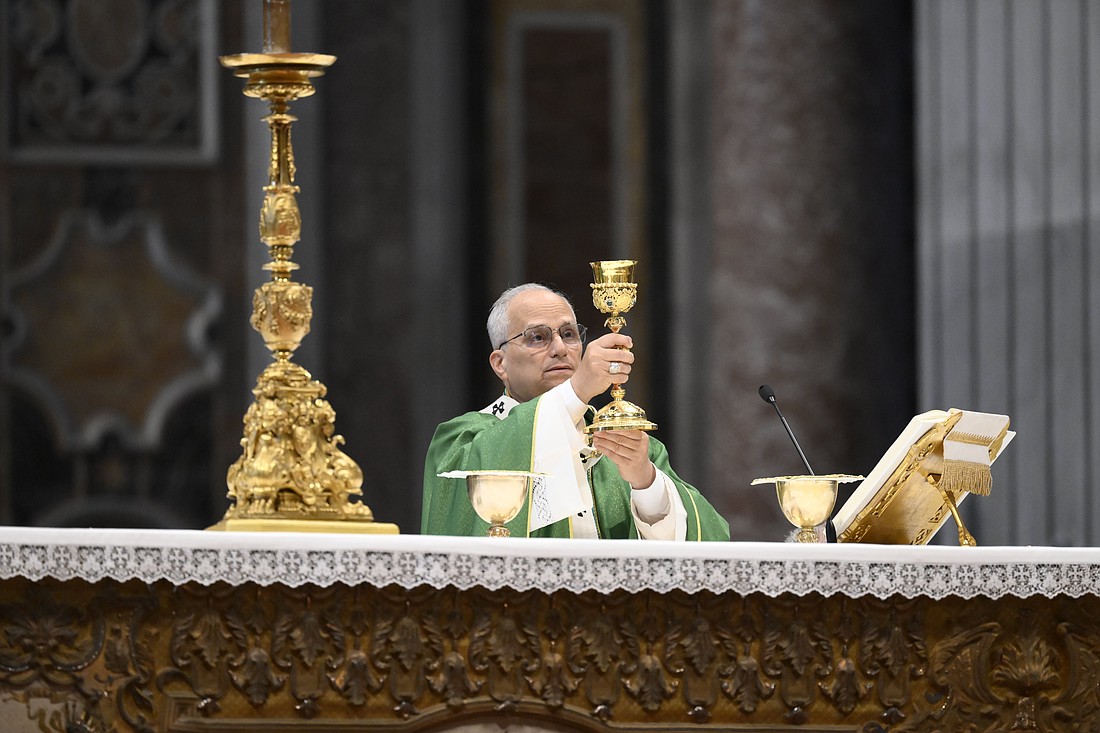
VATICAN CITY CNS – The supreme rule in the Catholic Church is love, which compels all of the faithful to serve, not to judge, exclude or dominate others, Pope Leo XIV said.
"No one should impose his or her own ideas; we must all listen to one another. No one is excluded; we are all called to participate," he said in his homily during a Mass in St. Peter's Basilica Oct. 26.
"No one possesses the whole truth; we must all humbly seek it and seek it together," he said.
The Mass marked the closing of the Oct. 24-26 Jubilee of Synodal Teams and Participatory Bodies. About 2,000 members of synodal teams and bodies such as presbyteral councils, pastoral councils and finance councils at the diocesan, eparchial, national and regional levels were registered for the Jubilee events.
The Jubilee included workshops and other gatherings to further strengthen the implementation phase of the final document of the 2021-2024 Synod of Bishops on synodality.
"We must dream of and build a more humble Church," Pope Leo said in his homily.
It must be a Church that does not stand "triumphant and inflated with pride, but bends down to wash the feet of humanity," he said.
It must be a Church that does not judge, he said, "but becomes a welcoming place for all; a Church that does not close in on itself, but remains attentive to God so that it can similarly listen to everyone."
By "clothing ourselves with the sentiments of Christ, we expand the ecclesial space so that it becomes collegial and welcoming," he said. This will "enable us to live with confidence and a new spirit amid the tensions that run through the life of the Church."
"We must allow the Spirit to transform" the current tensions in the Church "between unity and diversity, tradition and novelty, authority and participation," he said.
"It is not a question of resolving them by reducing one to the other, but of allowing them to be purified by the Spirit, so that they may be harmonized and oriented toward a common discernment," he said.
"Being a synodal Church means recognizing that truth is not possessed, but sought together, allowing ourselves to be guided by a restless heart in love with love," he said.
Synodal teams and participatory bodies, he said, should "express what occurs within the Church, where relationships do not respond to the logic of power but to that of love."
Rather than follow a "worldly" logic, the Christian community focuses on "the spiritual life, which reveals to us that we are all children of God, brothers and sisters, called to serve one another," he said.
"The supreme rule in the Church is love. No one is called to dominate; all are called to serve," he said.
He said Jesus showed how he belongs "to those who are humble" and condemns the self-righteous in the parable of the Pharisee and the tax collector, which was the day's Gospel reading (Lk 18:9-14).
The Pharisee and the tax collector both enter the temple area to pray, the Pope said, but they are divided mostly because of the attitude of the Pharisee, who is "obsessed with his own ego and, in this way, ends up focused on himself without having a relationship with either God or others."
"This can also happen in the Christian community," he said. "It happens when the ego prevails over the collective, causing an individualism that prevents authentic and fraternal relationships."
"It also occurs when the claim to be better than others … creates division and turns the community into a judgmental and exclusionary place; and when one leverages one's role to exert power, rather than to serve," the Pope said.
The tax collector, on the other hand, recognized his sinfulness, prayed for God's mercy and "went home justified," that is, forgiven and renewed by his encounter with God, according to the reading.
Everyone in the Church must show the same humility, he said, recognizing that "we are all in need of God and of one another, which leads us to practice reciprocal love, listen to each other and enjoy walking together."
This is the nature and praxis of the synodal teams and participatory bodies, he said, calling them "an image of this Church that lives in communion."
"Let us commit ourselves to building a Church that is entirely synodal, ministerial and attracted to Christ and therefore committed to serving the world," he said.
Pope Leo cited the words of the late Italian Bishop Antonio Bello, who prayed for Mary's intercession to help the Church "overcome internal divisions. Intervene when the demon of discord creeps into their midst. Extinguish the fires of factionalism. Reconcile mutual disputes. Defuse their rivalries. Stop them when they decide to go their own way, neglecting convergence on common projects."
The Catholic Church, he said, "is the visible sign of the union between God and humanity, where God intends to bring us all together into one family of brothers and sisters and make us his people: a people made up of beloved children, all united in the one embrace of his love."
Later in the day, before praying the Angelus at noon with those gathered in St. Peter's Square, Pope Leo continued his reflection on the day's Gospel reading, saying, "it is not by flaunting our merits that we are saved, nor by hiding our mistakes, but by presenting ourselves honestly, just as we are, before God, ourselves and others, asking for forgiveness and entrusting ourselves to the Lord's grace."
Just as a person who is ill does not try to hide – out of shame or pride – their wounds from a doctor, the Christian also should not try to hide their pain if they are to be healed, he said.
"Let us not be afraid to acknowledge our mistakes, lay them bare, take responsibility for them and entrust them to God's mercy," he said. "That way, his kingdom – which belongs not to the proud but to the humble and is built through prayer and action, by practicing honesty, forgiveness and gratitude – can grow in us and around us."
Catholic journalism is needed now more than ever. Please consider supporting this work by signing up for a SUBSCRIPTION (click HERE) or making a DONATION to The Monitor (click HERE). Thank you for your contribution.
Related Stories
Sunday, December 28, 2025


E-Editions
Events
VATICAN CITY CNS – The supreme rule in the Catholic Church is love, which compels all of the faithful to serve, not to judge, exclude or dominate others, Pope Leo XIV said.
"No one should impose his or her own ideas; we must all listen to one another. No one is excluded; we are all called to participate," he said in his homily during a Mass in St. Peter's Basilica Oct. 26.
"No one possesses the whole truth; we must all humbly seek it and seek it together," he said.
The Mass marked the closing of the Oct. 24-26 Jubilee of Synodal Teams and Participatory Bodies. About 2,000 members of synodal teams and bodies such as presbyteral councils, pastoral councils and finance councils at the diocesan, eparchial, national and regional levels were registered for the Jubilee events.
The Jubilee included workshops and other gatherings to further strengthen the implementation phase of the final document of the 2021-2024 Synod of Bishops on synodality.
"We must dream of and build a more humble Church," Pope Leo said in his homily.
It must be a Church that does not stand "triumphant and inflated with pride, but bends down to wash the feet of humanity," he said.
It must be a Church that does not judge, he said, "but becomes a welcoming place for all; a Church that does not close in on itself, but remains attentive to God so that it can similarly listen to everyone."
By "clothing ourselves with the sentiments of Christ, we expand the ecclesial space so that it becomes collegial and welcoming," he said. This will "enable us to live with confidence and a new spirit amid the tensions that run through the life of the Church."
"We must allow the Spirit to transform" the current tensions in the Church "between unity and diversity, tradition and novelty, authority and participation," he said.
"It is not a question of resolving them by reducing one to the other, but of allowing them to be purified by the Spirit, so that they may be harmonized and oriented toward a common discernment," he said.
"Being a synodal Church means recognizing that truth is not possessed, but sought together, allowing ourselves to be guided by a restless heart in love with love," he said.
Synodal teams and participatory bodies, he said, should "express what occurs within the Church, where relationships do not respond to the logic of power but to that of love."
Rather than follow a "worldly" logic, the Christian community focuses on "the spiritual life, which reveals to us that we are all children of God, brothers and sisters, called to serve one another," he said.
"The supreme rule in the Church is love. No one is called to dominate; all are called to serve," he said.
He said Jesus showed how he belongs "to those who are humble" and condemns the self-righteous in the parable of the Pharisee and the tax collector, which was the day's Gospel reading (Lk 18:9-14).
The Pharisee and the tax collector both enter the temple area to pray, the Pope said, but they are divided mostly because of the attitude of the Pharisee, who is "obsessed with his own ego and, in this way, ends up focused on himself without having a relationship with either God or others."
"This can also happen in the Christian community," he said. "It happens when the ego prevails over the collective, causing an individualism that prevents authentic and fraternal relationships."
"It also occurs when the claim to be better than others … creates division and turns the community into a judgmental and exclusionary place; and when one leverages one's role to exert power, rather than to serve," the Pope said.
The tax collector, on the other hand, recognized his sinfulness, prayed for God's mercy and "went home justified," that is, forgiven and renewed by his encounter with God, according to the reading.
Everyone in the Church must show the same humility, he said, recognizing that "we are all in need of God and of one another, which leads us to practice reciprocal love, listen to each other and enjoy walking together."
This is the nature and praxis of the synodal teams and participatory bodies, he said, calling them "an image of this Church that lives in communion."
"Let us commit ourselves to building a Church that is entirely synodal, ministerial and attracted to Christ and therefore committed to serving the world," he said.
Pope Leo cited the words of the late Italian Bishop Antonio Bello, who prayed for Mary's intercession to help the Church "overcome internal divisions. Intervene when the demon of discord creeps into their midst. Extinguish the fires of factionalism. Reconcile mutual disputes. Defuse their rivalries. Stop them when they decide to go their own way, neglecting convergence on common projects."
The Catholic Church, he said, "is the visible sign of the union between God and humanity, where God intends to bring us all together into one family of brothers and sisters and make us his people: a people made up of beloved children, all united in the one embrace of his love."
Later in the day, before praying the Angelus at noon with those gathered in St. Peter's Square, Pope Leo continued his reflection on the day's Gospel reading, saying, "it is not by flaunting our merits that we are saved, nor by hiding our mistakes, but by presenting ourselves honestly, just as we are, before God, ourselves and others, asking for forgiveness and entrusting ourselves to the Lord's grace."
Just as a person who is ill does not try to hide – out of shame or pride – their wounds from a doctor, the Christian also should not try to hide their pain if they are to be healed, he said.
"Let us not be afraid to acknowledge our mistakes, lay them bare, take responsibility for them and entrust them to God's mercy," he said. "That way, his kingdom – which belongs not to the proud but to the humble and is built through prayer and action, by practicing honesty, forgiveness and gratitude – can grow in us and around us."
Catholic journalism is needed now more than ever. Please consider supporting this work by signing up for a SUBSCRIPTION (click HERE) or making a DONATION to The Monitor (click HERE). Thank you for your contribution.