


'Fundamental change' needed to protect humanity amid arms race, says Vatican diplomat
October 21, 2025 at 2:16 p.m.
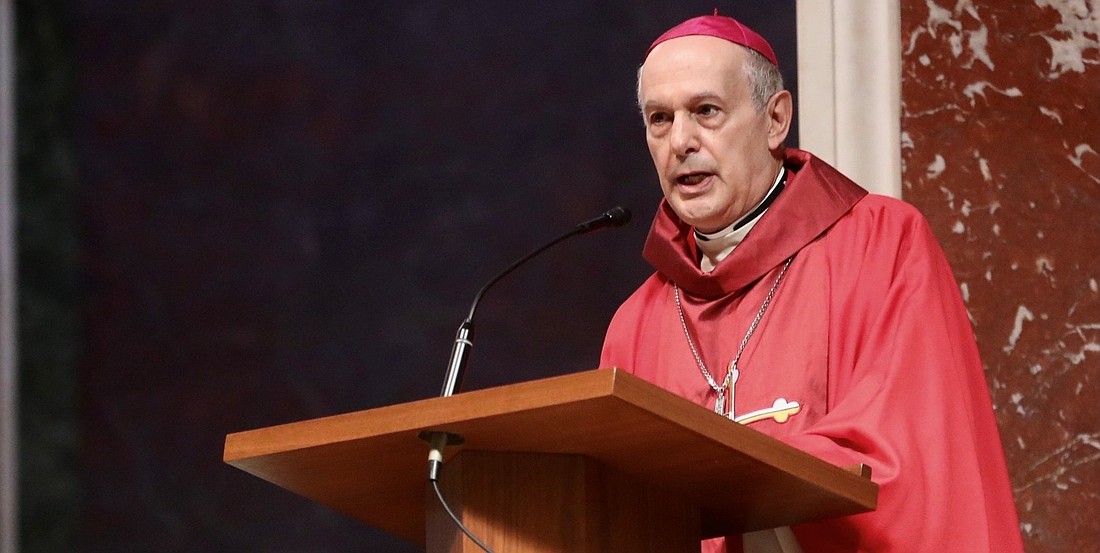
OSV News – Amid a new and more dangerous arms race – and the deterioration of international dialogue – the Vatican's top diplomat to the United Nations has called for a "fundamental change in perspective" to safeguard the increasingly imperiled international community.
Archbishop Gabriele G. Caccia, the Holy See's U.N. apostolic nuncio and permanent observer, delivered a statement at the Oct. 17 general debate of the U.N. General Assembly in New York.
The archbishop lamented that eight decades after the U.N.'s establishment in the aftermath of the Second World War, "the spirit of diplomacy and multilateralism … is being increasingly overshadowed by the perilous resurgence of force and fear as ways to resolve disputes."
As a result, he said, "dialogue is being weakened" while "the economic ties that sustain cooperation and integral human development are becoming increasingly fragile."
"The cries of those in need and in vulnerable situations, especially children, are coming from too many places around the world, shamefully reproaching humanity’s conscience," he said.
The archbishop stressed the "urgent need to recommit to disarmament, to overcome divisions, and to make full use of every established forum for this purpose," including the U.N. itself, "in order to renew an authentic and constructive dialogue."
He urged nations to radically shift their stance, "moving away from reliance on arms and building peace through dialogue, based on a human-centered approach that is firmly grounded in dignity and the full respect of human rights, and committed to integral human development."
Archbishop Caccia expressed the Vatican's "profound concern" over nuclear rhetoric and arsenal expansion – with artificial intelligence integrations into military systems exponentially increasing the risks.
He pointed to both the "enormous destructive potential" of such AI-enhanced weapons, as well as "the extension of competition into domains such as outer space and missile defense."
"These developments pose an unprecedented danger to humanity," the archbishop warned, adding that "it is imperative to move beyond the illusory logic of nuclear deterrence and embrace the path of dialogue and comprehensive disarmament instead."
Archbishop Caccia repeated the Holy See's plea for states to ratify three legal instruments designed to end the nuclear arms race: the Treaty on the Non-Proliferation of Nuclear Weapons, or NPT; the Comprehensive Nuclear Test Ban Treaty, or CTBT; and the Treaty on the Prohibition of Nuclear Weapons, or TPNW.
The agreements "offer a tangible and optimistic path towards liberating humanity from the threat of nuclear weapons, while promoting peace for future generations," he said.
The NPT has seen the most support, with 191 states – including the five recognized nuclear weapon nations (China, France, Russia, the United Kingdom and the U.S.) – signing on.
However, neither the United States or Russia, which together account for approximately 88% of the world's nuclear weapons, have adopted the TNPW.
The threat posed by the "widespread use and proliferation of conventional weapons" is "equally grave," said Archbishop Caccia.
"Countless innocent people continue to endure the devastating consequences of explosive weapons, which are increasingly being used indiscriminately in populated areas, as well as the ongoing menace of landmines, which continue to maim and kill long after conflicts have ended," he said.
Small arms and light weapons – produced and trafficked through illicit channels – wreak havoc across regions, "fueling instability" and particularly endangering "fragile communities," with women, children and the elderly suffering at the hands of "criminals, terrorists and armed groups," said the archbishop.
As with nuclear weapons, AI has exacerbated the risks posed by conventional arms, he said.
Lethal autonomous weapons systems, "which operate without meaningful human control, transgress every legal, security, humanitarian and, above all, ethical boundary," said Archbishop Caccia, echoing the U.N. Secretary-General's call "to conclude a legally binding instrument prohibiting such weapons by 2026, in order to prevent their development and use before they cast an even darker shadow on the future."
Archbishop Caccia observed that with progress stalled in implementing the U.N.'s Sustainable Development Goals – a plan for ending poverty, protecting the environment and ensuring global peace and prosperity by 2030 – "it is unacceptable that military expenditure reached 2.7 trillion dollars in 2024."
"However, there is still time to change this course," said the archbishop. "What is needed is a fundamental change in perspective: moving away from reliance on arms and building peace through dialogue, based on a human-centered approach that is firmly grounded in dignity and the full respect of human rights, and committed to integral human development."
Gina Christian is a multimedia reporter for OSV News. Follow her on X @GinaJesseReina.
Catholic journalism is needed now more than ever. Please consider supporting this work by signing up for a SUBSCRIPTION (click HERE) or making a DONATION to The Monitor (click HERE). Thank you for your contribution.
Related Stories
Sunday, December 28, 2025



E-Editions
Events
OSV News – Amid a new and more dangerous arms race – and the deterioration of international dialogue – the Vatican's top diplomat to the United Nations has called for a "fundamental change in perspective" to safeguard the increasingly imperiled international community.
Archbishop Gabriele G. Caccia, the Holy See's U.N. apostolic nuncio and permanent observer, delivered a statement at the Oct. 17 general debate of the U.N. General Assembly in New York.
The archbishop lamented that eight decades after the U.N.'s establishment in the aftermath of the Second World War, "the spirit of diplomacy and multilateralism … is being increasingly overshadowed by the perilous resurgence of force and fear as ways to resolve disputes."
As a result, he said, "dialogue is being weakened" while "the economic ties that sustain cooperation and integral human development are becoming increasingly fragile."
"The cries of those in need and in vulnerable situations, especially children, are coming from too many places around the world, shamefully reproaching humanity’s conscience," he said.
The archbishop stressed the "urgent need to recommit to disarmament, to overcome divisions, and to make full use of every established forum for this purpose," including the U.N. itself, "in order to renew an authentic and constructive dialogue."
He urged nations to radically shift their stance, "moving away from reliance on arms and building peace through dialogue, based on a human-centered approach that is firmly grounded in dignity and the full respect of human rights, and committed to integral human development."
Archbishop Caccia expressed the Vatican's "profound concern" over nuclear rhetoric and arsenal expansion – with artificial intelligence integrations into military systems exponentially increasing the risks.
He pointed to both the "enormous destructive potential" of such AI-enhanced weapons, as well as "the extension of competition into domains such as outer space and missile defense."
"These developments pose an unprecedented danger to humanity," the archbishop warned, adding that "it is imperative to move beyond the illusory logic of nuclear deterrence and embrace the path of dialogue and comprehensive disarmament instead."
Archbishop Caccia repeated the Holy See's plea for states to ratify three legal instruments designed to end the nuclear arms race: the Treaty on the Non-Proliferation of Nuclear Weapons, or NPT; the Comprehensive Nuclear Test Ban Treaty, or CTBT; and the Treaty on the Prohibition of Nuclear Weapons, or TPNW.
The agreements "offer a tangible and optimistic path towards liberating humanity from the threat of nuclear weapons, while promoting peace for future generations," he said.
The NPT has seen the most support, with 191 states – including the five recognized nuclear weapon nations (China, France, Russia, the United Kingdom and the U.S.) – signing on.
However, neither the United States or Russia, which together account for approximately 88% of the world's nuclear weapons, have adopted the TNPW.
The threat posed by the "widespread use and proliferation of conventional weapons" is "equally grave," said Archbishop Caccia.
"Countless innocent people continue to endure the devastating consequences of explosive weapons, which are increasingly being used indiscriminately in populated areas, as well as the ongoing menace of landmines, which continue to maim and kill long after conflicts have ended," he said.
Small arms and light weapons – produced and trafficked through illicit channels – wreak havoc across regions, "fueling instability" and particularly endangering "fragile communities," with women, children and the elderly suffering at the hands of "criminals, terrorists and armed groups," said the archbishop.
As with nuclear weapons, AI has exacerbated the risks posed by conventional arms, he said.
Lethal autonomous weapons systems, "which operate without meaningful human control, transgress every legal, security, humanitarian and, above all, ethical boundary," said Archbishop Caccia, echoing the U.N. Secretary-General's call "to conclude a legally binding instrument prohibiting such weapons by 2026, in order to prevent their development and use before they cast an even darker shadow on the future."
Archbishop Caccia observed that with progress stalled in implementing the U.N.'s Sustainable Development Goals – a plan for ending poverty, protecting the environment and ensuring global peace and prosperity by 2030 – "it is unacceptable that military expenditure reached 2.7 trillion dollars in 2024."
"However, there is still time to change this course," said the archbishop. "What is needed is a fundamental change in perspective: moving away from reliance on arms and building peace through dialogue, based on a human-centered approach that is firmly grounded in dignity and the full respect of human rights, and committed to integral human development."
Gina Christian is a multimedia reporter for OSV News. Follow her on X @GinaJesseReina.
Catholic journalism is needed now more than ever. Please consider supporting this work by signing up for a SUBSCRIPTION (click HERE) or making a DONATION to The Monitor (click HERE). Thank you for your contribution.