


Some reflections on ‘Dilexi Te’
October 9, 2025 at 10:25 a.m.
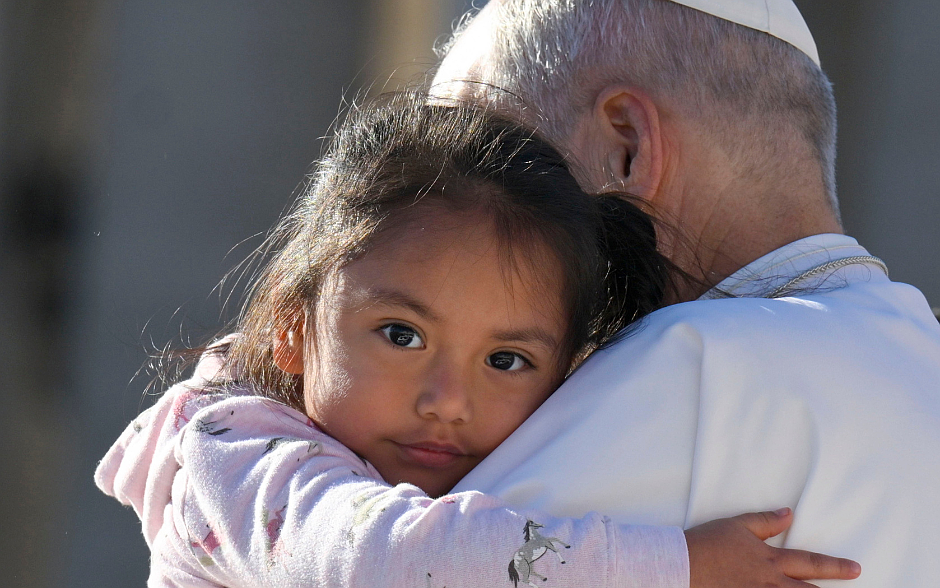
Bishop David M. O’Connell, C.M., has shared this reflection on Dilexi te, Pope Leo XIV’s apostolic exhortation.
Five months into the first year of his pontificate, our Holy Father Pope Leo XIV has released the first official document of his papacy entitled Dilexi te (“I have loved you”), drawn from the Book of Revelation, 3:9. Addressed to all Christians, Pope Leo’s initial apostolic exhortation places the poor at the heart of the Church’s mission, urging believers to see the poor not simply as recipients of charity but also and more significantly as the motivation and rationale for the Church herself.
The exhortation was signed by our Holy Father in Rome on October 4, 2025, on the feast of St. Francis of Assisi, beloved patron of the poor, whose inspiration is clearly evident throughout the text. Pope Leo notes that his exhortation on love and care for the poor should be read in continuity with the thought of his predecessor Pope Francis who had begun the writing of this text shortly before his death in April of this year.
As Bishop of the Diocese and a member of the Congregation of the Mission of St. Vincent de Paul (Vincentians), who was known in 17th century France as the “Father of the Poor,” I welcome this apostolic exhortation with great enthusiasm and recommend its reading by all the faithful, especially pastors and priests who exercise pastoral care for them in our parishes, schools and organizations. Reading the text, I believe it provides an early insight into the mind and perspective of Pope Leo, offering what will become the framework for the pastoral priorities of his papacy.
Pope Leo has written a deeply spiritual and profound meditation on love and care for the poor as reflected in the Scriptures, the tradition of the Church, and the thought and writings of her greatest and holiest saints throughout her unfolding history. He does so in a wonderfully simple, compelling and accessible way, reminding us all that “contact with those who are lowly and powerless is a fundamental way of encountering the Lord of history. In the poor, he continues to speak to us (para. 5).
“The condition of the poor is a cry that, throughout human history, constantly challenges our lives, societies, political and economic systems, and, not least, the Church. On the wounded faces of the poor, we see the suffering of the innocent and, therefore, the suffering of Christ himself. At the same time, we should perhaps speak more correctly of the many faces of the poor and of poverty, since it is a multifaceted phenomenon. In fact, there are many forms of poverty: the poverty of those who lack material means of subsistence, the poverty of those who are socially marginalized and lack the means to give voice to their dignity and abilities, moral and spiritual poverty, cultural poverty, the poverty of those who find themselves in a condition of personal or social weakness or fragility, the poverty of those who have no rights, no space, no freedom (para. 9).”
“God is merciful love, and his plan of love, which unfolds and is fulfilled in history, is above all his descent and coming among us to free us from slavery, fear, sin and the power of death. Addressing their human condition with a merciful gaze and a heart full of love, he turned to his creatures and thus took care of their poverty. Precisely in order to share the limitations and fragility of our human nature, he himself became poor and was born in the flesh like us. We came to know him in the smallness of a child laid in a manger and in the extreme humiliation of the cross, where he shared our radical poverty, which is death. It is easy to understand, then, why we can also speak theologically of a preferential option on the part of God for the poor (para. 16).”
I was particularly moved by Pope Leo’s reference to a sermon given by St. Augustine, the patron of the religious order to which he belongs, putting “the following words in the Lord’s mouth: “I received the earth, I will give heaven; I received temporal goods, I will give back eternal goods; I received bread, I will give life… I have been given hospitality, but I will give a home; I was visited when I was sick, but I will give health; I was visited in prison, but I will give freedom. The bread you have given to my poor has been consumed, but the bread I will give will not only refresh you, but will never end (para. 36). … The Almighty will not be outdone in generosity to those who serve the people most in need: the greater the love for the poor, the greater the reward from God (para. 45).”
Pope Leo explains his approach in this exhortation: “I have chosen to recall the age-old history of the Church’s care for the poor and with the poor in order to make clear that it has always been a central part of her life. Indeed, caring for the poor is part of the Church’s great Tradition, a beacon as it were of evangelical light to illumine the hearts and guide the decisions of Christians in every age. That is why we must feel bound to invite everyone to share in the light and life born of recognizing Christ in the faces of the suffering and those in need. Love for the poor is an essential element of the history of God’s dealings with us; it rises up from the heart of the Church as a constant appeal to the hearts of the faithful, both individually and in our communities. As the Body of Christ, the Church experiences the lives of the poor as her very “flesh,” for theirs is a privileged place within the pilgrim people of God. Consequently, love for the poor – whatever the form their poverty may take – is the evangelical hallmark of a Church faithful to the heart of God (para. 103).”
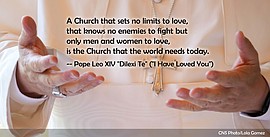
Our Holy Father concludes: “Christian love breaks down every barrier, brings close those who were distant, unites strangers, and reconciles enemies. It spans chasms that are humanly impossible to bridge, and it penetrates to the most hidden crevices of society. By its very nature, Christian love is prophetic: it works miracles and knows no limits. It makes what was apparently impossible happen. Love is above all a way of looking at life and a way of living it. A Church that sets no limits to love, that knows no enemies to fight but only men and women to love, is the Church that the world needs today (para. 120).”
Once again, the voice of Peter is heard in the words of his successor. The encouragement of St. Augustine found in his Confessions is worth heeding with respect to Pope Leo’s first apostolic exhortation Dilexi te: Tolle, lege (“Pick up and read”).”
 Church must 'walk poor with the poor' to serve Christ, says Pope Leo in new exhortation
Saturday, December 13, 2025


E-Editions
Events
Bishop David M. O’Connell, C.M., has shared this reflection on Dilexi te, Pope Leo XIV’s apostolic exhortation.
Five months into the first year of his pontificate, our Holy Father Pope Leo XIV has released the first official document of his papacy entitled Dilexi te (“I have loved you”), drawn from the Book of Revelation, 3:9. Addressed to all Christians, Pope Leo’s initial apostolic exhortation places the poor at the heart of the Church’s mission, urging believers to see the poor not simply as recipients of charity but also and more significantly as the motivation and rationale for the Church herself.
The exhortation was signed by our Holy Father in Rome on October 4, 2025, on the feast of St. Francis of Assisi, beloved patron of the poor, whose inspiration is clearly evident throughout the text. Pope Leo notes that his exhortation on love and care for the poor should be read in continuity with the thought of his predecessor Pope Francis who had begun the writing of this text shortly before his death in April of this year.
As Bishop of the Diocese and a member of the Congregation of the Mission of St. Vincent de Paul (Vincentians), who was known in 17th century France as the “Father of the Poor,” I welcome this apostolic exhortation with great enthusiasm and recommend its reading by all the faithful, especially pastors and priests who exercise pastoral care for them in our parishes, schools and organizations. Reading the text, I believe it provides an early insight into the mind and perspective of Pope Leo, offering what will become the framework for the pastoral priorities of his papacy.
Pope Leo has written a deeply spiritual and profound meditation on love and care for the poor as reflected in the Scriptures, the tradition of the Church, and the thought and writings of her greatest and holiest saints throughout her unfolding history. He does so in a wonderfully simple, compelling and accessible way, reminding us all that “contact with those who are lowly and powerless is a fundamental way of encountering the Lord of history. In the poor, he continues to speak to us (para. 5).
“The condition of the poor is a cry that, throughout human history, constantly challenges our lives, societies, political and economic systems, and, not least, the Church. On the wounded faces of the poor, we see the suffering of the innocent and, therefore, the suffering of Christ himself. At the same time, we should perhaps speak more correctly of the many faces of the poor and of poverty, since it is a multifaceted phenomenon. In fact, there are many forms of poverty: the poverty of those who lack material means of subsistence, the poverty of those who are socially marginalized and lack the means to give voice to their dignity and abilities, moral and spiritual poverty, cultural poverty, the poverty of those who find themselves in a condition of personal or social weakness or fragility, the poverty of those who have no rights, no space, no freedom (para. 9).”
“God is merciful love, and his plan of love, which unfolds and is fulfilled in history, is above all his descent and coming among us to free us from slavery, fear, sin and the power of death. Addressing their human condition with a merciful gaze and a heart full of love, he turned to his creatures and thus took care of their poverty. Precisely in order to share the limitations and fragility of our human nature, he himself became poor and was born in the flesh like us. We came to know him in the smallness of a child laid in a manger and in the extreme humiliation of the cross, where he shared our radical poverty, which is death. It is easy to understand, then, why we can also speak theologically of a preferential option on the part of God for the poor (para. 16).”
I was particularly moved by Pope Leo’s reference to a sermon given by St. Augustine, the patron of the religious order to which he belongs, putting “the following words in the Lord’s mouth: “I received the earth, I will give heaven; I received temporal goods, I will give back eternal goods; I received bread, I will give life… I have been given hospitality, but I will give a home; I was visited when I was sick, but I will give health; I was visited in prison, but I will give freedom. The bread you have given to my poor has been consumed, but the bread I will give will not only refresh you, but will never end (para. 36). … The Almighty will not be outdone in generosity to those who serve the people most in need: the greater the love for the poor, the greater the reward from God (para. 45).”
Pope Leo explains his approach in this exhortation: “I have chosen to recall the age-old history of the Church’s care for the poor and with the poor in order to make clear that it has always been a central part of her life. Indeed, caring for the poor is part of the Church’s great Tradition, a beacon as it were of evangelical light to illumine the hearts and guide the decisions of Christians in every age. That is why we must feel bound to invite everyone to share in the light and life born of recognizing Christ in the faces of the suffering and those in need. Love for the poor is an essential element of the history of God’s dealings with us; it rises up from the heart of the Church as a constant appeal to the hearts of the faithful, both individually and in our communities. As the Body of Christ, the Church experiences the lives of the poor as her very “flesh,” for theirs is a privileged place within the pilgrim people of God. Consequently, love for the poor – whatever the form their poverty may take – is the evangelical hallmark of a Church faithful to the heart of God (para. 103).”
Our Holy Father concludes: “Christian love breaks down every barrier, brings close those who were distant, unites strangers, and reconciles enemies. It spans chasms that are humanly impossible to bridge, and it penetrates to the most hidden crevices of society. By its very nature, Christian love is prophetic: it works miracles and knows no limits. It makes what was apparently impossible happen. Love is above all a way of looking at life and a way of living it. A Church that sets no limits to love, that knows no enemies to fight but only men and women to love, is the Church that the world needs today (para. 120).”
Once again, the voice of Peter is heard in the words of his successor. The encouragement of St. Augustine found in his Confessions is worth heeding with respect to Pope Leo’s first apostolic exhortation Dilexi te: Tolle, lege (“Pick up and read”).”