


‘The Limp of Grace’: Some pastoral reflections on disabilities
October 8, 2025 at 1:34 p.m.
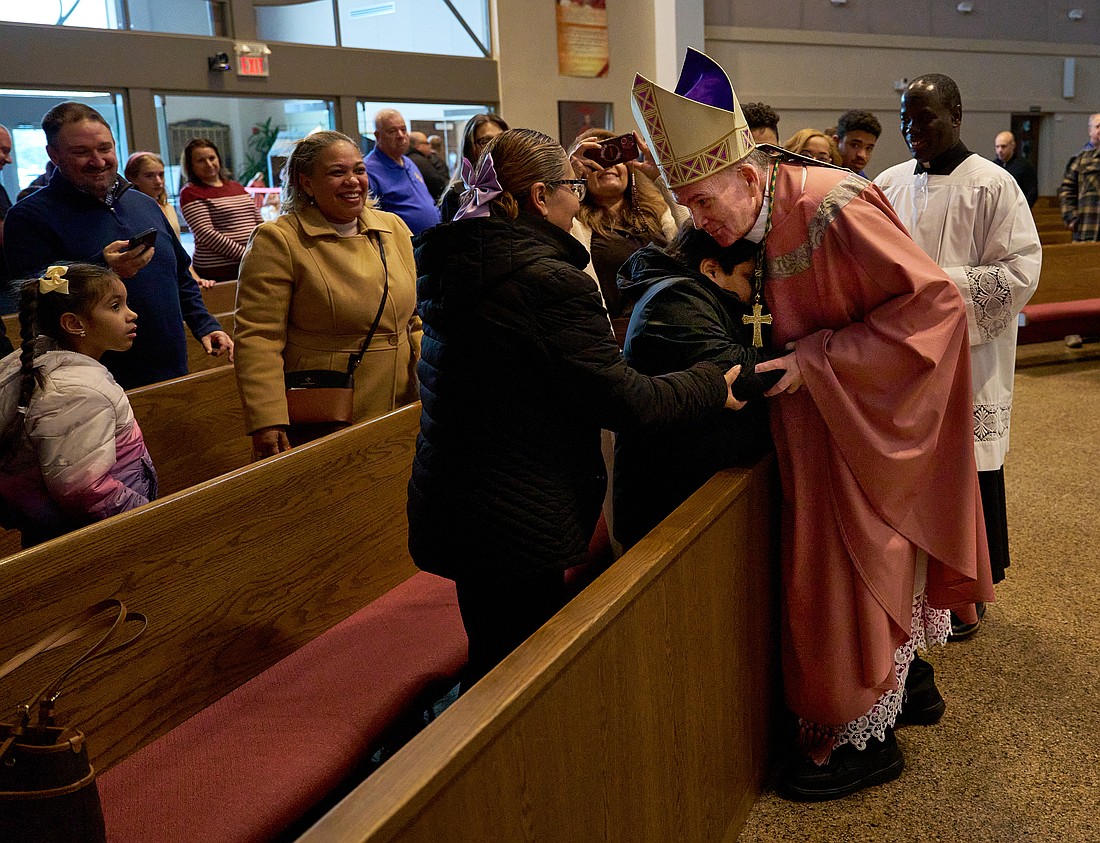
Ten years ago, I lost my left leg due to a bone infection and sepsis brought on by diabetes. The circumstances were sudden, the recovery long and the adjustment ongoing. It became a disability that changed my life – but not my calling. Through God’s grace, I have continued to travel throughout the Diocese and fulfill my responsibilities as its bishop. I am deeply grateful for the help I receive as I make my way around the four counties and beyond with what I now call a “limp of grace.”
Any disability – whether visible or hidden, physical or psychological, or simply the limitations placed on us by aging – is not a detour from the spiritual path. It is part of it. It is not a punishment, nor a devaluation of one’s worth or vocation. Rather, it is a sacred invitation to deeper communion with Christ, who himself bore wounds in His resurrected body.
Disability does not diminish our dignity. It does not disqualify us from living fully and faithfully. Instead, it invites us to lean more heavily on the strength of God and the support of one another. I have never ceased to be amazed by the resilience of the human spirit when animated by divine grace and the love of others.
In our society, “disability” is often misunderstood. It can be met with pity, avoidance, or even fear. But in the Body of Christ, we are called to a different response: one of reverence, inclusion, and love.
Every person (including ourselves), regardless of ability or disability, bears the image of God.
Every person (including ourselves), regardless of ability or disability, has a mission.
Every person (including ourselves), regardless of ability or disability, belongs.
Every person (including ourselves), regardless of ability or disability, is deserving of support, care, and love.
To those among us who live with disabilities, I say this: you are not alone. Do not give in to discouragement or despair. Do not retreat into hiding. Your suffering is noticed. Your courage is inspiring. Your presence is essential.
The Church needs your witness – your perseverance, your creativity, your faith. You teach us what it means to rely not on strength alone, but on grace. Your disabilities may be a burden to you at times, but they are a gift to others. Your struggles are an invitation to others, teaching them to love more deeply.
St. Francis of Assisi encouraged those with disabilities who he encountered in his ministry: “Start by doing what’s necessary; then do what’s possible; and suddenly you are doing the impossible.”
To families, parishes, schools, ministries, and workplaces, I offer a challenge: be places of radical welcome. Let us examine our homes, facilities, liturgies, programs, and attitudes.
Are we accessible – not just physically, but spiritually and emotionally?
Do we make room for all gifts, even those that come wrapped in fragility?
Do we listen to the voices of those who navigate life differently?
My own journey has taught me that disability is not the end of vitality. I continue to preach as I always have, although I may need help getting to the pulpit. I prefer an elevator, but I can climb stairs with prosthetics. It’s not easy getting out of a chair, but I manage and take my time. I’ve learned to laugh at the awkward moments – and there are many – and to muster up humility and lean on others when needed.
I’ve discovered new rhythms of grace as I limp through life. And I’ve come to see that evangelizing is not hindered by weakness – it shines through it.
St. Paul reminds us, “My grace is sufficient for you, for power is made perfect in weakness (2 Corinthians 12:9).” Those of us who live with a disability must embrace that truth fearlessly.
Helen Keller, the beloved American author who was deaf and blind, once wrote: “Your success and happiness lies in you. Resolve to keep happy, and your joy and you shall form an invincible host against difficulties.”
To those who encounter someone with a disability – offer your love, your support and your assistance as needed and accepted. See the person first, and then the disability. That is true for the disabled person themselves, as well as for those who encounter them. We all need to become ever more compassionate, ever more accepting, ever more Christ-like.
Let us walk together, each with our own “limp of grace,” toward the fullness of life in Christ and his Church.
Related Stories
Sunday, December 28, 2025



E-Editions
Events
Ten years ago, I lost my left leg due to a bone infection and sepsis brought on by diabetes. The circumstances were sudden, the recovery long and the adjustment ongoing. It became a disability that changed my life – but not my calling. Through God’s grace, I have continued to travel throughout the Diocese and fulfill my responsibilities as its bishop. I am deeply grateful for the help I receive as I make my way around the four counties and beyond with what I now call a “limp of grace.”
Any disability – whether visible or hidden, physical or psychological, or simply the limitations placed on us by aging – is not a detour from the spiritual path. It is part of it. It is not a punishment, nor a devaluation of one’s worth or vocation. Rather, it is a sacred invitation to deeper communion with Christ, who himself bore wounds in His resurrected body.
Disability does not diminish our dignity. It does not disqualify us from living fully and faithfully. Instead, it invites us to lean more heavily on the strength of God and the support of one another. I have never ceased to be amazed by the resilience of the human spirit when animated by divine grace and the love of others.
In our society, “disability” is often misunderstood. It can be met with pity, avoidance, or even fear. But in the Body of Christ, we are called to a different response: one of reverence, inclusion, and love.
Every person (including ourselves), regardless of ability or disability, bears the image of God.
Every person (including ourselves), regardless of ability or disability, has a mission.
Every person (including ourselves), regardless of ability or disability, belongs.
Every person (including ourselves), regardless of ability or disability, is deserving of support, care, and love.
To those among us who live with disabilities, I say this: you are not alone. Do not give in to discouragement or despair. Do not retreat into hiding. Your suffering is noticed. Your courage is inspiring. Your presence is essential.
The Church needs your witness – your perseverance, your creativity, your faith. You teach us what it means to rely not on strength alone, but on grace. Your disabilities may be a burden to you at times, but they are a gift to others. Your struggles are an invitation to others, teaching them to love more deeply.
St. Francis of Assisi encouraged those with disabilities who he encountered in his ministry: “Start by doing what’s necessary; then do what’s possible; and suddenly you are doing the impossible.”
To families, parishes, schools, ministries, and workplaces, I offer a challenge: be places of radical welcome. Let us examine our homes, facilities, liturgies, programs, and attitudes.
Are we accessible – not just physically, but spiritually and emotionally?
Do we make room for all gifts, even those that come wrapped in fragility?
Do we listen to the voices of those who navigate life differently?
My own journey has taught me that disability is not the end of vitality. I continue to preach as I always have, although I may need help getting to the pulpit. I prefer an elevator, but I can climb stairs with prosthetics. It’s not easy getting out of a chair, but I manage and take my time. I’ve learned to laugh at the awkward moments – and there are many – and to muster up humility and lean on others when needed.
I’ve discovered new rhythms of grace as I limp through life. And I’ve come to see that evangelizing is not hindered by weakness – it shines through it.
St. Paul reminds us, “My grace is sufficient for you, for power is made perfect in weakness (2 Corinthians 12:9).” Those of us who live with a disability must embrace that truth fearlessly.
Helen Keller, the beloved American author who was deaf and blind, once wrote: “Your success and happiness lies in you. Resolve to keep happy, and your joy and you shall form an invincible host against difficulties.”
To those who encounter someone with a disability – offer your love, your support and your assistance as needed and accepted. See the person first, and then the disability. That is true for the disabled person themselves, as well as for those who encounter them. We all need to become ever more compassionate, ever more accepting, ever more Christ-like.
Let us walk together, each with our own “limp of grace,” toward the fullness of life in Christ and his Church.