


Faith at Home: Mental health matters … and so do you
October 6, 2025 at 1:06 p.m.
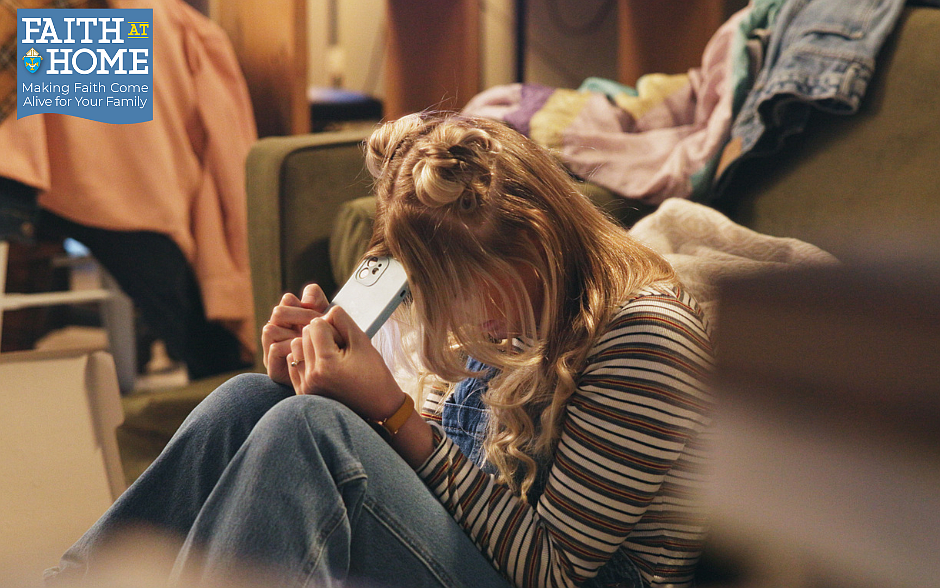
According to the National Alliance on Mental Illness, an estimated 40 million Americans suffer from an anxiety disorder, and another 16 million have clinical depression. When you include the numbers for various other mental illnesses, the total figure represents about 20% of the U.S. population (NAMI).
Put simply, for every five people you know, one of them is likely dealing with a mental health condition. These people are our family members, friends, neighbors and our fellow parishioners.
The stress of the COVID-19 pandemic only worsened the mental health of our society. Even those who were not previously dealing with a mental health condition now find themselves facing one due to experiencing mass death, stress of living through unprecedented times and the isolation that came with it. We are living in an epidemic of loneliness that spans generations.
With an increase and misuse of technology and social media, the ongoing breakdown and fragmentation of the family unit and social isolation, we are witnessing more people who are just trying to hold themselves together (Franciscan Media, 2021).
Americans are seeing a heightened increase in rates of depression and anxiety impacting young people. Over the last few years, we’ve also seen an alarming increase in suicide rates in nearly every age group, for both men and women.
In light of World Mental Health Day approaching on Oct. 10, Church leaders are speaking out more frequently and robustly than ever on this topic.
In the September issue of The Monitor, Bishop David M. O’Connell, C.M., spoke about the importance of accompanying those experiencing psychological struggles: “I want to say this clearly, and with deep compassion: You are not alone.”
He continued with several reminders, such as, “Mental illness is not a moral failure; addiction is not a sign of weak faith; depression is not ingratitude; anxiety is not hopelessness.”
Calling them “profoundly human experiences – complex, painful and real,” the Bishop emphasized that “they are never beyond the reach of God’s healing love. In fact, such moments call us to become vessels of that love for one another.”
In a Sept. 16 press release, the U.S. Conference of Catholic Bishops announced its “Healing and Hope” initiative as a “new component” of the USCCB’s National Catholic Mental Health Campaign.
Their stated goals are “to raise greater awareness of the issue, to remove the sense of stigma for those suffering from mental illness, and to advocate a clear message to all: everyone who needs help should get help.”
A revived digital campaign for the effort will include bishops’ reflections, posted to the USCCB’s social media platforms, that will “invite all people into deeper conversation on the realities and stigmas of mental health,” said the USCCB in its release.
In addition, bishops, clergy, religious and lay people will gather for state-level conferences on “local mental health realities,” with the first such event scheduled to take place early next year in New Jersey, said the release.
Though a stigma continues to persist around mental health care, and some voices claim its incompatibility with Catholic teaching, nothing could be further from the truth. Our last three popes have spoken openly about the good gift of mental health care. Pope Francis frequently reminded us to be a Church of accompaniment. We are called to walk alongside those who suffer, to have compassion and love for others, and to breakdown the stigma that surrounds mental health care in the Church. There is no shame in reaching out for help – even Jesus Christ had help in carrying his Cross. Every single human has inherent dignity and should be treated as such (Sanctuary Mental Health Ministries, 2021).
It’s important to understand that Catholic families don’t have to choose between faith and mental health – they can embrace both. Seeking professional help is not a lack of faith, but a sign of wisdom and courage. Whether you’re a parent worried about your teen’s anxiety or a family navigating depression and grief, know that God walks with you and meets you where you are; and the Church, when engaged with love and understanding, can be a powerful ally in the journey toward hope and healing.
What Parents Can Do:
- Talk openly about mental health with your children, just as you do about physical health. Normalize conversations about therapy, emotions, and stress.
- Model healthy behavior. Prioritize prayer, yes – but also rest, boundaries and professional support when needed.
- Collaborate with your parish and advocate for mental health resources. Sometimes the best support starts right in your own pew!
- Lean on the Sacraments in your family life. Mass, Confession, and spiritual direction can help restore meaning, especially when paired with counselling.
Catholic Resources for Mental Health:
Books like “When Your Child is Hurting and Parenting Your Kids With Mental Health Challenges” offer guidance steeped in both clinical research and Catholic truth. USCCB and Catholic Charities USA
Lisa Ann Limongello is parish catechetical leader in St. Luke Parish, Toms River, and the parishes that compose The Catholic Community of Hopewell Valley: St. James, Pennington; St. George, Titusville, and St. Alphonsus, Hopewell.
Faith at Home is a monthly column coordinated by the Diocese of Trenton’s Departments of Catechesis, Evangelization and Family Life, and Youth and Young Adult Ministry. For additional Faith at Home resources, visit dioceseoftrenton.org/faith-at-home.
Related Stories
Sunday, December 28, 2025

E-Editions
Events
According to the National Alliance on Mental Illness, an estimated 40 million Americans suffer from an anxiety disorder, and another 16 million have clinical depression. When you include the numbers for various other mental illnesses, the total figure represents about 20% of the U.S. population (NAMI).
Put simply, for every five people you know, one of them is likely dealing with a mental health condition. These people are our family members, friends, neighbors and our fellow parishioners.
The stress of the COVID-19 pandemic only worsened the mental health of our society. Even those who were not previously dealing with a mental health condition now find themselves facing one due to experiencing mass death, stress of living through unprecedented times and the isolation that came with it. We are living in an epidemic of loneliness that spans generations.
With an increase and misuse of technology and social media, the ongoing breakdown and fragmentation of the family unit and social isolation, we are witnessing more people who are just trying to hold themselves together (Franciscan Media, 2021).
Americans are seeing a heightened increase in rates of depression and anxiety impacting young people. Over the last few years, we’ve also seen an alarming increase in suicide rates in nearly every age group, for both men and women.
In light of World Mental Health Day approaching on Oct. 10, Church leaders are speaking out more frequently and robustly than ever on this topic.
In the September issue of The Monitor, Bishop David M. O’Connell, C.M., spoke about the importance of accompanying those experiencing psychological struggles: “I want to say this clearly, and with deep compassion: You are not alone.”
He continued with several reminders, such as, “Mental illness is not a moral failure; addiction is not a sign of weak faith; depression is not ingratitude; anxiety is not hopelessness.”
Calling them “profoundly human experiences – complex, painful and real,” the Bishop emphasized that “they are never beyond the reach of God’s healing love. In fact, such moments call us to become vessels of that love for one another.”
In a Sept. 16 press release, the U.S. Conference of Catholic Bishops announced its “Healing and Hope” initiative as a “new component” of the USCCB’s National Catholic Mental Health Campaign.
Their stated goals are “to raise greater awareness of the issue, to remove the sense of stigma for those suffering from mental illness, and to advocate a clear message to all: everyone who needs help should get help.”
A revived digital campaign for the effort will include bishops’ reflections, posted to the USCCB’s social media platforms, that will “invite all people into deeper conversation on the realities and stigmas of mental health,” said the USCCB in its release.
In addition, bishops, clergy, religious and lay people will gather for state-level conferences on “local mental health realities,” with the first such event scheduled to take place early next year in New Jersey, said the release.
Though a stigma continues to persist around mental health care, and some voices claim its incompatibility with Catholic teaching, nothing could be further from the truth. Our last three popes have spoken openly about the good gift of mental health care. Pope Francis frequently reminded us to be a Church of accompaniment. We are called to walk alongside those who suffer, to have compassion and love for others, and to breakdown the stigma that surrounds mental health care in the Church. There is no shame in reaching out for help – even Jesus Christ had help in carrying his Cross. Every single human has inherent dignity and should be treated as such (Sanctuary Mental Health Ministries, 2021).
It’s important to understand that Catholic families don’t have to choose between faith and mental health – they can embrace both. Seeking professional help is not a lack of faith, but a sign of wisdom and courage. Whether you’re a parent worried about your teen’s anxiety or a family navigating depression and grief, know that God walks with you and meets you where you are; and the Church, when engaged with love and understanding, can be a powerful ally in the journey toward hope and healing.
What Parents Can Do:
- Talk openly about mental health with your children, just as you do about physical health. Normalize conversations about therapy, emotions, and stress.
- Model healthy behavior. Prioritize prayer, yes – but also rest, boundaries and professional support when needed.
- Collaborate with your parish and advocate for mental health resources. Sometimes the best support starts right in your own pew!
- Lean on the Sacraments in your family life. Mass, Confession, and spiritual direction can help restore meaning, especially when paired with counselling.
Catholic Resources for Mental Health:
Books like “When Your Child is Hurting and Parenting Your Kids With Mental Health Challenges” offer guidance steeped in both clinical research and Catholic truth. USCCB and Catholic Charities USA
Lisa Ann Limongello is parish catechetical leader in St. Luke Parish, Toms River, and the parishes that compose The Catholic Community of Hopewell Valley: St. James, Pennington; St. George, Titusville, and St. Alphonsus, Hopewell.
Faith at Home is a monthly column coordinated by the Diocese of Trenton’s Departments of Catechesis, Evangelization and Family Life, and Youth and Young Adult Ministry. For additional Faith at Home resources, visit dioceseoftrenton.org/faith-at-home.