


Pope Leo XIV prays for victims of deadly earthquake in central Philippines
October 3, 2025 at 10:41 a.m.
OSV News – Pope Leo XIV said prayers for victims of a 6.9 magnitude earthquake in the central part of the Philippines that killed at least 72 people late Sept. 30, according to Archbishop Alberto Uy of Cebu.
The archbishop said Oct. 2 he received the message of the Pope's prayers and condolences from the Philippines papal nuncio, Archbishop Charles John Brown.
The nuncio "called me to convey the Holy Father’s heartfelt sympathies for all the survivors of the earthquake, and his prayers for the eternal repose of the victims,” Archbishop Uy said.
The day after the earthquake, Archbishop Uy who had just been installed in the archdiocese Sept. 30, gave his condolences to those who lost their loved ones and urged the faithful of the archdiocese to "unite in prayer and mutual help."
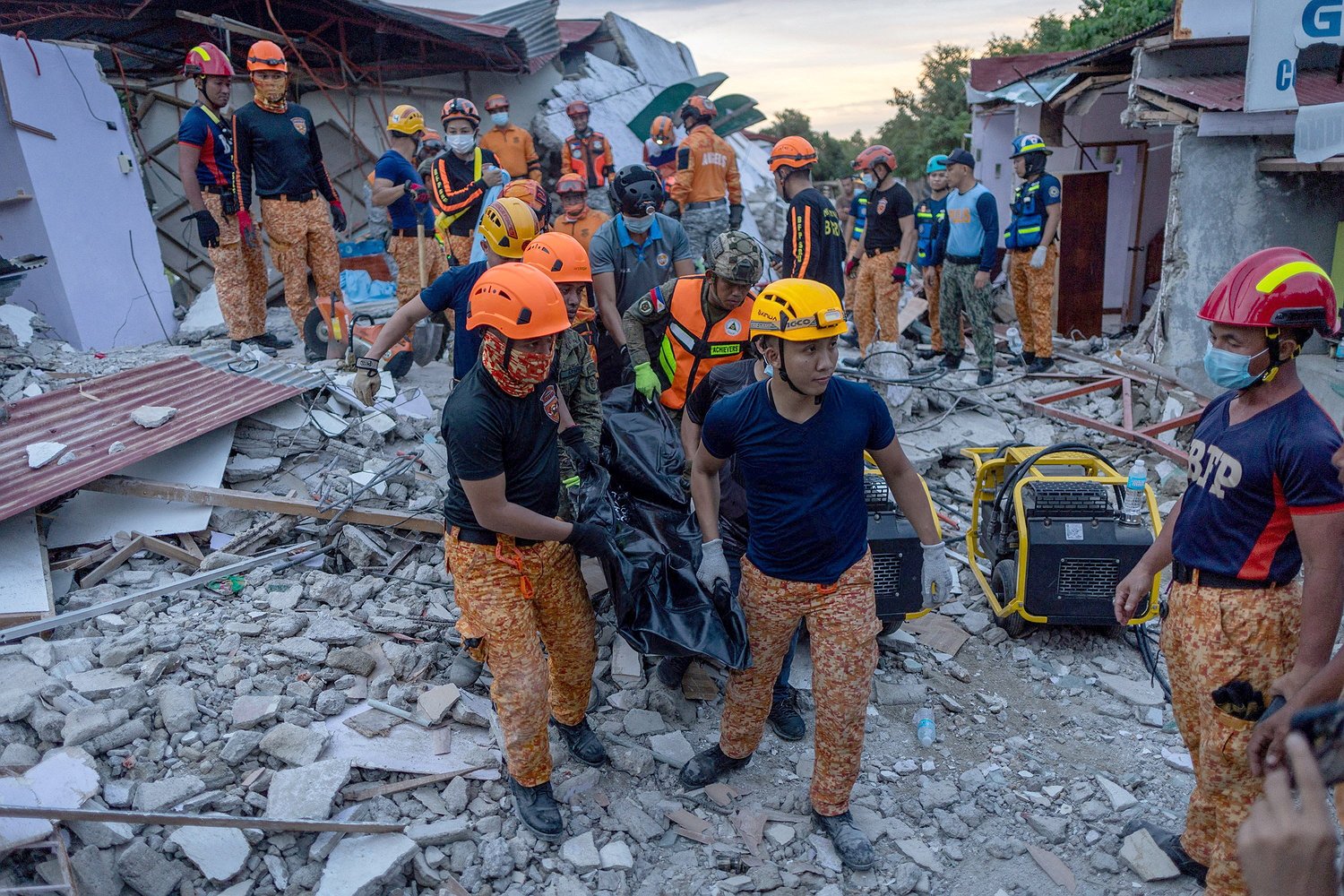 Rescuers carry a victim's body recovered from a damaged house in Bogo, Philippines, in Cebu province, Oct. 1, 2025, in the aftermath of a magnitude 6.9 offshore earthquake. The quake collapsed houses and buildings late Sept. 30 in the central Philippine province, leaving at least 72 dead and injuring many others. (OSV News photo/Eloisa Lopez, Reuters)
On Oct. 2, Philippine officials said they would end rescue efforts and shift instead to giving aid to the more than 20,000 displaced residents of the affected towns in northern Cebu – the populous central island in the disaster-prone Southeast Asian nation. Disaster officials told reporters there were "zero missing" after all those who were thought to be missing were accounted for.
Most of the deaths were caused by collapsed houses and buildings, and the resulting landslides that followed the earthquake.
Philippine President Ferdinand Marcos Jr. visited the northern Cebu city of Bogo, which suffered the greatest damage and death toll, and told reporters that with structures not yet deemed safe, the government would likely put up a temporary tent city to house the evacuees.
The epicenter of the quake was in the Philippine Sea just east of Bogo. The U.S. Geological Survey recorded its depth at about six miles. This meant the shaking was significant because of its shallow origin. Residents there continued to fear aftershocks two days after it struck.
The Philippines is one of the most disaster-stricken nations that sit on the Pacific "ring of fire," a chain of volcanic tectonic plates from Australia to South America where earthquakes and volcanic eruptions occur.
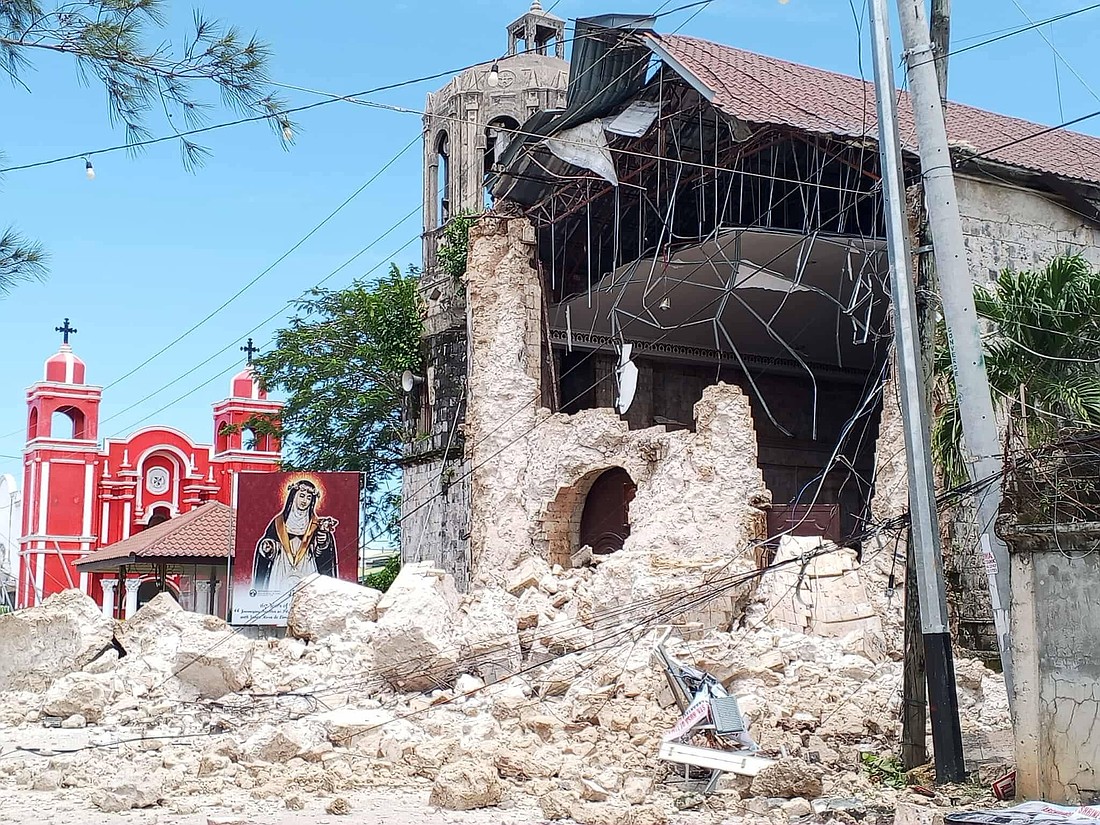
In Daanbantayan, near the very north of Cebu, the front of a Church was reduced to rubble in photos posted on Cebu Gov. Pam Baricuatro's official Facebook page.
"The current situation in Daanbantayan highlights the severe impact of the earthquake on heritage structures, which form part of Cebu's rich cultural and spiritual identity," said the caption of the post.
It continued, Baricuatro "has directed cultural and disaster authorities to include heritage site assessments as part of the ongoing response and rehabilitation efforts."
Cebu is where Catholicism took root in the Philippines more than 500 years ago, and the island province is home to some of the oldest Catholic Churches in the country, a number of which have suffered multiple disasters.
A Cebu Archdiocese advisory posted on Facebook said Archbishop Uy ordered structural assessments at "all our Churches and rectories." And in the parishes to the north "that have been gravely affected," he called for a halt in Masses being celebrated inside Churches until the structural inspections were completed.
"We continue to pray to our Loving Father for calmness and strength in the midst of these trials," said the statement. "May the Lord shelter us under His wings, protect us from every harm, and guide us to safety and peace."
Simone Orendain is an OSV News correspondent. She writes from Chicago.
Catholic journalism is needed now more than ever. Please consider supporting this work by signing up for a SUBSCRIPTION (click HERE) or making a DONATION to The Monitor (click HERE). Thank you for your contribution.
Related Stories
Sunday, December 28, 2025


E-Editions
Events
OSV News – Pope Leo XIV said prayers for victims of a 6.9 magnitude earthquake in the central part of the Philippines that killed at least 72 people late Sept. 30, according to Archbishop Alberto Uy of Cebu.
The archbishop said Oct. 2 he received the message of the Pope's prayers and condolences from the Philippines papal nuncio, Archbishop Charles John Brown.
The nuncio "called me to convey the Holy Father’s heartfelt sympathies for all the survivors of the earthquake, and his prayers for the eternal repose of the victims,” Archbishop Uy said.
The day after the earthquake, Archbishop Uy who had just been installed in the archdiocese Sept. 30, gave his condolences to those who lost their loved ones and urged the faithful of the archdiocese to "unite in prayer and mutual help."
Rescuers carry a victim's body recovered from a damaged house in Bogo, Philippines, in Cebu province, Oct. 1, 2025, in the aftermath of a magnitude 6.9 offshore earthquake. The quake collapsed houses and buildings late Sept. 30 in the central Philippine province, leaving at least 72 dead and injuring many others. (OSV News photo/Eloisa Lopez, Reuters)On Oct. 2, Philippine officials said they would end rescue efforts and shift instead to giving aid to the more than 20,000 displaced residents of the affected towns in northern Cebu – the populous central island in the disaster-prone Southeast Asian nation. Disaster officials told reporters there were "zero missing" after all those who were thought to be missing were accounted for.
Most of the deaths were caused by collapsed houses and buildings, and the resulting landslides that followed the earthquake.
Philippine President Ferdinand Marcos Jr. visited the northern Cebu city of Bogo, which suffered the greatest damage and death toll, and told reporters that with structures not yet deemed safe, the government would likely put up a temporary tent city to house the evacuees.
The epicenter of the quake was in the Philippine Sea just east of Bogo. The U.S. Geological Survey recorded its depth at about six miles. This meant the shaking was significant because of its shallow origin. Residents there continued to fear aftershocks two days after it struck.
The Philippines is one of the most disaster-stricken nations that sit on the Pacific "ring of fire," a chain of volcanic tectonic plates from Australia to South America where earthquakes and volcanic eruptions occur.
In Daanbantayan, near the very north of Cebu, the front of a Church was reduced to rubble in photos posted on Cebu Gov. Pam Baricuatro's official Facebook page.
"The current situation in Daanbantayan highlights the severe impact of the earthquake on heritage structures, which form part of Cebu's rich cultural and spiritual identity," said the caption of the post.
It continued, Baricuatro "has directed cultural and disaster authorities to include heritage site assessments as part of the ongoing response and rehabilitation efforts."
Cebu is where Catholicism took root in the Philippines more than 500 years ago, and the island province is home to some of the oldest Catholic Churches in the country, a number of which have suffered multiple disasters.
A Cebu Archdiocese advisory posted on Facebook said Archbishop Uy ordered structural assessments at "all our Churches and rectories." And in the parishes to the north "that have been gravely affected," he called for a halt in Masses being celebrated inside Churches until the structural inspections were completed.
"We continue to pray to our Loving Father for calmness and strength in the midst of these trials," said the statement. "May the Lord shelter us under His wings, protect us from every harm, and guide us to safety and peace."
Simone Orendain is an OSV News correspondent. She writes from Chicago.
Catholic journalism is needed now more than ever. Please consider supporting this work by signing up for a SUBSCRIPTION (click HERE) or making a DONATION to The Monitor (click HERE). Thank you for your contribution.