


Capuchin-run music school changes the region through culture in the Central African Republic
October 1, 2025 at 4:41 p.m.
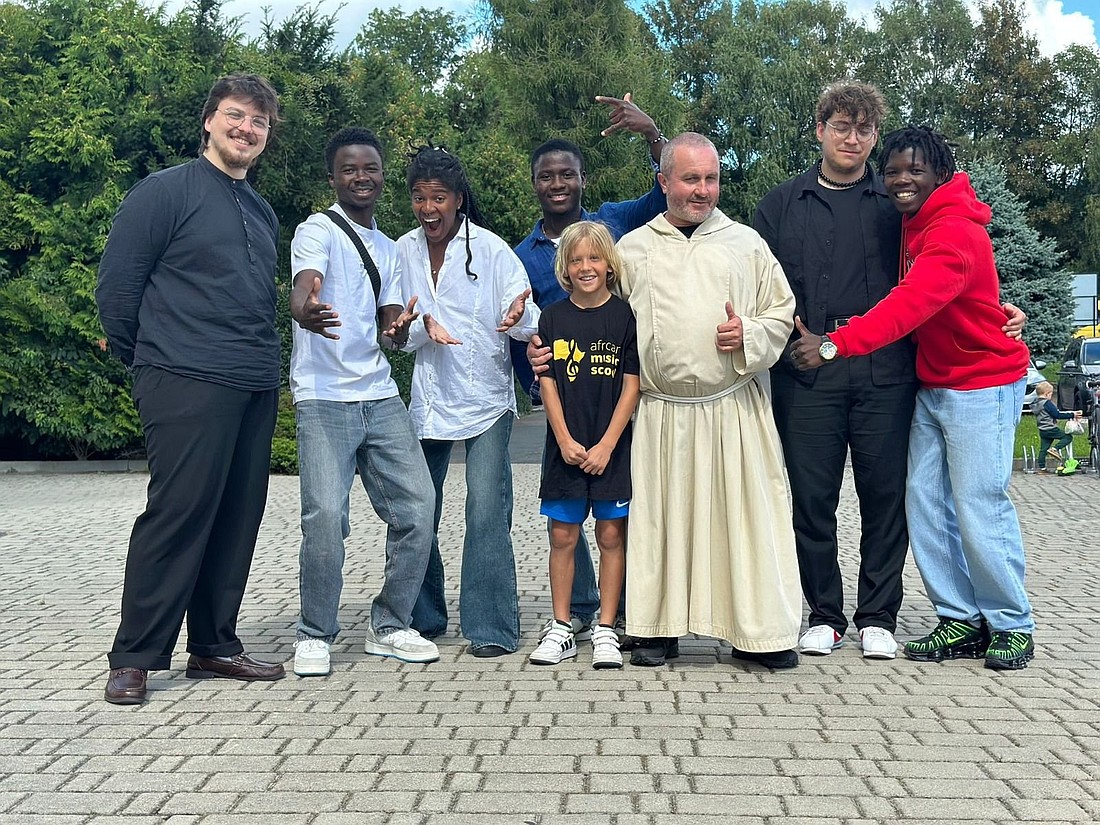
BOUAR, Central African Republic (OSV News) – The Central African Republic is one of the poorest and most unstable countries in the world. For years, it has been ravaged by civil war, tribal conflicts, and a lack of prospects for young people. It was here that a Capuchin priest decided to start something that might have sounded too crazy to many – a music school.
Now, the school runs the only radio station in the region and seeks to build a concert hall for the children to perform at.
"The hall is currently at the stage of building walls. We spent three months laying the foundations, and now we have the walls and roof ahead of us," said Capuchin Father Benedykt "Benek" Paczka, the school's founder.
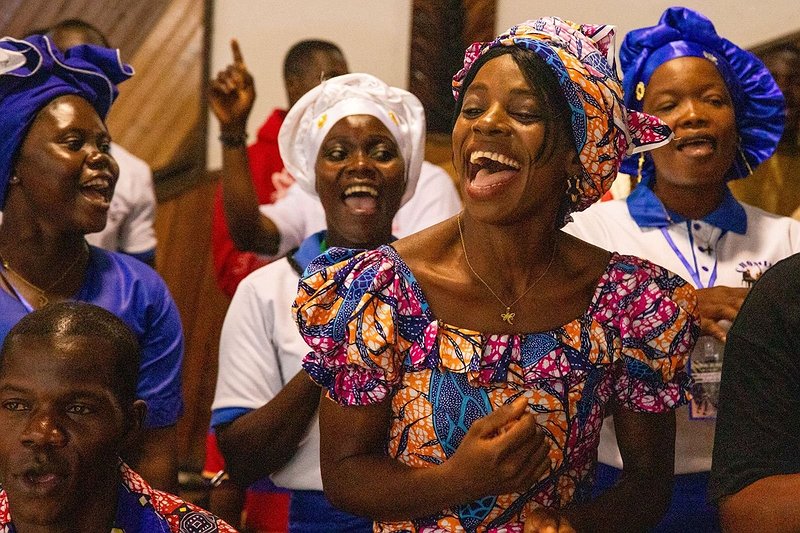 Students of the African Music School, established in the Central African Republic in 2017, perform on an undated photograph. The Central African Republic, where the school was established, is one of the poorest and most unstable countries in the world. For years, it has been ravaged by civil war, tribal conflicts, and a lack of prospects for young people. A Capuchin-run music school, where they can learn to sing and play instruments, changes lives of local youth. (OSV News photo/courtesy Father Benedykt Paczka)
There is no concert hall within a 300-mile radius in the western town of the Bouar region. "During the rainy season, it is essential. We need the funds that we are fighting for. The hall will accommodate 600 people," Father Paczka said.
"Despite the war and constant killings in this country, we opened a music school," Father Paczka told OSV News, recalling the modest beginnings: a few rooms in a monastery in Bouar, a few instruments, and a great desire for children to hear a different world.
Recently, Father Paczka launched a new project – Radio Siriri. "Siriri means 'peace," the Capuchin said.
With solar panels powering it – "it is the only media outlet in our area." It has an evangelization purpose, but Father Paczka said, "it also provides information about the rebellion, among other things."
According to a United Nations report, "insecurity, armed conflict, and climate shocks continue to drive displacement across the country, where over 460,000 people are internally displaced and more than 700,000 remain refugees in neighboring countries."
"Imagine that people buy small radios to listen to us when they go to work in the fields," Father Paczka said. "We Capuchins want to bring the Good News to people here in the same way that it has long been done in Europe and the United States – through the media. There is no television here, but there is radio – our radio," he said.
When the recruitment was announced back in 2017, several hundred children applied. They wanted to play, learn, and escape from everyday life, where the sound of weapons was more frequent than laughter.
Teachers from Europe started to come for a short-term contracts to teach the local kids.
Then, the music school quickly became more than just a place of learning, but a place of refuge.
"A few years ago, one of my students came and said he hadn't eaten anything for two days. I thought my heart would break," Father Paczka said.
When asked why he came so late, the boy answered that he was ashamed. "That was the moment when I didn't wait, I set up a canteen for all the children," the Capuchin friar said.
Today, every child eats first before classes every day. "It's like in the Gospel: Jesus showed us how to love, but to also feed first," Father Paczka said.
The same boy who went without food for two days is now studying in Nancy, France. The symbolic journey from hunger to a European university gives Father Paczka reasons for special pride.
"There is not a single music-trained teacher in the country. That's why we want our kids to become educated musicians," he told OSV News.
"The African Music School takes on the cost of tuition, but in return, we expect the youngsters who get this chance to return to the country and, with their talent and knowledge, open the door for more kids. It's a very fair deal – they get a chance and then share what they've received."
Parents place great trust in the school, Father Paczka said. "For the families of our students, it's often the hope for a better life. A young person who studies helps not only himself, but also his family. When he goes abroad, he takes responsibility for his loved ones – and knows that he is not alone."
The school teaches everything from keyboard instruments, drums, bass guitar, electric guitar and classical guitar. There are also saxophones, trumpets and cymbals.
"That's really a lot. It's a chance to hold an instrument in your hands, not a rifle. And that changes everything," Father Paczka said.
Students regularly give concerts, record, and the best ones go to music schools around the world. Several have received scholarships in Poland, France and the U.S.
The new hall is not just about having a roof over their heads during heavy rains. Father Paczka sees it as a space that will combine sports and music. A playing field where children can play soccer and a stage where concerts "for peace" will be held, the Capuchin told OSV News.
"Music changes people. When we play together, people forget themselves and become different," he said.
Thanks to such initiatives, the town of Bouar gains something that cannot be bought – a sense of normality and community. "The parents feel the pride, they feel their children have a future," Father Paczka said.
Catholic journalism is needed now more than ever. Please consider supporting this work by signing up for a SUBSCRIPTION (click HERE) or making a DONATION to The Monitor (click HERE). Thank you for your contribution.
Related Stories
Sunday, December 28, 2025



E-Editions
Events
BOUAR, Central African Republic (OSV News) – The Central African Republic is one of the poorest and most unstable countries in the world. For years, it has been ravaged by civil war, tribal conflicts, and a lack of prospects for young people. It was here that a Capuchin priest decided to start something that might have sounded too crazy to many – a music school.
Now, the school runs the only radio station in the region and seeks to build a concert hall for the children to perform at.
"The hall is currently at the stage of building walls. We spent three months laying the foundations, and now we have the walls and roof ahead of us," said Capuchin Father Benedykt "Benek" Paczka, the school's founder.
Students of the African Music School, established in the Central African Republic in 2017, perform on an undated photograph. The Central African Republic, where the school was established, is one of the poorest and most unstable countries in the world. For years, it has been ravaged by civil war, tribal conflicts, and a lack of prospects for young people. A Capuchin-run music school, where they can learn to sing and play instruments, changes lives of local youth. (OSV News photo/courtesy Father Benedykt Paczka)There is no concert hall within a 300-mile radius in the western town of the Bouar region. "During the rainy season, it is essential. We need the funds that we are fighting for. The hall will accommodate 600 people," Father Paczka said.
"Despite the war and constant killings in this country, we opened a music school," Father Paczka told OSV News, recalling the modest beginnings: a few rooms in a monastery in Bouar, a few instruments, and a great desire for children to hear a different world.
Recently, Father Paczka launched a new project – Radio Siriri. "Siriri means 'peace," the Capuchin said.
With solar panels powering it – "it is the only media outlet in our area." It has an evangelization purpose, but Father Paczka said, "it also provides information about the rebellion, among other things."
According to a United Nations report, "insecurity, armed conflict, and climate shocks continue to drive displacement across the country, where over 460,000 people are internally displaced and more than 700,000 remain refugees in neighboring countries."
"Imagine that people buy small radios to listen to us when they go to work in the fields," Father Paczka said. "We Capuchins want to bring the Good News to people here in the same way that it has long been done in Europe and the United States – through the media. There is no television here, but there is radio – our radio," he said.
When the recruitment was announced back in 2017, several hundred children applied. They wanted to play, learn, and escape from everyday life, where the sound of weapons was more frequent than laughter.
Teachers from Europe started to come for a short-term contracts to teach the local kids.
Then, the music school quickly became more than just a place of learning, but a place of refuge.
"A few years ago, one of my students came and said he hadn't eaten anything for two days. I thought my heart would break," Father Paczka said.
When asked why he came so late, the boy answered that he was ashamed. "That was the moment when I didn't wait, I set up a canteen for all the children," the Capuchin friar said.
Today, every child eats first before classes every day. "It's like in the Gospel: Jesus showed us how to love, but to also feed first," Father Paczka said.
The same boy who went without food for two days is now studying in Nancy, France. The symbolic journey from hunger to a European university gives Father Paczka reasons for special pride.
"There is not a single music-trained teacher in the country. That's why we want our kids to become educated musicians," he told OSV News.
"The African Music School takes on the cost of tuition, but in return, we expect the youngsters who get this chance to return to the country and, with their talent and knowledge, open the door for more kids. It's a very fair deal – they get a chance and then share what they've received."
Parents place great trust in the school, Father Paczka said. "For the families of our students, it's often the hope for a better life. A young person who studies helps not only himself, but also his family. When he goes abroad, he takes responsibility for his loved ones – and knows that he is not alone."
The school teaches everything from keyboard instruments, drums, bass guitar, electric guitar and classical guitar. There are also saxophones, trumpets and cymbals.
"That's really a lot. It's a chance to hold an instrument in your hands, not a rifle. And that changes everything," Father Paczka said.
Students regularly give concerts, record, and the best ones go to music schools around the world. Several have received scholarships in Poland, France and the U.S.
The new hall is not just about having a roof over their heads during heavy rains. Father Paczka sees it as a space that will combine sports and music. A playing field where children can play soccer and a stage where concerts "for peace" will be held, the Capuchin told OSV News.
"Music changes people. When we play together, people forget themselves and become different," he said.
Thanks to such initiatives, the town of Bouar gains something that cannot be bought – a sense of normality and community. "The parents feel the pride, they feel their children have a future," Father Paczka said.
Catholic journalism is needed now more than ever. Please consider supporting this work by signing up for a SUBSCRIPTION (click HERE) or making a DONATION to The Monitor (click HERE). Thank you for your contribution.