


Synod study groups release 'interim' reports as most continue working
November 17, 2025 at 4:00 p.m.
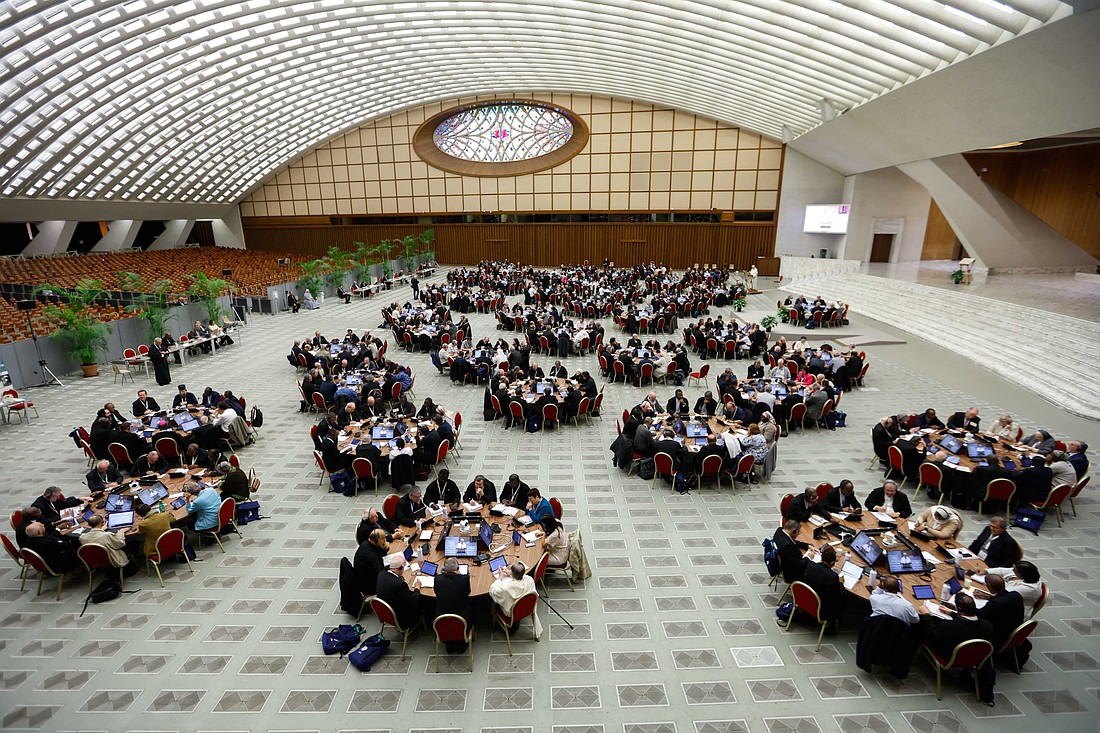
VATICAN CITY CNS – The study groups Pope Francis had established to provide an in-depth reflection on controversial, complex or "emerging" questions raised during the Synod of Bishops on synodality have published interim reports.
The groups were asked to look at questions including the formation of priests, the selection of bishops, women's leadership in the Church and ministry to LGBTQ Catholics.
The late Pope had asked the groups to complete their work by June 2025, but Pope Leo XIV extended the deadlines to the end of the year.
However, Cardinal Mario Grech, secretary-general of the synod, said Nov. 17 that the work of some groups – "given the richness and complexity of most of the topics entrusted to them -– has required more time than originally anticipated."
"Some groups are now nearing completion of their work, while others will continue in the months ahead," he said.
The reports, the cardinal said, also include the initial work of a study group on "the liturgy in a synodal perspective," which began working in late July.
The interim reports published Nov. 17 vary in their depth and detail, with some groups listing their members and providing concrete proposals and with others giving only a vague description of the methodology they were using.
The study group on priestly formation, which was focused ways to ensure future priests are educated in synodality – listening, discernment and shared responsibility with laypeople – said its members concluded that "a complete overhaul" of the Vatican and national guidelines for priestly formation "does not currently seem appropriate" because the guidelines are so recent.
But the group identified "a series of needs," which it said "cannot be ignored." These included: "the need to deepen the identity of ordained ministry in relational terms"; "joint formation moments involving laypeople, consecrated persons, ordained ministers and seminarians"; greater participation of women and families in formation; and a focus on missionary outreach.
One of the shortest reports was from the group convened by the Dicastery for the Doctrine of the Faith to look at "the participation of women in the life and leadership of the Church."
The group's final report, it said, would include: "Significant female figures in the history of the Church; personal accounts from women currently engaged in Church leadership; personal accounts from women serving within the Roman Curia"; the nature and exercise of authority in the Church; "critical tensions regarding clericalism and male chauvinism"; and "the contribution of Pope Francis and Pope Leo XIV concerning the role of women in the Church."
On the question of the possible ordination of women to the diaconate, the report said that materials from the synod and contributions received more recently have been forwarded to the commission Pope Francis had set up in 2020 to continue studying the issue and which he "revived" during the Synod of Bishops on Synodality.
The study groups on the ministry of the bishop and on the role of nuncios and other papal representatives had a joint meeting to discuss a topic they both were looking at: the choice of bishops, the report said.
The group looking at bishops said its first focus was "the selection of candidates to the episcopacy in the perspective of a synodal and missionary Church, highlighting the participation of the bishops of the territory and of the entire people of God in the process coordinated by the apostolic nunciature."
The work was aided by the fact that Pope Francis gave then-Cardinal Robert F. Prevost, prefect of the Dicastery for Bishops, "the faculty to examine the confidential Instructions sent to Pontifical Representatives concerning the procedure for episcopal appointments." The report gave no further details, however.
The group said its conclusions would include "the need to promote an understanding of the process of selecting candidates to the episcopacy as a spiritual journey, characterized at every stage by the search for the will of God for his Church."
Members of the group, it said, are not hoping just to get more people involved in the process of identifying potential bishops, "which could unduly slow down episcopal appointments, but rather to pursue qualitative improvement, for instance by ensuring balanced participation of clergy and laity, of men and women, and by valuing the role of participatory bodies within the local Church."
Commonly referred to as "Study Group Nine," another group was focused on "Theological criteria and synodal methodologies for shared discernment of controversial doctrinal, pastoral and ethical issues," including ministry to LGBTQ Catholics.
The final report of the synod in October 2024 had called for reflection on "the relationship between love and truth and the repercussions that it has on many controversial issues."
The study group's mandate also included a note from Pope Francis' apostolic exhortation "Amoris Laetitia" that "not all discussions of doctrinal, moral or pastoral issues need to be settled by interventions of the magisterium. Unity of teaching and practice is certainly necessary in the Church, but this does not preclude various ways of interpreting some aspects of that teaching or drawing certain consequences from it."
The two quotations, the report said, risk suggesting that love and truth as well as moral teaching and pastoral practice are separate issues but in the Church's view they always intersect.
The final report, it said, would deal with three main topics: "homosexuality; conflicts and the nonviolent practice of the Gospel; and violence against women in situations of armed conflict."
"For these cases, a concise presentation will be offered of the positions upheld by tradition and the magisterium, the new questions that have recently emerged, concluding with some questions to be addressed in the discernment process, mentioning the principal references drawn from Scripture and anthropology, including contributions from the scientific disciplines," it said.
Catholic journalism is needed now more than ever. Please consider supporting this work by signing up for a SUBSCRIPTION (click HERE) or making a DONATION to The Monitor (click HERE). Thank you for your contribution.
Related Stories
Monday, December 29, 2025


E-Editions
Events
VATICAN CITY CNS – The study groups Pope Francis had established to provide an in-depth reflection on controversial, complex or "emerging" questions raised during the Synod of Bishops on synodality have published interim reports.
The groups were asked to look at questions including the formation of priests, the selection of bishops, women's leadership in the Church and ministry to LGBTQ Catholics.
The late Pope had asked the groups to complete their work by June 2025, but Pope Leo XIV extended the deadlines to the end of the year.
However, Cardinal Mario Grech, secretary-general of the synod, said Nov. 17 that the work of some groups – "given the richness and complexity of most of the topics entrusted to them -– has required more time than originally anticipated."
"Some groups are now nearing completion of their work, while others will continue in the months ahead," he said.
The reports, the cardinal said, also include the initial work of a study group on "the liturgy in a synodal perspective," which began working in late July.
The interim reports published Nov. 17 vary in their depth and detail, with some groups listing their members and providing concrete proposals and with others giving only a vague description of the methodology they were using.
The study group on priestly formation, which was focused ways to ensure future priests are educated in synodality – listening, discernment and shared responsibility with laypeople – said its members concluded that "a complete overhaul" of the Vatican and national guidelines for priestly formation "does not currently seem appropriate" because the guidelines are so recent.
But the group identified "a series of needs," which it said "cannot be ignored." These included: "the need to deepen the identity of ordained ministry in relational terms"; "joint formation moments involving laypeople, consecrated persons, ordained ministers and seminarians"; greater participation of women and families in formation; and a focus on missionary outreach.
One of the shortest reports was from the group convened by the Dicastery for the Doctrine of the Faith to look at "the participation of women in the life and leadership of the Church."
The group's final report, it said, would include: "Significant female figures in the history of the Church; personal accounts from women currently engaged in Church leadership; personal accounts from women serving within the Roman Curia"; the nature and exercise of authority in the Church; "critical tensions regarding clericalism and male chauvinism"; and "the contribution of Pope Francis and Pope Leo XIV concerning the role of women in the Church."
On the question of the possible ordination of women to the diaconate, the report said that materials from the synod and contributions received more recently have been forwarded to the commission Pope Francis had set up in 2020 to continue studying the issue and which he "revived" during the Synod of Bishops on Synodality.
The study groups on the ministry of the bishop and on the role of nuncios and other papal representatives had a joint meeting to discuss a topic they both were looking at: the choice of bishops, the report said.
The group looking at bishops said its first focus was "the selection of candidates to the episcopacy in the perspective of a synodal and missionary Church, highlighting the participation of the bishops of the territory and of the entire people of God in the process coordinated by the apostolic nunciature."
The work was aided by the fact that Pope Francis gave then-Cardinal Robert F. Prevost, prefect of the Dicastery for Bishops, "the faculty to examine the confidential Instructions sent to Pontifical Representatives concerning the procedure for episcopal appointments." The report gave no further details, however.
The group said its conclusions would include "the need to promote an understanding of the process of selecting candidates to the episcopacy as a spiritual journey, characterized at every stage by the search for the will of God for his Church."
Members of the group, it said, are not hoping just to get more people involved in the process of identifying potential bishops, "which could unduly slow down episcopal appointments, but rather to pursue qualitative improvement, for instance by ensuring balanced participation of clergy and laity, of men and women, and by valuing the role of participatory bodies within the local Church."
Commonly referred to as "Study Group Nine," another group was focused on "Theological criteria and synodal methodologies for shared discernment of controversial doctrinal, pastoral and ethical issues," including ministry to LGBTQ Catholics.
The final report of the synod in October 2024 had called for reflection on "the relationship between love and truth and the repercussions that it has on many controversial issues."
The study group's mandate also included a note from Pope Francis' apostolic exhortation "Amoris Laetitia" that "not all discussions of doctrinal, moral or pastoral issues need to be settled by interventions of the magisterium. Unity of teaching and practice is certainly necessary in the Church, but this does not preclude various ways of interpreting some aspects of that teaching or drawing certain consequences from it."
The two quotations, the report said, risk suggesting that love and truth as well as moral teaching and pastoral practice are separate issues but in the Church's view they always intersect.
The final report, it said, would deal with three main topics: "homosexuality; conflicts and the nonviolent practice of the Gospel; and violence against women in situations of armed conflict."
"For these cases, a concise presentation will be offered of the positions upheld by tradition and the magisterium, the new questions that have recently emerged, concluding with some questions to be addressed in the discernment process, mentioning the principal references drawn from Scripture and anthropology, including contributions from the scientific disciplines," it said.
Catholic journalism is needed now more than ever. Please consider supporting this work by signing up for a SUBSCRIPTION (click HERE) or making a DONATION to The Monitor (click HERE). Thank you for your contribution.