


Welcome the stranger with hope
November 12, 2025 at 1:56 p.m.
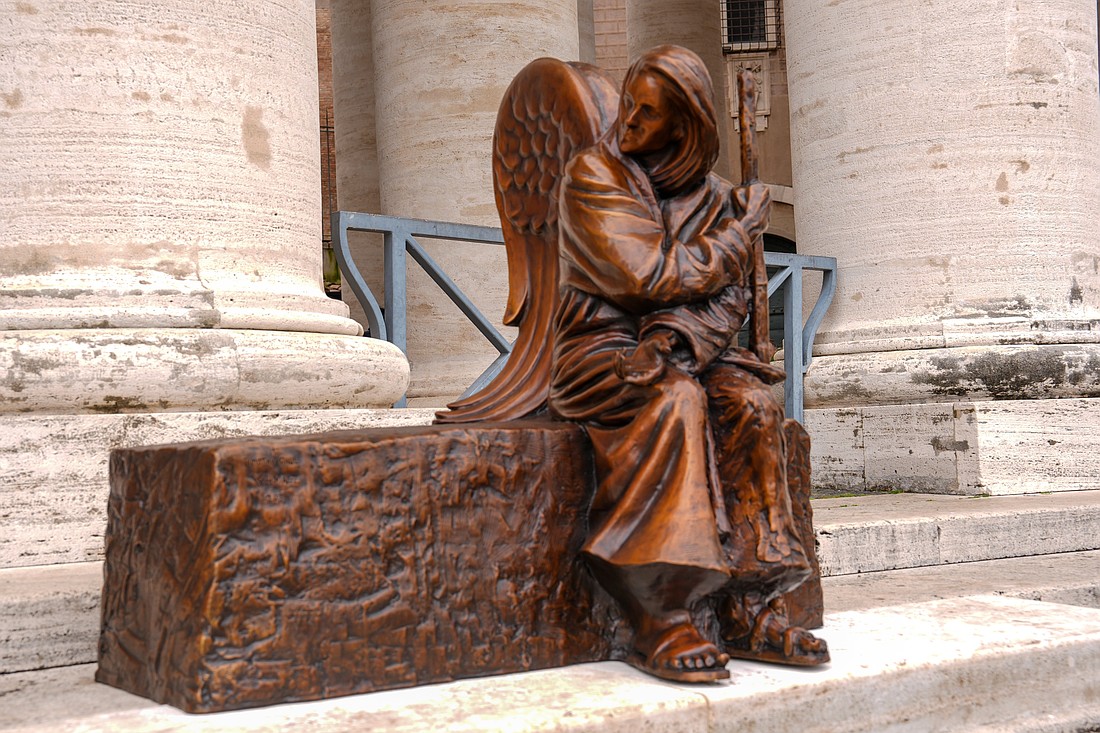
Our faith calls us to see in every person the image of God, and to welcome the stranger as we would welcome Christ Himself. In these times, when so many families and individuals are displaced by war, poverty, or persecution, the Church must be a beacon of compassion and justice.
The Scriptures speak with clarity and urgency about our responsibility toward immigrants and sojourners. In Leviticus 19:33–34, the Lord commands: “When a stranger sojourns with you in your land, you shall not do him wrong. You shall treat the stranger who sojourns with you as the native among you, and you shall love him as yourself, for you were strangers in the land of Egypt.” This is not a suggestion but a divine mandate. We are reminded that our own history as a nation is marked by migration, and that God’s people have always been called to extend hospitality.
Similarly, Deuteronomy 10:18–19 proclaims: “He executes justice for the fatherless and the widow, and loves the sojourner, giving him food and clothing. Love the sojourner, therefore, for you were sojourners in the land of Egypt.” God Himself models care for the immigrant, and we, as His Church, must imitate His love.
Our Lord Jesus Christ deepens this teaching in the Gospel. In Matthew 25:35, He identifies Himself with the stranger: “For I was hungry and you gave me food, I was thirsty and you gave me drink, I was a stranger and you welcomed me.” To welcome the immigrant is to welcome Christ. To turn away the immigrant is to turn away Christ. This is the radical challenge of the Gospel.
The Letter to the Hebrews reminds us of the blessings that come with hospitality: “Do not neglect to show hospitality to strangers, for thereby some have entertained angels unawares” (Hebrews 13:2). Welcoming immigrants is not only a duty but a grace, opening us to God’s presence in unexpected ways.
Finally, Saint Paul offers us a vision of unity in Christ that transcends all boundaries: “There is neither Jew nor Greek, there is neither slave nor free, there is no male and female, for you are all one in Christ Jesus” (Galatians 3:28). In Christ, divisions of nationality, culture, and status are overcome. We are one family, reconciled in His love.
I share these thoughts not only as your bishop but as a fellow disciple of the Lord Jesus, deeply moved by the suffering of so many in our midst who are now living in fear, uncertainty and separation due to the current state of immigration enforcement in our country. True enough, the United States, like every sovereign nation, has the right and responsibility to regulate its borders and to protect its own citizens. This duty, however, must be exercised in a manner that respects our God-given human dignity and upholds the principles of justice and mercy that lie at the heart of the Gospel, our Catholic faith and Catholic Church teaching.
As a Diocese, we must embody the call of the Gospel which means:
• Welcoming immigrants into our parishes and communities with dignity and respect.
• Advocating for just policies that protect families and uphold human rights.
• Offering practical support—food, clothing, shelter, and friendship—to those who arrive in our midst.
• Seeing immigrants not as outsiders, but as brothers and sisters in Christ.
There must be a way that respects our nation’s rights and responsibilities while at the same time creates a legitimate path to citizenship for honest, hardworking, tax paying immigrants whose legal status in our country has become subject to widespread and hurtful scrutiny.
The situation that now confronts immigrants in our nation was addressed in great detail at the recent plenary meeting of the United States Conference of Bishops in Baltimore (November 10-13, 2025) as it has been by Pope Leo XIV, the first American-born pope, in the summer. “The Church cannot be silent” in the face of suffering and injustice.
As a Diocese, we need to pray for migrants and refugees, for families separated by detention and deportation and for our leaders to act with wisdom and compassion. Our prayers should accompanied by advocacy and action to protect families, to uphold due process of law and to respect religious liberty. We are all children of a loving and just Creator.
The Church is at her most radiant when she opens her doors wide to the stranger. Let us be a Diocese known for our hospitality, our justice, and our love. In welcoming immigrants, we welcome Christ Himself. May the Lord give us the courage to live this Gospel truth with joy, conviction and a “hope that does not disappoint (Romans 5:5).”
Related Stories
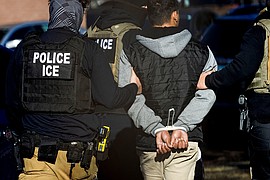 US bishops approve 'special pastoral message' on immigration
Monday, December 29, 2025



E-Editions
Events
Our faith calls us to see in every person the image of God, and to welcome the stranger as we would welcome Christ Himself. In these times, when so many families and individuals are displaced by war, poverty, or persecution, the Church must be a beacon of compassion and justice.
The Scriptures speak with clarity and urgency about our responsibility toward immigrants and sojourners. In Leviticus 19:33–34, the Lord commands: “When a stranger sojourns with you in your land, you shall not do him wrong. You shall treat the stranger who sojourns with you as the native among you, and you shall love him as yourself, for you were strangers in the land of Egypt.” This is not a suggestion but a divine mandate. We are reminded that our own history as a nation is marked by migration, and that God’s people have always been called to extend hospitality.
Similarly, Deuteronomy 10:18–19 proclaims: “He executes justice for the fatherless and the widow, and loves the sojourner, giving him food and clothing. Love the sojourner, therefore, for you were sojourners in the land of Egypt.” God Himself models care for the immigrant, and we, as His Church, must imitate His love.
Our Lord Jesus Christ deepens this teaching in the Gospel. In Matthew 25:35, He identifies Himself with the stranger: “For I was hungry and you gave me food, I was thirsty and you gave me drink, I was a stranger and you welcomed me.” To welcome the immigrant is to welcome Christ. To turn away the immigrant is to turn away Christ. This is the radical challenge of the Gospel.
The Letter to the Hebrews reminds us of the blessings that come with hospitality: “Do not neglect to show hospitality to strangers, for thereby some have entertained angels unawares” (Hebrews 13:2). Welcoming immigrants is not only a duty but a grace, opening us to God’s presence in unexpected ways.
Finally, Saint Paul offers us a vision of unity in Christ that transcends all boundaries: “There is neither Jew nor Greek, there is neither slave nor free, there is no male and female, for you are all one in Christ Jesus” (Galatians 3:28). In Christ, divisions of nationality, culture, and status are overcome. We are one family, reconciled in His love.
I share these thoughts not only as your bishop but as a fellow disciple of the Lord Jesus, deeply moved by the suffering of so many in our midst who are now living in fear, uncertainty and separation due to the current state of immigration enforcement in our country. True enough, the United States, like every sovereign nation, has the right and responsibility to regulate its borders and to protect its own citizens. This duty, however, must be exercised in a manner that respects our God-given human dignity and upholds the principles of justice and mercy that lie at the heart of the Gospel, our Catholic faith and Catholic Church teaching.
As a Diocese, we must embody the call of the Gospel which means:
• Welcoming immigrants into our parishes and communities with dignity and respect.
• Advocating for just policies that protect families and uphold human rights.
• Offering practical support—food, clothing, shelter, and friendship—to those who arrive in our midst.
• Seeing immigrants not as outsiders, but as brothers and sisters in Christ.
There must be a way that respects our nation’s rights and responsibilities while at the same time creates a legitimate path to citizenship for honest, hardworking, tax paying immigrants whose legal status in our country has become subject to widespread and hurtful scrutiny.
The situation that now confronts immigrants in our nation was addressed in great detail at the recent plenary meeting of the United States Conference of Bishops in Baltimore (November 10-13, 2025) as it has been by Pope Leo XIV, the first American-born pope, in the summer. “The Church cannot be silent” in the face of suffering and injustice.
As a Diocese, we need to pray for migrants and refugees, for families separated by detention and deportation and for our leaders to act with wisdom and compassion. Our prayers should accompanied by advocacy and action to protect families, to uphold due process of law and to respect religious liberty. We are all children of a loving and just Creator.
The Church is at her most radiant when she opens her doors wide to the stranger. Let us be a Diocese known for our hospitality, our justice, and our love. In welcoming immigrants, we welcome Christ Himself. May the Lord give us the courage to live this Gospel truth with joy, conviction and a “hope that does not disappoint (Romans 5:5).”