


Space must be safeguarded for the common good, says Vatican diplomat
November 5, 2025 at 6:01 p.m.
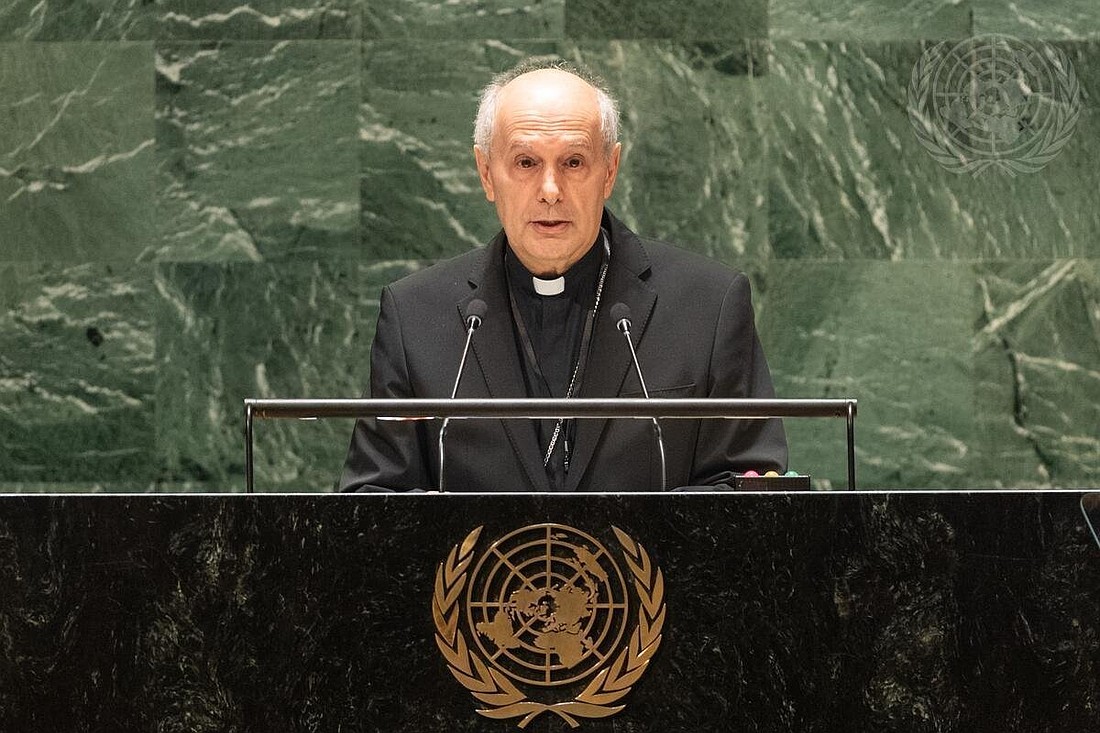
OSV News – Outer space must be safeguarded for peaceful purposes and for the common good of humanity, stressed the Vatican's top diplomat to the United Nations.
Archbishop Gabriele G. Caccia, the Holy See's U.N. apostolic nuncio and permanent observer, delivered two statements on the issue Oct. 27 and Oct. 30 at the U.N. General Assembly in New York.
Speaking Oct. 27, Archbishop Caccia said that while "the vastness of outer space is a realm of immense opportunity" for "cooperation and scientific discovery," that potential also brings with it "great responsibility."
He pointed to "disturbing trends that threaten" the peaceful use of space.
Among those, said Archbishop Caccia, are "the ongoing threat posed by space-based weaponry, including anti-satellite systems, and the accumulation of debris in low Earth orbit," which all "represent a genuine and grave threat to international peace, security, and the long-term sustainability of space-related activities."
According to an April 2025 assessment released by the Center for Strategic and International Studies – a bipartisan nonprofit policy research organization based in Washington – "space is likely becoming a more dangerous place.
CSIS cited "widespread jamming and spoofing of GPS signals in and around conflict zones," including those "near and in Russia and throughout the Middle East."
Both Chinese and Russian satellites at various orbit levels are increasingly more agile in their maneuvering, displaying capabilities applicable to "space warfighting," said CSIS.
Additionally, CSIS noted the blending of military and commercial space technologies, along with "China's rapid buildup of military space capabilities in all orbital regimes" and increased statements from U.S. officials signaling a willingness to "conduct offensive and defensive space operations."
Archbishop Caccia lamented that "the international community has not yet achieved a consensus on an agreement to ban all types of weapons in outer space," although "outer space has been an agenda item of the Conference on Disarmament" – the U.N.'s forum for disarmament and the prevention of war – "since 1985."
He stressed that the U.N.'s 1967 Outer Space Treaty, which sets forth a basic framework for international space law, reminds the global community that "space is a common good to be protected for the benefit of present and future generations, rather than being exploited for the exclusive interests of private entities or nations.
"States have a shared responsibility to cooperate, embrace multilateralism, and advance the common good in their activities in space," said Archbishop Caccia.
The archbishop reiterated his calls in an Oct. 30 address at the U.N., highlighting the need for the exploration and use of space to "be guided by the principles of cooperation, solidarity and peace."
He stressed that "the rapid pace of technological progress and mounting military competition underscore the urgent need for renewed dialogue and cooperation to ensure that outer space remains a realm of peace and shared responsibility.
"As geopolitical rivalries extend into space, there is a growing risk of a fragmented and contested regime that would undermine the peaceful and cooperative spirit envisioned in the founding principles of the 1967 Outer Space Treaty," said Archbishop Caccia.
He expressed the hope that "states can continue this work with the view to establish responsible guidelines for managing space activities."
And, he added, "Strengthening multilateral cooperation and mutual trust in this matter is indeed critical, both now and in the future, to ensure that this new frontier remains a realm of peace, stability, and shared progress for generations to come."
Gina Christian is a multimedia reporter for OSV News. Follow her on X @GinaJesseReina.
Catholic journalism is needed now more than ever. Please consider supporting this work by signing up for a SUBSCRIPTION (click HERE) or making a DONATION to The Monitor (click HERE). Thank you for your contribution.
Related Stories
Monday, December 29, 2025




E-Editions
Events
OSV News – Outer space must be safeguarded for peaceful purposes and for the common good of humanity, stressed the Vatican's top diplomat to the United Nations.
Archbishop Gabriele G. Caccia, the Holy See's U.N. apostolic nuncio and permanent observer, delivered two statements on the issue Oct. 27 and Oct. 30 at the U.N. General Assembly in New York.
Speaking Oct. 27, Archbishop Caccia said that while "the vastness of outer space is a realm of immense opportunity" for "cooperation and scientific discovery," that potential also brings with it "great responsibility."
He pointed to "disturbing trends that threaten" the peaceful use of space.
Among those, said Archbishop Caccia, are "the ongoing threat posed by space-based weaponry, including anti-satellite systems, and the accumulation of debris in low Earth orbit," which all "represent a genuine and grave threat to international peace, security, and the long-term sustainability of space-related activities."
According to an April 2025 assessment released by the Center for Strategic and International Studies – a bipartisan nonprofit policy research organization based in Washington – "space is likely becoming a more dangerous place.
CSIS cited "widespread jamming and spoofing of GPS signals in and around conflict zones," including those "near and in Russia and throughout the Middle East."
Both Chinese and Russian satellites at various orbit levels are increasingly more agile in their maneuvering, displaying capabilities applicable to "space warfighting," said CSIS.
Additionally, CSIS noted the blending of military and commercial space technologies, along with "China's rapid buildup of military space capabilities in all orbital regimes" and increased statements from U.S. officials signaling a willingness to "conduct offensive and defensive space operations."
Archbishop Caccia lamented that "the international community has not yet achieved a consensus on an agreement to ban all types of weapons in outer space," although "outer space has been an agenda item of the Conference on Disarmament" – the U.N.'s forum for disarmament and the prevention of war – "since 1985."
He stressed that the U.N.'s 1967 Outer Space Treaty, which sets forth a basic framework for international space law, reminds the global community that "space is a common good to be protected for the benefit of present and future generations, rather than being exploited for the exclusive interests of private entities or nations.
"States have a shared responsibility to cooperate, embrace multilateralism, and advance the common good in their activities in space," said Archbishop Caccia.
The archbishop reiterated his calls in an Oct. 30 address at the U.N., highlighting the need for the exploration and use of space to "be guided by the principles of cooperation, solidarity and peace."
He stressed that "the rapid pace of technological progress and mounting military competition underscore the urgent need for renewed dialogue and cooperation to ensure that outer space remains a realm of peace and shared responsibility.
"As geopolitical rivalries extend into space, there is a growing risk of a fragmented and contested regime that would undermine the peaceful and cooperative spirit envisioned in the founding principles of the 1967 Outer Space Treaty," said Archbishop Caccia.
He expressed the hope that "states can continue this work with the view to establish responsible guidelines for managing space activities."
And, he added, "Strengthening multilateral cooperation and mutual trust in this matter is indeed critical, both now and in the future, to ensure that this new frontier remains a realm of peace, stability, and shared progress for generations to come."
Gina Christian is a multimedia reporter for OSV News. Follow her on X @GinaJesseReina.
Catholic journalism is needed now more than ever. Please consider supporting this work by signing up for a SUBSCRIPTION (click HERE) or making a DONATION to The Monitor (click HERE). Thank you for your contribution.