


AI regulation subject of debate as Senate weighs Trump's 'Big Beautiful Bill'
June 26, 2025 at 1:53 p.m.
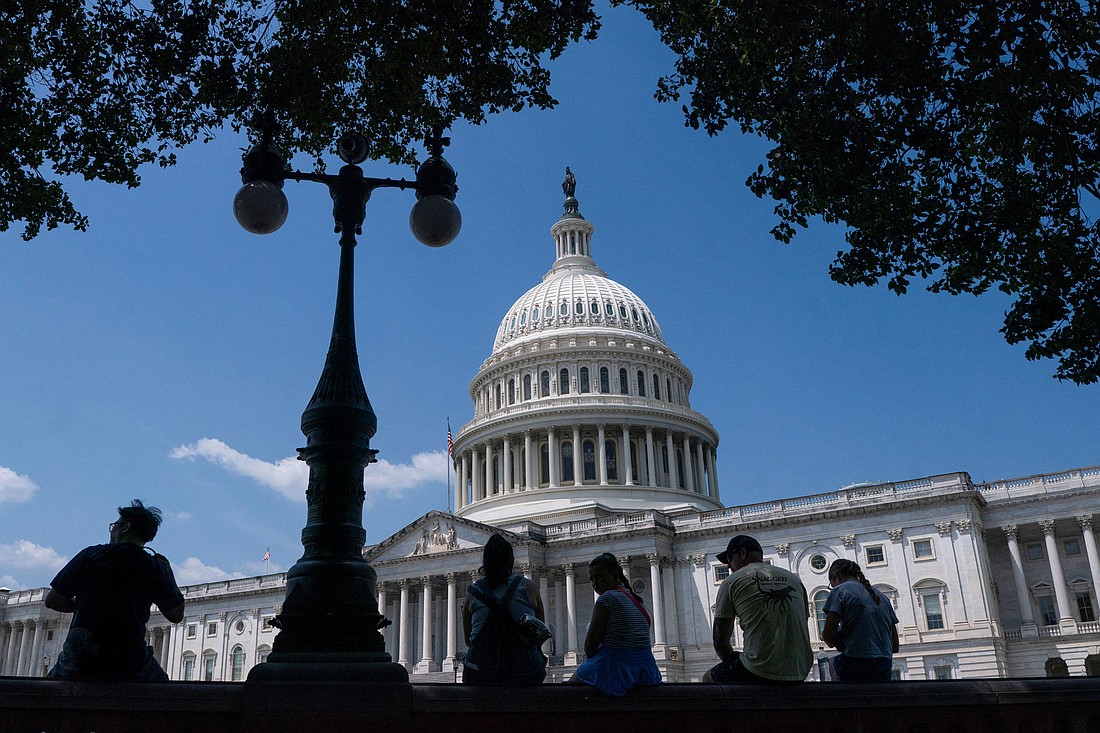
WASHINGTON OSV News – A provision in a sweeping package for President Donald Trump's agenda would block states from regulating artificial intelligence for the next 10 years.
AI is an issue Pope Leo XIV has raised concerns about in the early days of his papacy.
As the Senate considers what Trump calls his "one big, beautiful bill" – and as such, later named the One Big Beautiful Bill Act – which would enact key provisions of his legislative agenda on tax and immigration policy, some sticking points have emerged among Senate Republicans, such as artificial intelligence regulation.
Tim Weninger, a professor of computer science and engineering at the University of Notre Dame, told OSV News the debate is "a tough one" as Congress navigates potential regulation of emerging technology.
"It's not so much a matter of one side's right and one side's wrong," he said. "It's complicated."
Sen. Ted Cruz, R-Texas, a supporter of the provision, has argued in comments to various media outlets that prohibiting states from regulating AI is "good policy," comparing it to the "light touch" that then-President Bill Clinton took toward the internet as an emerging technology in the 1990s. Cruz reportedly tweaked the provision to restrict state regulation of AI rather than outright ban it in order to satisfy Senate rules about what could be included in the megabill.
However, Sens. Josh Hawley, R-Mo., and Marsha Blackburn, R-Tenn., are among those Republicans who oppose it. Hawley argued in recent comments to Time magazine that the provision would erode states' rights.
Sen. Ed Markey, D-Mass., is seeking to pass an amendment to the bill to strip the provision, arguing on social media it is "dangerous" to block states from regulating AI.
Asked about the debate, Weninger, who has been invited to participate in a discussion on AI during a Vatican conference in October, said that some in Congress want to prohibit states from regulating AI to maintain "technological competitiveness with other nations" by preventing "a patchwork" of varying state regulations.
On the other hand, he said, some who see states as "the petri dishes of democracy" argue that allowing states to regulate AI would allow for tailored policy for that state or even yield policy replicable at the federal level.
However, Weninger argued, "if you don't want states to do their own AI regulation, maybe the federal government should actually propose something instead," rather than "just allow a vacuum to appear."
In a recent message to AI experts and executives, Pope Leo said, "Together with its extraordinary potential to benefit the human family, the rapid development of AI also raises deeper questions concerning the proper use of such technology in generating a more authentically just and human global society."
Asked about the Pope's concerns about AI, Weninger said, "AI has the possibility of exacerbating inequality, right, where some people who are able to go and use the AI, because they already have means, can further get ahead. I also find that there might be a possibility for a profound change in how we talk to one another and how we communicate with one another."
House Republicans passed their version of the sweeping bill in May, and Trump has called for the Senate to follow suit by July 4, even urging them to skip their upcoming scheduled recess for the holiday.
Catholic leaders have alternately praised and criticized various provisions in the House's version of that package, which has drawn fire from some critics over its cuts to Medicaid, while drawing praise from others for promises to eliminate funds to health providers who also perform abortions.
In a June letter to members of Congress, the U.S. Conference of Catholic Bishops urged them to consider human dignity and the common good when crafting AI policy.
Kate Scanlon is a national reporter for OSV News covering Washington. Follow her on X @kgscanlon.
Please consider supporting this work by signing up for a SUBSCRIPTION (click HERE) or making a DONATION to The Monitor (click HERE). Thank you for your support.
Related Stories
Friday, December 26, 2025



E-Editions

Events
WASHINGTON OSV News – A provision in a sweeping package for President Donald Trump's agenda would block states from regulating artificial intelligence for the next 10 years.
AI is an issue Pope Leo XIV has raised concerns about in the early days of his papacy.
As the Senate considers what Trump calls his "one big, beautiful bill" – and as such, later named the One Big Beautiful Bill Act – which would enact key provisions of his legislative agenda on tax and immigration policy, some sticking points have emerged among Senate Republicans, such as artificial intelligence regulation.
Tim Weninger, a professor of computer science and engineering at the University of Notre Dame, told OSV News the debate is "a tough one" as Congress navigates potential regulation of emerging technology.
"It's not so much a matter of one side's right and one side's wrong," he said. "It's complicated."
Sen. Ted Cruz, R-Texas, a supporter of the provision, has argued in comments to various media outlets that prohibiting states from regulating AI is "good policy," comparing it to the "light touch" that then-President Bill Clinton took toward the internet as an emerging technology in the 1990s. Cruz reportedly tweaked the provision to restrict state regulation of AI rather than outright ban it in order to satisfy Senate rules about what could be included in the megabill.
However, Sens. Josh Hawley, R-Mo., and Marsha Blackburn, R-Tenn., are among those Republicans who oppose it. Hawley argued in recent comments to Time magazine that the provision would erode states' rights.
Sen. Ed Markey, D-Mass., is seeking to pass an amendment to the bill to strip the provision, arguing on social media it is "dangerous" to block states from regulating AI.
Asked about the debate, Weninger, who has been invited to participate in a discussion on AI during a Vatican conference in October, said that some in Congress want to prohibit states from regulating AI to maintain "technological competitiveness with other nations" by preventing "a patchwork" of varying state regulations.
On the other hand, he said, some who see states as "the petri dishes of democracy" argue that allowing states to regulate AI would allow for tailored policy for that state or even yield policy replicable at the federal level.
However, Weninger argued, "if you don't want states to do their own AI regulation, maybe the federal government should actually propose something instead," rather than "just allow a vacuum to appear."
In a recent message to AI experts and executives, Pope Leo said, "Together with its extraordinary potential to benefit the human family, the rapid development of AI also raises deeper questions concerning the proper use of such technology in generating a more authentically just and human global society."
Asked about the Pope's concerns about AI, Weninger said, "AI has the possibility of exacerbating inequality, right, where some people who are able to go and use the AI, because they already have means, can further get ahead. I also find that there might be a possibility for a profound change in how we talk to one another and how we communicate with one another."
House Republicans passed their version of the sweeping bill in May, and Trump has called for the Senate to follow suit by July 4, even urging them to skip their upcoming scheduled recess for the holiday.
Catholic leaders have alternately praised and criticized various provisions in the House's version of that package, which has drawn fire from some critics over its cuts to Medicaid, while drawing praise from others for promises to eliminate funds to health providers who also perform abortions.
In a June letter to members of Congress, the U.S. Conference of Catholic Bishops urged them to consider human dignity and the common good when crafting AI policy.
Kate Scanlon is a national reporter for OSV News covering Washington. Follow her on X @kgscanlon.
Please consider supporting this work by signing up for a SUBSCRIPTION (click HERE) or making a DONATION to The Monitor (click HERE). Thank you for your support.