


Over 20,000 permanent deacons serve Church, but death, retirement bring overall number down
June 13, 2025 at 11:08 a.m.
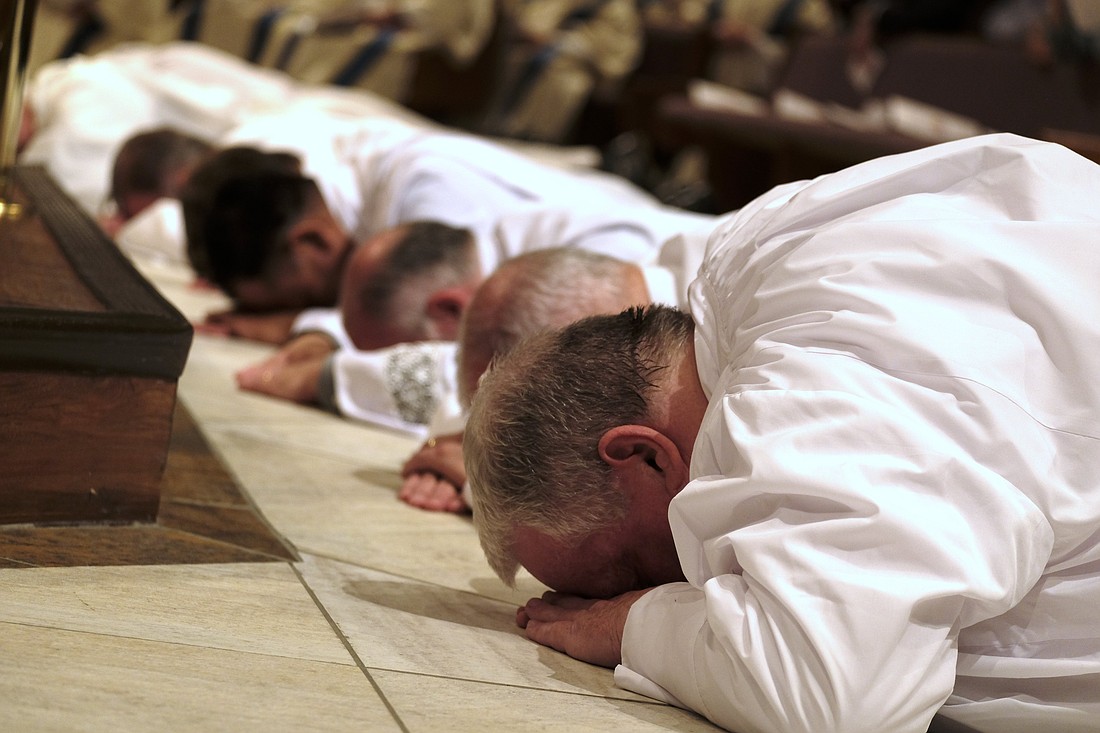
OSV News – The nation's Catholic permanent deacons were estimated to number more than 20,000 in 2024 – but "as is the case with priests in the United States, there are not enough new permanent deacons being ordained to make up for the numbers who are retiring from active ministry and dying each year," according to a new report.
"A Portrait of the Permanent Diaconate in 2025" was released June 12 by the U.S. Conference of Catholic Bishops’ Committee on Clergy, Consecrated Life and Vocations.
"Deacons serve an invaluable role in bringing the hope of the Gospel to all members of society," said committee chair Bishop Earl A. Boyea of Lansing, Michigan. “By their witness in the parish, within their families, at the workplace, and while serving the poor, the life of a deacon displays the servant heart of Christ in their faithful, and often hidden, acts of charity.”
Since 2005, the Center for Applied Research in the Apostolate at Georgetown University has conducted the annual survey, which assesses the permanent diaconate's demographics and trends in the U.S.
Data for the survey, which was administered between February and May, represents responses from 140 of the 185 dioceses, archdioceses and eparchies whose bishops are USCCB members, and which also have an active diaconate office. The overall response rate for the study was 76%.
The survey tallied a total of 16,769 permanent deacons, active and not active, among respondents, and extrapolated that number to include the nonrespondents for an estimated total of as many as 20,212 permanent deacons in the U.S. in 2024.
The Archdioceses of Chicago (848), Atlanta (385), New York (369), San Antonio (361) and Galveston-Houston (316) had the greatest number of permanent deacons last year.
The Dioceses of Rapid City, South Dakota (43); Lexington, Kentucky (77); and Bismarck, North Dakota (94), had fewer than 100 deacons; Tulsa, Oklahoma, had 105.
In 2024, 393 new permanent deacons were ordained in responding dioceses, according to the survey.
But at the same time, 545 deacons retired from active ministry, and another 361 died – making for a net loss of 513 permanent deacons, although 92% of the nation's dioceses, archdioceses and eparchies have active ministry formation programs for the permanent diaconate, and 30% of those lacking one plan to start a program within the next two years.
An overwhelming majority of active permanent deacons (96%) are at least 50 years old, with 38% age 70 or older. One in five, or 18%, are in their 50s, while 41% (two in five) are in their 60s.
Those figures are within the larger context of the nation's aging population, with the number of those 65 and older projected to make up more than 20% of the U.S. population by 2030 and 23% by 2050, according to the Census Bureau.
Most (96%) dioceses and eparchies have a minimum age for acceptance into the permanent diaconate, with the average being 32 years old. Three in five (58%) have a mandatory retirement age for their permanent deacons, on average 75 years old.
Most permanent deacons (93%) are currently married, with 4% widowers and 2% never married.
Almost three quarters (74%) of U.S. permanent deacons are white, with 20% Hispanic of Latino, 3% Asian or Pacific Islander and 2% African American.
Two out of three active permanent deacons (66%) have at least a college degree, with 32% holding a graduate degree (15% in a field related to the diaconate).
Only 10% of active permanent deacons were compensated for their ministry in 2024, down from 11% the year prior. Since 2009, an average of 16% have been compensated (a range of 11% to 21% for the period). The survey projected that if the trend holds, about 12% of permanent deacons will be compensated in 2028.
Other parish ministerial (24%) and non-ministerial (18%) positions topped the list for those who were compensated, followed by diocesan non-ministerial (14%) and ministerial (11%) roles.
Ten percent of compensated active permanent deacons in 2024 were entrusted with the pastoral care of one or more parishes. Canon law stipulates that a diocesan bishop may do so due to a lack of priests.
The permanent diaconate, which traces its roots to the Church's apostolic age, declined during the Middle Ages, having been eclipsed by the rise of the priesthood. Following the Second World War, the vocation began to receive renewed attention, and in 1959 Caritas Internationalis – the Catholic Church's international humanitarian network – requested that it be restored.
The Second Vatican Council approved of the permanent diaconate's restoration, with St. Paul VI promulgating the decision through canonical norms and a new rite for the conferral of the ordained ministry.
"With the release of this survey, I ask for continued prayers for deacons and for an increase in vocations to the permanent diaconate within the United States," said Bishop Boyea.
Gina Christian is a multimedia reporter for OSV News. Follow her on X @GinaJesseReina.
NOTES: To download "A Portrait of the Permanent Diaconate in 2025," visit the U.S. Conference of Catholic Bishops' website at: https://www.usccb.org/resources/Report-Portrait%20of%20Diaconate%202025%20FINAL%20June%203_0.pdf.
The Church needs quality Catholic journalism now more than ever. Please consider supporting this work by signing up for a SUBSCRIPTION (click HERE) or making a DONATION to The Monitor (click HERE). Thank you for your support.
Related Stories
Thursday, December 25, 2025


E-Editions
Events
OSV News – The nation's Catholic permanent deacons were estimated to number more than 20,000 in 2024 – but "as is the case with priests in the United States, there are not enough new permanent deacons being ordained to make up for the numbers who are retiring from active ministry and dying each year," according to a new report.
"A Portrait of the Permanent Diaconate in 2025" was released June 12 by the U.S. Conference of Catholic Bishops’ Committee on Clergy, Consecrated Life and Vocations.
"Deacons serve an invaluable role in bringing the hope of the Gospel to all members of society," said committee chair Bishop Earl A. Boyea of Lansing, Michigan. “By their witness in the parish, within their families, at the workplace, and while serving the poor, the life of a deacon displays the servant heart of Christ in their faithful, and often hidden, acts of charity.”
Since 2005, the Center for Applied Research in the Apostolate at Georgetown University has conducted the annual survey, which assesses the permanent diaconate's demographics and trends in the U.S.
Data for the survey, which was administered between February and May, represents responses from 140 of the 185 dioceses, archdioceses and eparchies whose bishops are USCCB members, and which also have an active diaconate office. The overall response rate for the study was 76%.
The survey tallied a total of 16,769 permanent deacons, active and not active, among respondents, and extrapolated that number to include the nonrespondents for an estimated total of as many as 20,212 permanent deacons in the U.S. in 2024.
The Archdioceses of Chicago (848), Atlanta (385), New York (369), San Antonio (361) and Galveston-Houston (316) had the greatest number of permanent deacons last year.
The Dioceses of Rapid City, South Dakota (43); Lexington, Kentucky (77); and Bismarck, North Dakota (94), had fewer than 100 deacons; Tulsa, Oklahoma, had 105.
In 2024, 393 new permanent deacons were ordained in responding dioceses, according to the survey.
But at the same time, 545 deacons retired from active ministry, and another 361 died – making for a net loss of 513 permanent deacons, although 92% of the nation's dioceses, archdioceses and eparchies have active ministry formation programs for the permanent diaconate, and 30% of those lacking one plan to start a program within the next two years.
An overwhelming majority of active permanent deacons (96%) are at least 50 years old, with 38% age 70 or older. One in five, or 18%, are in their 50s, while 41% (two in five) are in their 60s.
Those figures are within the larger context of the nation's aging population, with the number of those 65 and older projected to make up more than 20% of the U.S. population by 2030 and 23% by 2050, according to the Census Bureau.
Most (96%) dioceses and eparchies have a minimum age for acceptance into the permanent diaconate, with the average being 32 years old. Three in five (58%) have a mandatory retirement age for their permanent deacons, on average 75 years old.
Most permanent deacons (93%) are currently married, with 4% widowers and 2% never married.
Almost three quarters (74%) of U.S. permanent deacons are white, with 20% Hispanic of Latino, 3% Asian or Pacific Islander and 2% African American.
Two out of three active permanent deacons (66%) have at least a college degree, with 32% holding a graduate degree (15% in a field related to the diaconate).
Only 10% of active permanent deacons were compensated for their ministry in 2024, down from 11% the year prior. Since 2009, an average of 16% have been compensated (a range of 11% to 21% for the period). The survey projected that if the trend holds, about 12% of permanent deacons will be compensated in 2028.
Other parish ministerial (24%) and non-ministerial (18%) positions topped the list for those who were compensated, followed by diocesan non-ministerial (14%) and ministerial (11%) roles.
Ten percent of compensated active permanent deacons in 2024 were entrusted with the pastoral care of one or more parishes. Canon law stipulates that a diocesan bishop may do so due to a lack of priests.
The permanent diaconate, which traces its roots to the Church's apostolic age, declined during the Middle Ages, having been eclipsed by the rise of the priesthood. Following the Second World War, the vocation began to receive renewed attention, and in 1959 Caritas Internationalis – the Catholic Church's international humanitarian network – requested that it be restored.
The Second Vatican Council approved of the permanent diaconate's restoration, with St. Paul VI promulgating the decision through canonical norms and a new rite for the conferral of the ordained ministry.
"With the release of this survey, I ask for continued prayers for deacons and for an increase in vocations to the permanent diaconate within the United States," said Bishop Boyea.
Gina Christian is a multimedia reporter for OSV News. Follow her on X @GinaJesseReina.
NOTES: To download "A Portrait of the Permanent Diaconate in 2025," visit the U.S. Conference of Catholic Bishops' website at: https://www.usccb.org/resources/Report-Portrait%20of%20Diaconate%202025%20FINAL%20June%203_0.pdf.
The Church needs quality Catholic journalism now more than ever. Please consider supporting this work by signing up for a SUBSCRIPTION (click HERE) or making a DONATION to The Monitor (click HERE). Thank you for your support.