


Visiting Update on New York's National Shrine of Our Lady of Martyrs
June 2, 2025 at 2:49 p.m.
OSV News – Walking through the serene green spaces of the National Shrine of Our Lady of Martyrs in Auriesville, New York, it is hard to imagine the scene that greeted St. Isaac Jogues and St. René Goupil at the same site in 1642.
Captured by an Iroquois war party, the French Jesuit missionaries arrived at this spot, then a village called Ossernenon, after a forced march of many days. Already covered in festering wounds, they were made to run a gauntlet of sticks and iron rods before being placed on a platform to be tortured. They both died here: Goupil within a few months, and Jogues in 1646, with another Jesuit, Jean de Lalande.
Catholic pilgrims have been paying their respects on this hill by the Mohawk River, now so peaceful, for almost 150 years. A shrine was established in the late 1800s to honor Jogues, Goupil, Lalande and five other martyred Jesuits; today it also honors St. Kateri Tekakwitha, the Mohawk saint born in Ossernenon in 1656.
In March this year, the 600-acre property was designated a national shrine by the U.S. bishops. There is no better place to pray for the re-evangelization of our country – but should you need an extra nudge to visit, the Diocese of Albany has also named the shrine a pilgrimage site for the Jubilee Year.
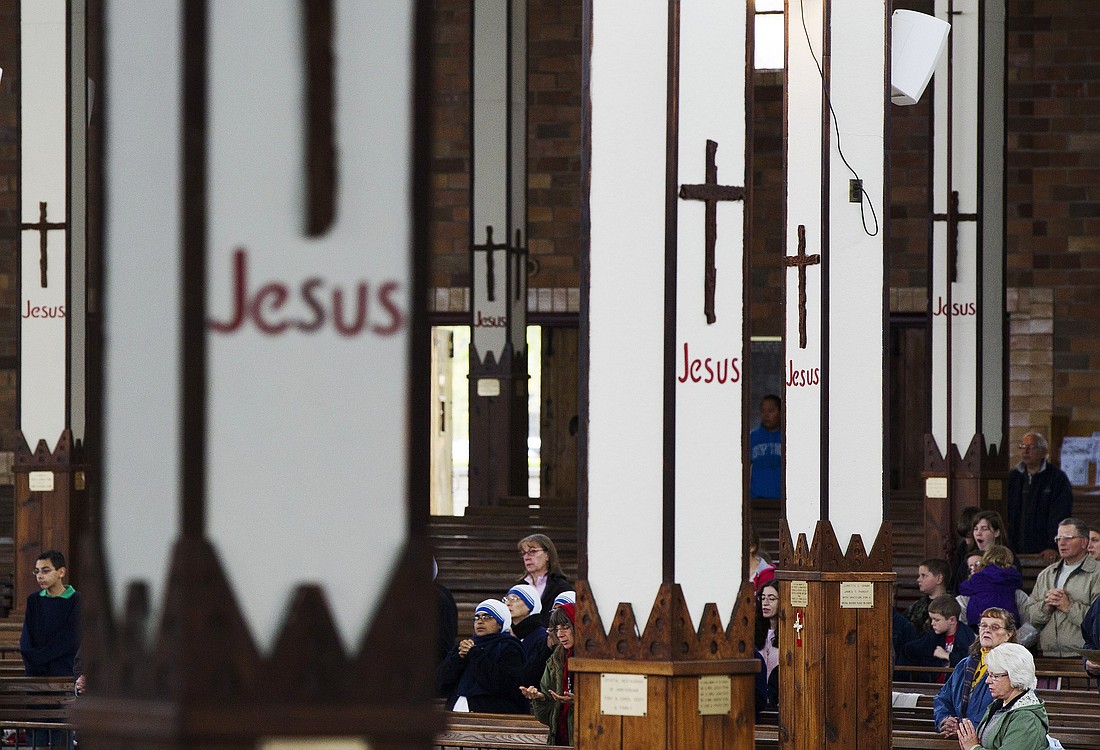
You'll want several hours, at least, to take it all in. Start your day with Mass – a privilege that the missionaries did not have. Father Jogues could not celebrate Mass during his captivity at Ossernenon because his hands, particularly the fingers that normally hold the consecrated host, had been so mutilated. The shrine's main Church, completed in 1931, is like no other: a vast round structure, called the Coliseum, that can fit nearly 10,000 people. A sea of simple wooden benches surrounds the central high altar, built to resemble a log stockade. Mass times in the Coliseum are subject to change, so be sure to check the shrine's web page or Facebook page before you go.
A small museum gives the complete story of the French Jesuit martyrs and their mission and of the heroic sanctity of St. Kateri Tekakwitha, who was canonized in 2015. You will come away with a much fuller picture of colonial history than the Anglocentric perspective of most school textbooks. You will also better recognize the many statues and memorials you see as you walk the grounds – wear good shoes! – and you'll know why a simple cross with "Jesus" under it appears in so many places.
Finally, do not miss the Ravine, where René Goupil was buried after being tomahawked for making the sign of the cross over a child. Here, flower beds give way to woodland, and it is suddenly very easy to imagine Father Jogues searching among the trees for his friend's remains in order to lay them to rest. His account of Goupil's death and burial is given on the signs that line the downward path.
Many pilgrims cite walking the Ravine as the most moving part of their visit, according to Beth Lynch, the shrine's pilgrimage coordinator. But her own favorite spot is the St. Kateri Chapel, which overlooks the hill that St. Isaac Jogues and St. René Goupil came up as captives. "It always astounds me to think," she said, "when (St. Isaac Jogues) was coming up that hill of torture – could he have ever imagined that there would be the Blessed Sacrament crowning that hill today?"
The National Shrine of Our Lady of Martyrs is open daily from May 1 through Oct. 19, the feast of the North American Martyrs. In addition to that feast, notable days to visit include June 21, the 100th anniversary of the martyrs' beatification; July 14, St. Kateri Tekakwitha's feast; and Aug. 15, the feast of the Assumption, when the shrine marks Sts. Isaac Jogues and René Goupil's arrival at Ossernenon.
Cecilia Hadley is the associate editor of Our Sunday Visitor magazine.
Related Stories
Thursday, December 25, 2025





E-Editions
Events
OSV News – Walking through the serene green spaces of the National Shrine of Our Lady of Martyrs in Auriesville, New York, it is hard to imagine the scene that greeted St. Isaac Jogues and St. René Goupil at the same site in 1642.
Captured by an Iroquois war party, the French Jesuit missionaries arrived at this spot, then a village called Ossernenon, after a forced march of many days. Already covered in festering wounds, they were made to run a gauntlet of sticks and iron rods before being placed on a platform to be tortured. They both died here: Goupil within a few months, and Jogues in 1646, with another Jesuit, Jean de Lalande.
Catholic pilgrims have been paying their respects on this hill by the Mohawk River, now so peaceful, for almost 150 years. A shrine was established in the late 1800s to honor Jogues, Goupil, Lalande and five other martyred Jesuits; today it also honors St. Kateri Tekakwitha, the Mohawk saint born in Ossernenon in 1656.
In March this year, the 600-acre property was designated a national shrine by the U.S. bishops. There is no better place to pray for the re-evangelization of our country – but should you need an extra nudge to visit, the Diocese of Albany has also named the shrine a pilgrimage site for the Jubilee Year.
You'll want several hours, at least, to take it all in. Start your day with Mass – a privilege that the missionaries did not have. Father Jogues could not celebrate Mass during his captivity at Ossernenon because his hands, particularly the fingers that normally hold the consecrated host, had been so mutilated. The shrine's main Church, completed in 1931, is like no other: a vast round structure, called the Coliseum, that can fit nearly 10,000 people. A sea of simple wooden benches surrounds the central high altar, built to resemble a log stockade. Mass times in the Coliseum are subject to change, so be sure to check the shrine's web page or Facebook page before you go.
A small museum gives the complete story of the French Jesuit martyrs and their mission and of the heroic sanctity of St. Kateri Tekakwitha, who was canonized in 2015. You will come away with a much fuller picture of colonial history than the Anglocentric perspective of most school textbooks. You will also better recognize the many statues and memorials you see as you walk the grounds – wear good shoes! – and you'll know why a simple cross with "Jesus" under it appears in so many places.
Finally, do not miss the Ravine, where René Goupil was buried after being tomahawked for making the sign of the cross over a child. Here, flower beds give way to woodland, and it is suddenly very easy to imagine Father Jogues searching among the trees for his friend's remains in order to lay them to rest. His account of Goupil's death and burial is given on the signs that line the downward path.
Many pilgrims cite walking the Ravine as the most moving part of their visit, according to Beth Lynch, the shrine's pilgrimage coordinator. But her own favorite spot is the St. Kateri Chapel, which overlooks the hill that St. Isaac Jogues and St. René Goupil came up as captives. "It always astounds me to think," she said, "when (St. Isaac Jogues) was coming up that hill of torture – could he have ever imagined that there would be the Blessed Sacrament crowning that hill today?"
The National Shrine of Our Lady of Martyrs is open daily from May 1 through Oct. 19, the feast of the North American Martyrs. In addition to that feast, notable days to visit include June 21, the 100th anniversary of the martyrs' beatification; July 14, St. Kateri Tekakwitha's feast; and Aug. 15, the feast of the Assumption, when the shrine marks Sts. Isaac Jogues and René Goupil's arrival at Ossernenon.
Cecilia Hadley is the associate editor of Our Sunday Visitor magazine.