


Does reception of the Eucharist replace confession?
July 22, 2025 at 3:44 p.m.
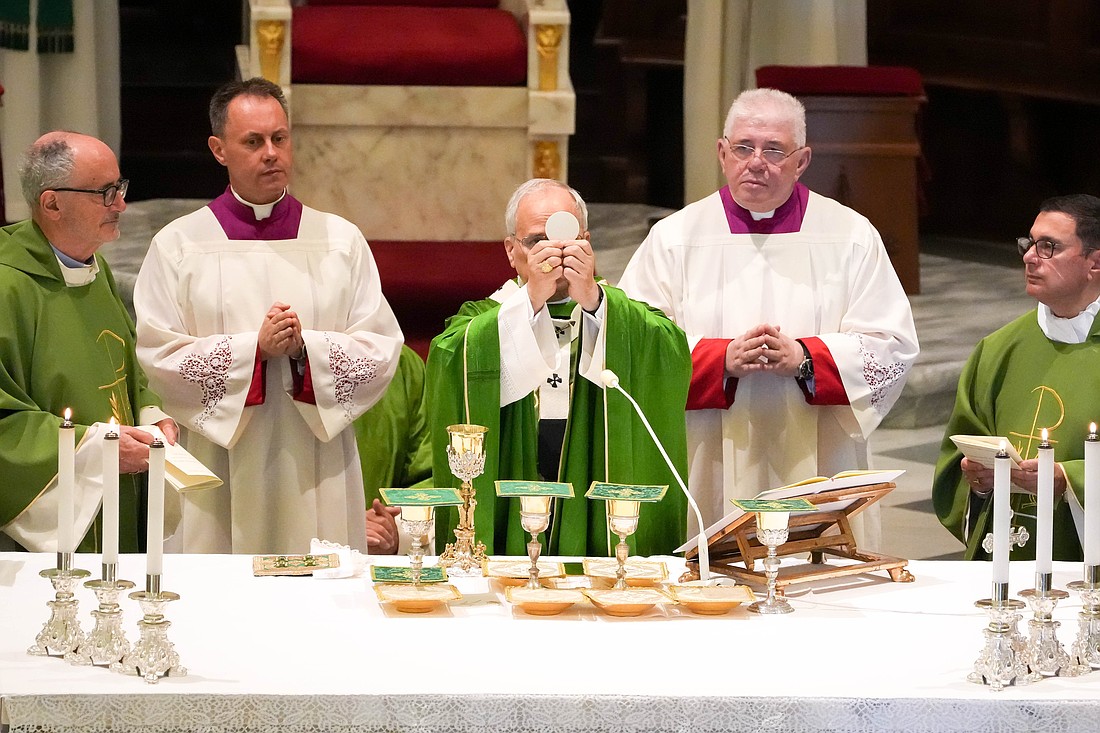
Q: When I was in the Rite of Christian Initiation of Adults (commonly known as RCIA, now the Order of Christian Initiation of Adults), the instructor said normal weekly Eucharist counts as a "confession," and reception counts as "absolution." She said in most cases, most people "don't need to bother" the priest with their sins, and only need to go to an actual confession once a year or if they've done something particularly wrong. Could you comment? (Indiana)
A: It sounds like your RCIA instructor was partially right about some things, insofar as there is at least a kernel of truth to these statements. But he or she also seems to have missed a lot of important nuances.
With respect to the first point, it is true that a devout reception of holy Communion can forgive venial (less serious) sins. Like the Catechism of the Catholic Church tells us: "As bodily nourishment restores lost strength, so the Eucharist strengthens our charity, which tends to be weakened in daily life; and this living charity wipes away venial sins" (1394).
But reception of holy Communion does not impart the forgiveness of "mortal," or very serious, sins. Not only is a person who has committed an unconfessed mortal sin prohibited from receiving Communion as a matter of sacramental discipline (see Canon 916 of the Code of Canon Law for reference), but a person who receives Communion illicitly in this way can actually endanger his or her soul.
As St. Paul writes in his first letter to the Corinthians: "Therefore whoever eats the bread or drinks the cup of the Lord unworthily will have to answer for the body and blood of the Lord. … For anyone who eats and drinks without discerning the body, eats and drinks judgment on himself" (1 Cor. 11:27-29).
So, on that very practical level, holy Communion does not replace confession, in that a person who has committed a mortal sin needs the sacrament of penance to be able to approach the Eucharist at all in the first place.
But also, perhaps obviously, confession is a different sacrament with its own distinct focus, and it would seem to be pastoral common sense that those seeking specifically the forgiveness of any kind of sin would most fruitfully do so in the sacrament that was "custom built" for that purpose.
When considering how often to go to confession, I think it becomes important to make a distinction between the question of: "What is the bare minimum required of Catholics?" versus "what does the Church propose as the ideal?" and "what should we do so that we may actively grow in our life of faith?"
Very strictly speaking, Catholics above the age of 7 are only required to go to confession once a year if they have committed a mortal sin since their last confession (see Canon 989).
But the Church encourages the faithful to approach the sacrament of penance much more often, even for merely venial sins. The Catholic Church has a long tradition of promoting what is called "devotional confessions," or the confession of minor sins even in the absence of grave ones just for the sake of growing closer to the Lord.
St. John Paul II expressed this teaching in his 2004 address to the Apostolic Penitentiary (the Vatican "department" that oversees many issues related to the sacrament of penance) when he noted: "It would be an illusion to want to strive for holiness in accordance with the vocation that God has given to each one of us without frequently and fervently receiving this sacrament of conversion and sanctification."
And, as long as we approach the sacrament in a reasonable and considerate way, it's not "bothering the priest" to seek out opportunities for a devotional confession.
In fact, canon law requires that parish priests must: "strive to ensure that the faithful are nourished by the devout celebration of the sacraments, and in particular that they frequently approach the sacraments of the blessed Eucharist and penance" (Canon 528, 2).
Jenna Marie Cooper, who holds a licentiate in canon law, is a consecrated virgin and a canonist whose column appears weekly at OSV News. Send your questions to [email protected].
Please consider supporting this work by signing up for a SUBSCRIPTION (click HERE) or making a DONATION to The Monitor (click HERE). Thank you for your support.
Related Stories
Saturday, December 13, 2025


E-Editions
Events
Q: When I was in the Rite of Christian Initiation of Adults (commonly known as RCIA, now the Order of Christian Initiation of Adults), the instructor said normal weekly Eucharist counts as a "confession," and reception counts as "absolution." She said in most cases, most people "don't need to bother" the priest with their sins, and only need to go to an actual confession once a year or if they've done something particularly wrong. Could you comment? (Indiana)
A: It sounds like your RCIA instructor was partially right about some things, insofar as there is at least a kernel of truth to these statements. But he or she also seems to have missed a lot of important nuances.
With respect to the first point, it is true that a devout reception of holy Communion can forgive venial (less serious) sins. Like the Catechism of the Catholic Church tells us: "As bodily nourishment restores lost strength, so the Eucharist strengthens our charity, which tends to be weakened in daily life; and this living charity wipes away venial sins" (1394).
But reception of holy Communion does not impart the forgiveness of "mortal," or very serious, sins. Not only is a person who has committed an unconfessed mortal sin prohibited from receiving Communion as a matter of sacramental discipline (see Canon 916 of the Code of Canon Law for reference), but a person who receives Communion illicitly in this way can actually endanger his or her soul.
As St. Paul writes in his first letter to the Corinthians: "Therefore whoever eats the bread or drinks the cup of the Lord unworthily will have to answer for the body and blood of the Lord. … For anyone who eats and drinks without discerning the body, eats and drinks judgment on himself" (1 Cor. 11:27-29).
So, on that very practical level, holy Communion does not replace confession, in that a person who has committed a mortal sin needs the sacrament of penance to be able to approach the Eucharist at all in the first place.
But also, perhaps obviously, confession is a different sacrament with its own distinct focus, and it would seem to be pastoral common sense that those seeking specifically the forgiveness of any kind of sin would most fruitfully do so in the sacrament that was "custom built" for that purpose.
When considering how often to go to confession, I think it becomes important to make a distinction between the question of: "What is the bare minimum required of Catholics?" versus "what does the Church propose as the ideal?" and "what should we do so that we may actively grow in our life of faith?"
Very strictly speaking, Catholics above the age of 7 are only required to go to confession once a year if they have committed a mortal sin since their last confession (see Canon 989).
But the Church encourages the faithful to approach the sacrament of penance much more often, even for merely venial sins. The Catholic Church has a long tradition of promoting what is called "devotional confessions," or the confession of minor sins even in the absence of grave ones just for the sake of growing closer to the Lord.
St. John Paul II expressed this teaching in his 2004 address to the Apostolic Penitentiary (the Vatican "department" that oversees many issues related to the sacrament of penance) when he noted: "It would be an illusion to want to strive for holiness in accordance with the vocation that God has given to each one of us without frequently and fervently receiving this sacrament of conversion and sanctification."
And, as long as we approach the sacrament in a reasonable and considerate way, it's not "bothering the priest" to seek out opportunities for a devotional confession.
In fact, canon law requires that parish priests must: "strive to ensure that the faithful are nourished by the devout celebration of the sacraments, and in particular that they frequently approach the sacraments of the blessed Eucharist and penance" (Canon 528, 2).
Jenna Marie Cooper, who holds a licentiate in canon law, is a consecrated virgin and a canonist whose column appears weekly at OSV News. Send your questions to [email protected].
Please consider supporting this work by signing up for a SUBSCRIPTION (click HERE) or making a DONATION to The Monitor (click HERE). Thank you for your support.