


Pope Leo XIV champions media literacy
July 17, 2025 at 10:18 a.m.
In this age of digital communication, it seems like nothing we say or do ever goes away. Once an interview, a podcast, a social media post or an article has been recorded, reported on or printed, it's out there for anyone at any time.
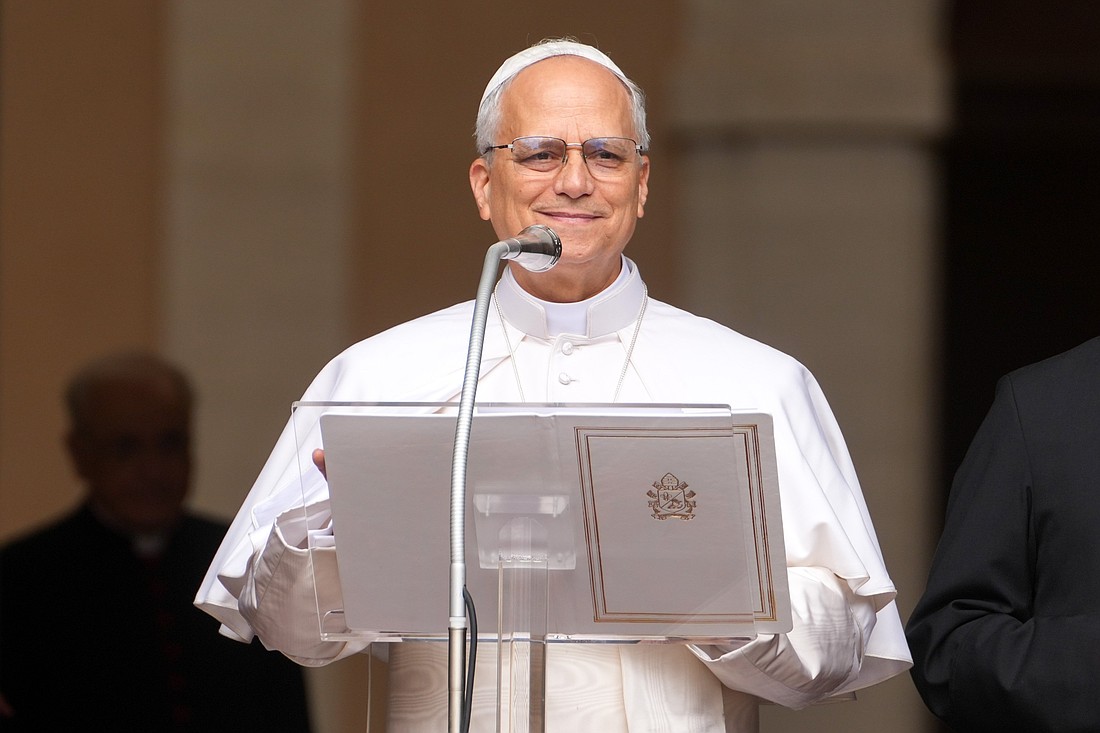
This is definitely true in regard to our new Holy Father, Pope Leo XIV. Snippets of things he said in interviews years ago are surfacing all over the internet. His family and friends are being mined for the special memories they have of their more intimate interactions with the new leader of the world's Catholics. Of course, this happens to many in Church leadership, but only one of them just got elected Pope.
Of great interest to those of us who are dedicated to helping people live out their faith in the nitty-gritty's of life, especially in regards to communications media, is an interview then-Father Robert Prevost gave to Catholic News Service on Oct. 29, 2012. It was held at the Augustinian Institute for Patristic Studies in Rome and focused on the topic of evangelization.
During this interview, the future Pope Leo was asked if Catholics should try to eliminate or drastically limit the use of digital media in their lives. His answer is music to the ears of myself and any Catholic who tries to instill in people, especially young people, the importance of applying the values of their faith when making choices about what media they choose to interact with.
Here's what the Holy Father had to say back then: "And I think, personally, that the answer, rather than turning away, is in the area of formation. How do we teach people to become critical thinkers? How do we teach people to understand that not everything you hear or everything you read should be taken at face value? And how do we come to give people the formation that they need to read something or to hear something and to be able to discern, if you will, to understand that underlying the message that's being communicated is a very different message or a very subtle message that has severe consequences for the future of society, let's say, that can or cannot be understood as a part of a much bigger picture, if you will."
In other words, teaching media literacy is a formational imperative for Catholics today, especially those charged with the religious education of the young. But media literacy isn't only for kids. If we teach children to make responsible media choices and we adults get sucked into the scroll-and-swipe rabbit hole, we're not practicing what we're preaching. The best thing we adults can do is learn media literacy, apply it to ourselves, be discerning users, critical thinkers and then, model good digital behavior for the children in our sphere of influence.
The Pope mentioned these things back in 2012, around the time smartphones were becoming commonplace. With internet-accessible devices that fit into our pockets, the world of communications media changed drastically. Social media gained popularity and continues to grow today. Increased access makes necessary the need for critical thinking and discernment.
Now, it's been almost 13 years since this interview with then-Father Prevost. If critical thinking and discernment were important back then, they're even more essential now in our age when communications media has exploded and so many interactions between people happen through some sort of digital mediation.
Even in his short time as the Holy Father, Pope Leo has already reiterated his stance on critical thinking in regard to digital media. In a speech to the Centesimus Annus Foundation on May 17, 2025, he had this to say: "In the context of the ongoing digital revolution, we must rediscover, emphasize and cultivate our duty to train others in critical thinking, countering temptations to the contrary, which can also be found in ecclesial circles. There is so little dialogue around us; shouting often replaces it, not infrequently in the form of fake news and irrational arguments proposed by a few loud voices."
If you are a part of the "digital revolution" (as I am through my use and sometimes dependence on digital technology), and you want to heed Pope Leo's call and be a better critical thinker, consider learning more about media literacy in a faith context.
Some sources can be found online through Pauline Media Studies at bemediamindful.org.
Sister Hosea Rupprecht, a Daughter of St. Paul, is the associate director of the Pauline Center for Media Studies.
Please consider supporting this work by signing up for a SUBSCRIPTION (click HERE) or making a DONATION to The Monitor (click HERE). Thank you for your support.
Related Stories
Friday, December 26, 2025

E-Editions
Events
In this age of digital communication, it seems like nothing we say or do ever goes away. Once an interview, a podcast, a social media post or an article has been recorded, reported on or printed, it's out there for anyone at any time.
This is definitely true in regard to our new Holy Father, Pope Leo XIV. Snippets of things he said in interviews years ago are surfacing all over the internet. His family and friends are being mined for the special memories they have of their more intimate interactions with the new leader of the world's Catholics. Of course, this happens to many in Church leadership, but only one of them just got elected Pope.
Of great interest to those of us who are dedicated to helping people live out their faith in the nitty-gritty's of life, especially in regards to communications media, is an interview then-Father Robert Prevost gave to Catholic News Service on Oct. 29, 2012. It was held at the Augustinian Institute for Patristic Studies in Rome and focused on the topic of evangelization.
During this interview, the future Pope Leo was asked if Catholics should try to eliminate or drastically limit the use of digital media in their lives. His answer is music to the ears of myself and any Catholic who tries to instill in people, especially young people, the importance of applying the values of their faith when making choices about what media they choose to interact with.
Here's what the Holy Father had to say back then: "And I think, personally, that the answer, rather than turning away, is in the area of formation. How do we teach people to become critical thinkers? How do we teach people to understand that not everything you hear or everything you read should be taken at face value? And how do we come to give people the formation that they need to read something or to hear something and to be able to discern, if you will, to understand that underlying the message that's being communicated is a very different message or a very subtle message that has severe consequences for the future of society, let's say, that can or cannot be understood as a part of a much bigger picture, if you will."
In other words, teaching media literacy is a formational imperative for Catholics today, especially those charged with the religious education of the young. But media literacy isn't only for kids. If we teach children to make responsible media choices and we adults get sucked into the scroll-and-swipe rabbit hole, we're not practicing what we're preaching. The best thing we adults can do is learn media literacy, apply it to ourselves, be discerning users, critical thinkers and then, model good digital behavior for the children in our sphere of influence.
The Pope mentioned these things back in 2012, around the time smartphones were becoming commonplace. With internet-accessible devices that fit into our pockets, the world of communications media changed drastically. Social media gained popularity and continues to grow today. Increased access makes necessary the need for critical thinking and discernment.
Now, it's been almost 13 years since this interview with then-Father Prevost. If critical thinking and discernment were important back then, they're even more essential now in our age when communications media has exploded and so many interactions between people happen through some sort of digital mediation.
Even in his short time as the Holy Father, Pope Leo has already reiterated his stance on critical thinking in regard to digital media. In a speech to the Centesimus Annus Foundation on May 17, 2025, he had this to say: "In the context of the ongoing digital revolution, we must rediscover, emphasize and cultivate our duty to train others in critical thinking, countering temptations to the contrary, which can also be found in ecclesial circles. There is so little dialogue around us; shouting often replaces it, not infrequently in the form of fake news and irrational arguments proposed by a few loud voices."
If you are a part of the "digital revolution" (as I am through my use and sometimes dependence on digital technology), and you want to heed Pope Leo's call and be a better critical thinker, consider learning more about media literacy in a faith context.
Some sources can be found online through Pauline Media Studies at bemediamindful.org.
Sister Hosea Rupprecht, a Daughter of St. Paul, is the associate director of the Pauline Center for Media Studies.
Please consider supporting this work by signing up for a SUBSCRIPTION (click HERE) or making a DONATION to The Monitor (click HERE). Thank you for your support.