


ANALYSIS: 'Big Beautiful Bill' cuts expected to outweigh benefits for low-income families
July 7, 2025 at 2:29 p.m.
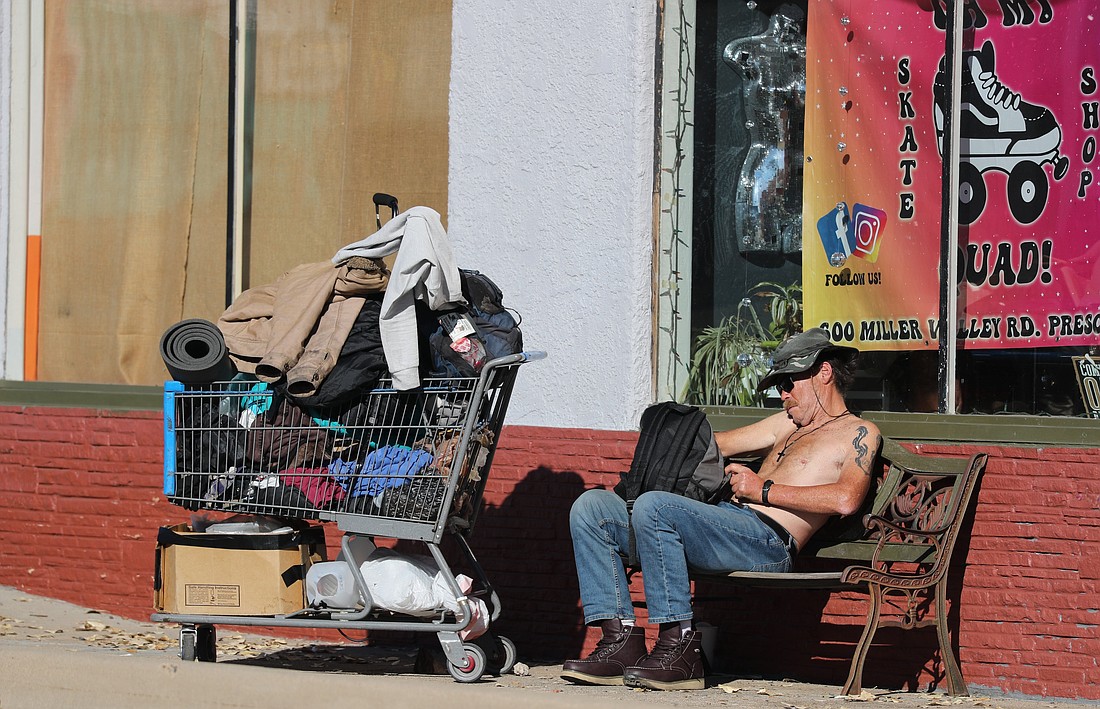
OSV News — It's a question with profound implications for millions of Americans: With the Trump administration's "One Big Beautiful Bill Act" signed into law July 4, will families thrive or languish? Will poverty increase, or decrease? Will more go hungry, or will more be fed?
In a record-breaking eight-plus hours speech from the floor of the House, Democratic Minority Leader Hakeem Jeffries, D-N.Y. declared, "Republicans are trying to take a chainsaw to Social Security, a chain saw to Medicare, a chain saw to Medicaid, a chainsaw to the health care of the American people, a chain saw to nutritional assistance for hungry children, a chain saw to farm country, and a chainsaw to vulnerable Americans."
After the bill passed, House Speaker Mike Johnson, R-La., rejected pessimistic evaluations.
"I think a lot of the estimations about what this legislation would do in a negative manner to communities, in my state or any other, are far overblown. I can tell you that this bill is going be a great thing for everybody around the country," Johnson said. "I think they're going to feel this pretty quickly. Wages will rise; I think household income will go up; I think the job participation rate will increase dramatically; I think unemployment will be low."
"This is jet fuel for the economy," concluded Johnson. "And all boats are going to rise."
Given dueling political assessments, how should Catholics judge future outcomes of the One Big Beautiful Bill Act?
"A basic moral test," the U.S. Conference of Catholic Bishops stated in its website resources concerning the impoverished, "is how our most vulnerable members are faring. In a society marred by deepening divisions between rich and poor, our tradition recalls the story of the Last Judgment (Mt 25:31-46) and instructs us to put the needs of the poor and vulnerable first."
After the bill's passage, Archbishop Timothy P. Broglio of the U.S. Archdiocese for the Military Services, president of the USCCB, issued a statement saying, "The bill, as passed, will cause the greatest harm to those who are especially vulnerable in our society." He cited what he described as "unconscionable cuts to health care and food assistance, tax cuts that increase inequality, immigration provisions that harm families and children, and cuts to programs that protect God's creation."
The bill — estimated to cut $930 billion from Medicaid, $285 billion from Supplemental Nutrition Assistance Program, or SNAP — also increases the national debt on paper by $3.4 trillion, with interest pushing the bill closer to $4 trillion. According to a CATO Institute analysis of Congressional Budget Office numbers, President Donald Trump's mass deportation campaign could add another $1 trillion to the debt by wiping out the predicted deficit reduction from 8.7 immigrants — including unauthorized, paroled, or asylum-seeker immigrants — that entered the U.S. during the Biden administration and have contributed to the economy.
"These cuts are going to have a staggering impact on the poor," said John Berry, national president of the Society of St. Vincent de Paul USA, "and on people that are in the most desperate need."
The Society of St. Vincent de Paul USA provides more than $1.7 billion in aid to more than 5 million people every year through person-to-person services, food pantries, disaster response, and more.
"There is no one that we're supporting at this point that is not going to be negatively impacted by this bill," Berry told OSV News. "Everybody that we serve is going to be hurt. Whether it's the elderly, whether it's the poor, whether it's children — they're all going to be hurt."
Medicaid provides health coverage for 71.4 million Americans. New federal work rules and eligibility changes could pose complications for recipients. The bipartisan Congressional Budget Office earlier projected approximately 7.8 million people could become uninsured by 2034 due to the cuts.
Reductions in SNAP could impact 40 million people — including 16 million children, 8 million seniors and 4 million disabled adults — according to the Washington-based Center of Budget and Policy Priorities. The CBPP also projects that about 600,000 low-income households could find their SNAP benefits — formerly called "food stamps" — cut by an average of $100 per month.
Nearly 28 million adults nationwide — 12.5% of the adult population — live in homes where there was either sometimes or often not enough to eat in the previous week, according to 2023 data from the Census Bureau.
On June 27, Berry urged Congress to protect Medicaid and SNAP, acknowledging "the fiscal pressures that Congress and our nation must address. But we must also ask why the poor must suffer the most — and suffer they will."
"The tax cuts that are being pushed through for people that don't need them are being paid for by taking money away from the people that most desperately need it," Berry said.
He also predicted a resulting rise in homelessness.
In 2024, the rate of homelessness was the highest since the U.S. Department of Housing and Urban Development in 2007 began keeping statistics.
Cuts to federal housing assistance, Berry predicted, are "only going to drive more people into homelessness because they are going to be forced into a situation where they have to decide between whether they're going to pay their rent or take their medicines, pay their rent or eat, pay their rent or feed their kids.
"And those totally unacceptable decisions," he said, "are going to drive more and more people into the street."
Given the extent of federal and state reductions, nonprofits are not prepared to cover the resulting gaps, Berry advised.
The density of the bill — 1,118 pages for the House version, 870 pages in the Senate — was enough to confound even the most politically inquisitive.
"There is so much in the One Big Beautiful Bill Act," said Lelaine Bigelow, executive director of the Georgetown Center for Poverty and Inequality. "And everyday Americans really don't have time to focus on the thousands of little provisions that are in there."
For those who are overwhelmed, Bigelow offered a summary.
"The core thing that I would tell people about this bill is that this is a transfer from things to help people in their everyday lives, like tax credits, and SNAP, and Medicaid," she told OSV News.
"It is the largest wealth transfer we've ever seen in this country — and the transfer is going from the poorest to the richest," she added.
When asked if poverty, hunger and illness are likely to increase in America, Bigelow didn't hesitate.
"Absolutely," she said. "We will see people lose health care. We will see people go hungry. We will also see mental health deteriorate."
Still, the idea that such a fate only awaits someone else has perhaps reassured those who nonetheless may be impacted.
"A lot of people think, 'This won't affect me' or 'I'm not really going to see these cuts,'" Bigelow said. "But this is actually about the people in your community. It's about the people that you're going to Church with, the kids that you see on your son's soccer team."
As to states or nonprofits stepping up to fill the gap, Bigelow, too, is skeptical.
"There's a reason why we have these federal government programs — and I think being lost in this, is that they work really well. SNAP is one of the most effective tools to prevent hunger in America, and Medicaid provides health coverage to 71 million people," she said. "States can't operate on that same scale."
Bigelow is dismissive of those who propose that the bill's large tax cuts for Americans with greater levels of wealth will eventually help the poor.
"Trickle-down economics is not the way you build this country," she said. "That is not what works. It's not how we eliminate poverty."
Prior to the House and Senate passing their versions of the measure, the USCCB directed a letter to each respective chamber of Congress, "both to commend certain important provisions, but also strongly to urge reconsideration of provisions that will harm the poor and disadvantaged."
There are some family-friendly provisions in the Senate version of the bill — such as temporary tax breaks for tip income, overtime pay and interest on auto loans; a permanent increase in the full child tax credit (for families with qualifying dependent children) starting in 2025; a $1,000 "Trump account" for babies; and a temporary deduction (through 2028) for tax filers age 65 and older.
"At a general level, the beneficiaries of Medicaid disproportionately tend to be family households," Lyman Stone, a senior fellow at the Institute for Family Studies, told OSV News. "And so cuts to Medicaid have a tendency to be cuts to family households. And so that section of the bill could create some difficulties for families as they think about having children."
As to the expansion of the child tax credit, Stone explained that owing to inflation, anything less than $2,500 is effectively a cut in the credit.
Even so, an increase in this tax credit won't help 17 million children whose low-income families don't earn enough to claim the full credit.
Stone wasn't thoroughly convinced about the newborn "Trump accounts," either.
"I think the Trump accounts are very unlikely to do much to help families. Handing an 18-year- old $1,000 — maybe by that point, it's $2,000, $3,000 — I don't think that's going to make a radical difference in their life, to be honest," he suggested. "So it's a pleasant gesture, but I'm not clear on how it's supposed to really benefit these families."
"On the whole," observed Stone, "I think that the bill probably cuts slightly more money from families than it gets back in other programs."
He paused, reflecting.
"Some people will have new positive incentives. Some people have new negative ones," he said. "But I think it's mostly just going to kind of shuffle things around — and not have a big impact one way or another on family formation."
Kimberley Heatherington writes for OSV News from Virginia.
Please consider supporting this work by signing up for a SUBSCRIPTION (click HERE) or making a DONATION to The Monitor (click HERE). Thank you for your support.
Related Stories
Friday, December 26, 2025


E-Editions

Events
OSV News — It's a question with profound implications for millions of Americans: With the Trump administration's "One Big Beautiful Bill Act" signed into law July 4, will families thrive or languish? Will poverty increase, or decrease? Will more go hungry, or will more be fed?
In a record-breaking eight-plus hours speech from the floor of the House, Democratic Minority Leader Hakeem Jeffries, D-N.Y. declared, "Republicans are trying to take a chainsaw to Social Security, a chain saw to Medicare, a chain saw to Medicaid, a chainsaw to the health care of the American people, a chain saw to nutritional assistance for hungry children, a chain saw to farm country, and a chainsaw to vulnerable Americans."
After the bill passed, House Speaker Mike Johnson, R-La., rejected pessimistic evaluations.
"I think a lot of the estimations about what this legislation would do in a negative manner to communities, in my state or any other, are far overblown. I can tell you that this bill is going be a great thing for everybody around the country," Johnson said. "I think they're going to feel this pretty quickly. Wages will rise; I think household income will go up; I think the job participation rate will increase dramatically; I think unemployment will be low."
"This is jet fuel for the economy," concluded Johnson. "And all boats are going to rise."
Given dueling political assessments, how should Catholics judge future outcomes of the One Big Beautiful Bill Act?
"A basic moral test," the U.S. Conference of Catholic Bishops stated in its website resources concerning the impoverished, "is how our most vulnerable members are faring. In a society marred by deepening divisions between rich and poor, our tradition recalls the story of the Last Judgment (Mt 25:31-46) and instructs us to put the needs of the poor and vulnerable first."
After the bill's passage, Archbishop Timothy P. Broglio of the U.S. Archdiocese for the Military Services, president of the USCCB, issued a statement saying, "The bill, as passed, will cause the greatest harm to those who are especially vulnerable in our society." He cited what he described as "unconscionable cuts to health care and food assistance, tax cuts that increase inequality, immigration provisions that harm families and children, and cuts to programs that protect God's creation."
The bill — estimated to cut $930 billion from Medicaid, $285 billion from Supplemental Nutrition Assistance Program, or SNAP — also increases the national debt on paper by $3.4 trillion, with interest pushing the bill closer to $4 trillion. According to a CATO Institute analysis of Congressional Budget Office numbers, President Donald Trump's mass deportation campaign could add another $1 trillion to the debt by wiping out the predicted deficit reduction from 8.7 immigrants — including unauthorized, paroled, or asylum-seeker immigrants — that entered the U.S. during the Biden administration and have contributed to the economy.
"These cuts are going to have a staggering impact on the poor," said John Berry, national president of the Society of St. Vincent de Paul USA, "and on people that are in the most desperate need."
The Society of St. Vincent de Paul USA provides more than $1.7 billion in aid to more than 5 million people every year through person-to-person services, food pantries, disaster response, and more.
"There is no one that we're supporting at this point that is not going to be negatively impacted by this bill," Berry told OSV News. "Everybody that we serve is going to be hurt. Whether it's the elderly, whether it's the poor, whether it's children — they're all going to be hurt."
Medicaid provides health coverage for 71.4 million Americans. New federal work rules and eligibility changes could pose complications for recipients. The bipartisan Congressional Budget Office earlier projected approximately 7.8 million people could become uninsured by 2034 due to the cuts.
Reductions in SNAP could impact 40 million people — including 16 million children, 8 million seniors and 4 million disabled adults — according to the Washington-based Center of Budget and Policy Priorities. The CBPP also projects that about 600,000 low-income households could find their SNAP benefits — formerly called "food stamps" — cut by an average of $100 per month.
Nearly 28 million adults nationwide — 12.5% of the adult population — live in homes where there was either sometimes or often not enough to eat in the previous week, according to 2023 data from the Census Bureau.
On June 27, Berry urged Congress to protect Medicaid and SNAP, acknowledging "the fiscal pressures that Congress and our nation must address. But we must also ask why the poor must suffer the most — and suffer they will."
"The tax cuts that are being pushed through for people that don't need them are being paid for by taking money away from the people that most desperately need it," Berry said.
He also predicted a resulting rise in homelessness.
In 2024, the rate of homelessness was the highest since the U.S. Department of Housing and Urban Development in 2007 began keeping statistics.
Cuts to federal housing assistance, Berry predicted, are "only going to drive more people into homelessness because they are going to be forced into a situation where they have to decide between whether they're going to pay their rent or take their medicines, pay their rent or eat, pay their rent or feed their kids.
"And those totally unacceptable decisions," he said, "are going to drive more and more people into the street."
Given the extent of federal and state reductions, nonprofits are not prepared to cover the resulting gaps, Berry advised.
The density of the bill — 1,118 pages for the House version, 870 pages in the Senate — was enough to confound even the most politically inquisitive.
"There is so much in the One Big Beautiful Bill Act," said Lelaine Bigelow, executive director of the Georgetown Center for Poverty and Inequality. "And everyday Americans really don't have time to focus on the thousands of little provisions that are in there."
For those who are overwhelmed, Bigelow offered a summary.
"The core thing that I would tell people about this bill is that this is a transfer from things to help people in their everyday lives, like tax credits, and SNAP, and Medicaid," she told OSV News.
"It is the largest wealth transfer we've ever seen in this country — and the transfer is going from the poorest to the richest," she added.
When asked if poverty, hunger and illness are likely to increase in America, Bigelow didn't hesitate.
"Absolutely," she said. "We will see people lose health care. We will see people go hungry. We will also see mental health deteriorate."
Still, the idea that such a fate only awaits someone else has perhaps reassured those who nonetheless may be impacted.
"A lot of people think, 'This won't affect me' or 'I'm not really going to see these cuts,'" Bigelow said. "But this is actually about the people in your community. It's about the people that you're going to Church with, the kids that you see on your son's soccer team."
As to states or nonprofits stepping up to fill the gap, Bigelow, too, is skeptical.
"There's a reason why we have these federal government programs — and I think being lost in this, is that they work really well. SNAP is one of the most effective tools to prevent hunger in America, and Medicaid provides health coverage to 71 million people," she said. "States can't operate on that same scale."
Bigelow is dismissive of those who propose that the bill's large tax cuts for Americans with greater levels of wealth will eventually help the poor.
"Trickle-down economics is not the way you build this country," she said. "That is not what works. It's not how we eliminate poverty."
Prior to the House and Senate passing their versions of the measure, the USCCB directed a letter to each respective chamber of Congress, "both to commend certain important provisions, but also strongly to urge reconsideration of provisions that will harm the poor and disadvantaged."
There are some family-friendly provisions in the Senate version of the bill — such as temporary tax breaks for tip income, overtime pay and interest on auto loans; a permanent increase in the full child tax credit (for families with qualifying dependent children) starting in 2025; a $1,000 "Trump account" for babies; and a temporary deduction (through 2028) for tax filers age 65 and older.
"At a general level, the beneficiaries of Medicaid disproportionately tend to be family households," Lyman Stone, a senior fellow at the Institute for Family Studies, told OSV News. "And so cuts to Medicaid have a tendency to be cuts to family households. And so that section of the bill could create some difficulties for families as they think about having children."
As to the expansion of the child tax credit, Stone explained that owing to inflation, anything less than $2,500 is effectively a cut in the credit.
Even so, an increase in this tax credit won't help 17 million children whose low-income families don't earn enough to claim the full credit.
Stone wasn't thoroughly convinced about the newborn "Trump accounts," either.
"I think the Trump accounts are very unlikely to do much to help families. Handing an 18-year- old $1,000 — maybe by that point, it's $2,000, $3,000 — I don't think that's going to make a radical difference in their life, to be honest," he suggested. "So it's a pleasant gesture, but I'm not clear on how it's supposed to really benefit these families."
"On the whole," observed Stone, "I think that the bill probably cuts slightly more money from families than it gets back in other programs."
He paused, reflecting.
"Some people will have new positive incentives. Some people have new negative ones," he said. "But I think it's mostly just going to kind of shuffle things around — and not have a big impact one way or another on family formation."
Kimberley Heatherington writes for OSV News from Virginia.
Please consider supporting this work by signing up for a SUBSCRIPTION (click HERE) or making a DONATION to The Monitor (click HERE). Thank you for your support.