


Is a person divorced due to an abusive marriage unable to receive Communion?
February 11, 2025 at 2:47 p.m.
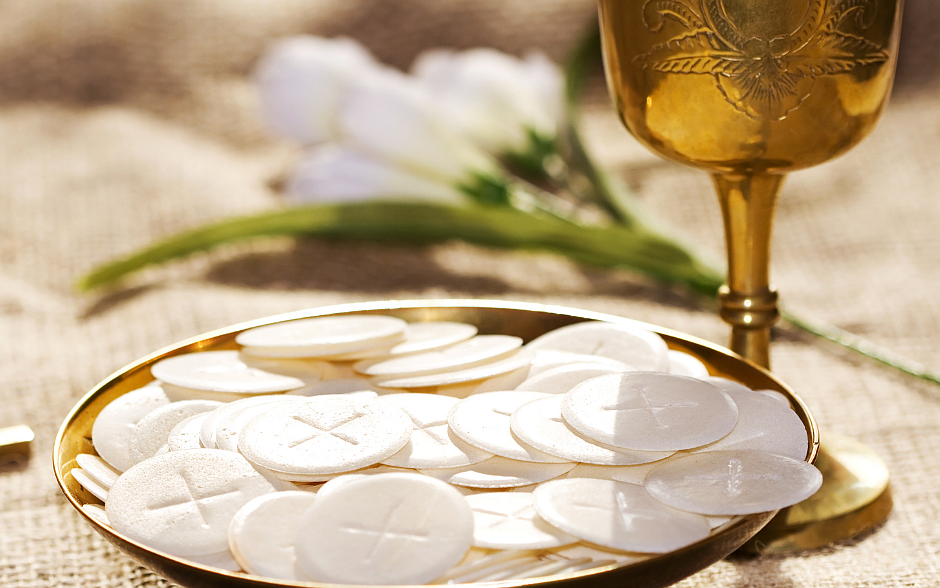
Q: If someone were in an abusive marriage, if they divorced would they still lose their right to Communion?
A: The short answer is no, the simple fact of being divorced does not in any way hinder or cut off a Catholic's access to the sacraments.
For some background, we as Catholics do believe that on a theological level, divorce as such is not truly possible. While the Church does recognize and respect the purely secular legal effects of a civil divorce (e.g., things like property divisions and child custody arrangements), at the end of the day the Church understands divorce as somewhat of a "legal fiction." That is, a consummated marriage between two baptized adults who entered the union with the proper intention and with full knowledge and freedom cannot be ended by anything other than the death of one of the spouses. We can find a scriptural basis for this teaching in Matthew 19:1-12.
It is possible that there could have been a problem at the time of the wedding – such as a mental health issue that prevented one of the parties from being able to consent, or a party having the wrong intentions – which prevented a true marriage from occurring in the first place. This is what the Church's marriage nullity process exists to discern. Yet we should keep in mind that declaring an apparent marriage invalid is very different from holding that an actual marriage bond can be broken.
However, for serious reasons the Church does allow spouses to separate. In canonical terms, this is called "separation while the bond remains." And in cases of abuse, the Church's law could be interpreted as practically encouraging the endangered spouse to leave the marital home.
As we read in Canon 1153 of the Code of Canon Law: "A spouse who occasions grave danger of soul or body to the other or to the children, or otherwise makes the common life unduly difficult, provides the other spouse with a reason to leave, either by a decree of the local Ordinary [that is, the diocesan bishop or his Vicar General] or, if there is danger in delay, even on his or her own authority."
Although Canon 1153 envisions the bishop's involvement in the separation of Catholic spouses, it is noteworthy how this same canon empowers ordinary lay Catholics to use their own best judgment in determining whether there is "danger in delay" in escaping an abusive or otherwise harmful domestic situation.
In a similar vein, while the Church teaches against divorce in general, the Church also acknowledges that a merely civil divorce might be necessary and acceptable in certain situations. Paragraph 2383 of the Catechism of the Catholic Church tells us: "if civil divorce remains the only possible way of ensuring certain legal rights, the care of the children, or the protection of inheritance, it can be tolerated and does not constitute a moral offense."
Divorce only becomes an obstacle for receiving the sacraments when a divorced Catholic attempts to remarry civilly without having had their first marriage declared null by a Catholic marriage tribunal. Since even a legitimately separated Catholic is still married to their original spouse in the eyes of God and the Church, any attempt at a new marriage would not "work." And living with another person in the manner of a married couple, when one is still actually married to another, is technically adultery.
Granted, most divorced and civilly remarried Catholics probably would not experience their new romantic situation as an adulterous union on a purely subjective and emotional level. Still, this does not change the fact that "on paper" at least they are living in a situation of objective and manifest (that is, publicly knowable) grave sin, which is why the divorced and remarried cannot receive Communion.
But these considerations do not apply to a Catholic who is divorced and striving to live a chaste life according to the Church's teachings.
Jenna Marie Cooper, who holds a licentiate in canon law, is a consecrated virgin and a canonist whose column appears weekly at OSV News. Send your questions to [email protected].
Related Stories
Friday, December 05, 2025
E-Editions
Events
Q: If someone were in an abusive marriage, if they divorced would they still lose their right to Communion?
A: The short answer is no, the simple fact of being divorced does not in any way hinder or cut off a Catholic's access to the sacraments.
For some background, we as Catholics do believe that on a theological level, divorce as such is not truly possible. While the Church does recognize and respect the purely secular legal effects of a civil divorce (e.g., things like property divisions and child custody arrangements), at the end of the day the Church understands divorce as somewhat of a "legal fiction." That is, a consummated marriage between two baptized adults who entered the union with the proper intention and with full knowledge and freedom cannot be ended by anything other than the death of one of the spouses. We can find a scriptural basis for this teaching in Matthew 19:1-12.
It is possible that there could have been a problem at the time of the wedding – such as a mental health issue that prevented one of the parties from being able to consent, or a party having the wrong intentions – which prevented a true marriage from occurring in the first place. This is what the Church's marriage nullity process exists to discern. Yet we should keep in mind that declaring an apparent marriage invalid is very different from holding that an actual marriage bond can be broken.
However, for serious reasons the Church does allow spouses to separate. In canonical terms, this is called "separation while the bond remains." And in cases of abuse, the Church's law could be interpreted as practically encouraging the endangered spouse to leave the marital home.
As we read in Canon 1153 of the Code of Canon Law: "A spouse who occasions grave danger of soul or body to the other or to the children, or otherwise makes the common life unduly difficult, provides the other spouse with a reason to leave, either by a decree of the local Ordinary [that is, the diocesan bishop or his Vicar General] or, if there is danger in delay, even on his or her own authority."
Although Canon 1153 envisions the bishop's involvement in the separation of Catholic spouses, it is noteworthy how this same canon empowers ordinary lay Catholics to use their own best judgment in determining whether there is "danger in delay" in escaping an abusive or otherwise harmful domestic situation.
In a similar vein, while the Church teaches against divorce in general, the Church also acknowledges that a merely civil divorce might be necessary and acceptable in certain situations. Paragraph 2383 of the Catechism of the Catholic Church tells us: "if civil divorce remains the only possible way of ensuring certain legal rights, the care of the children, or the protection of inheritance, it can be tolerated and does not constitute a moral offense."
Divorce only becomes an obstacle for receiving the sacraments when a divorced Catholic attempts to remarry civilly without having had their first marriage declared null by a Catholic marriage tribunal. Since even a legitimately separated Catholic is still married to their original spouse in the eyes of God and the Church, any attempt at a new marriage would not "work." And living with another person in the manner of a married couple, when one is still actually married to another, is technically adultery.
Granted, most divorced and civilly remarried Catholics probably would not experience their new romantic situation as an adulterous union on a purely subjective and emotional level. Still, this does not change the fact that "on paper" at least they are living in a situation of objective and manifest (that is, publicly knowable) grave sin, which is why the divorced and remarried cannot receive Communion.
But these considerations do not apply to a Catholic who is divorced and striving to live a chaste life according to the Church's teachings.
Jenna Marie Cooper, who holds a licentiate in canon law, is a consecrated virgin and a canonist whose column appears weekly at OSV News. Send your questions to [email protected].